Showing posts with label Caldecott. Show all posts

Monday, January 28, 2013

Newbery and Caldecott Rock Our January


This is it! The big day! Forget the Superbowl, or rather, picture a Superbowl with authors and illustrators, only they probably wouldn’t be wearing those odd uniforms… Anyway, this morning the American Library Association announced their annual children’s book awards. Here are some of the highlights. To see the entire list, read this ALA press release. (And join me in wondering why the knowledgeable librarians put the book titles in quote marks rather than in italics. Perhaps they don’t trust reporters?)


Newbery Medal

The One and Only Ivan by Katherine Applegate

The talking gorilla takes the prize! This was not an easy premise to pull off, but the accolades started pouring in early on and haven’t stopped. Plus, I will just mention that at this moment, the book is #13 on Amazon’s sales ranking list. I am embarrassed to say that The One and Only Ivan is still on my TBR list, but I will read it soon, I promise.


Newbery Honor

Splendors and Glooms by Laura Amy Schlitz

I actually just read this last week and was wowed. Intense, wonderful storytelling with depth of character and strange surprises. Kind of dark, though, so I’d say 10 and up.


Bomb: The Race to Build—and Steal—the World’s Most Dangerous Weapon by Steve Sheinkin

My mom is a huge nonfiction fan and I gave her this one for Christmas. It’s on my TBR pile, but I will tell you she’s picking it for her book club next go-round. She also loved Sheinkin’s books The Notorious Benedict Arnold: A True Story of Adventure, Heroism, and Treachery and King George: What Was His Problem? (The Whole Hilarious Story of the American Revolution). I’ve read the latter, and it’s fantastic—and truly funny. Steve Sheinkin makes a whole new thing out of nonfiction. You should know that Bomb won the Robert F. Sibert Informational Book Award and the YALSA Award for Excellence in Nonfiction for Young Adults as well, for a triple whammy. Arguably the best book of 2012.


Three Times Lucky by Sheila Turnage

Here’s my review (scroll down). I thought this was a fun book, but I wasn’t as enchanted by it as the committee clearly was. Great voice and characters, definitely! A rollicking Southern tale.


Caldecott Medal

This Is Not My Hat, illustrated and written by Jon Klassen

What we might call a companion book to last year’s I Want My Hat Back, this one is set under the ocean and has the same conciseness, brash style, and grimly humorous conclusion. The artwork is hard to describe—I guess I would say that it’s spare, deliberately flat, and very distinct. Take a look! Oh, and note that Klassen accomplished something that has got to be a first: He won the Caldecott Medal and a Caldecott Honor in the same year! (Here's a link to the book trailer.) Oh, just found out that Leonard Weisgard won both the Caldecott and an Honor in 1947. Not a common occurrence, obviously!


Caldecott Honor (Yes, there are 5 of them)

Creepy Carrots! illustrated by Peter Brown, written by Aaron Reynolds

One of the things I like best about this one is that it has the look of an old black-and-white horror film—relieved only by bright, not pumpkin, but carrot orange. The story is cute, but the illustrations are stunning. Such a fresh take on the Halloween book.


Extra Yarn, illustrated by Jon Klassen, written by Mac Barnett

I reviewed this as a picture book to look forward to, and I’ve been rooting for it to get the Caldecott Medal or an Honor ever since. Klassen’s deadpan illustrative style meshes perfectly with Barnett’s deadpan approach to storytelling—and to make that mix into a modern fairy tale involving knitting? Bliss!


Green, illustrated and written by Laura Vaccaro Seeger

I loved this one so much that I wrote my review last July as a set of brief poems. Non-artists tend not to see the world the same way artists do, but in this book, Laura lends us her vision of just one color. It should change the way we see all colors. This would have been my other pick for the Caldecott Medal (along with Extra Yarn).


One Cool Friend, illustrated by David Small, written by Toni Buzzeo

The artwork in this book reminds me a tiny bit of Hilary Knight’s Eloise, but then, David Small’s art has its own unique look. The story of a boy who winds up hanging out with a penguin, and why not? As Booklist puts it, the artwork is “black-and-white line illustrations with pops of soft color.” Lovely stuff, and a gently funny book.


Sleep Like a Tiger, illustrated by Pamela Zagarenski, written by Mary Logue

I haven’t read this, but a quick look on Amazon made me want it. It’s illustrated by a woman whose artwork won a previous Caldecott Honor in 2010, for Red Sings from Treetops: A Year in Colors by Joyce Sidman. Another artist with an unusual, memorable, and appealing style.


I mostly read Young Adult fantasy, so I’ve only read one of the Printz Award and Honors books. Here’s the list—and my note about the book I did read.

Printz Award

In Darkness by Nick Lake


Printz Honor

Dodger by Terry Pratchett

This book is by one of my favorite authors, and I reviewed it when it came out. Pratchett takes one of Charles Dickens’ most intriguing characters and gives him his own story, imbuing it with that Victorian Horatio Alger feel that characterizes many of Dickens’ books. A terrific adventure in the sewers and grand houses of London.
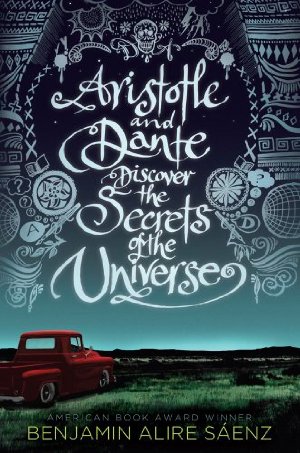


Aristotle and Dante Discover the Secrets of the Universe by Benjamin Alire Sáenz


Code Name Verity by Elizabeth Wein


The White Bicycle by Beverley Brenna


Remember to read the entire awards list! As Jules of Seven Impossible Things Before Breakfast pointed out a few days ago, it was a year of wild cards. But, as always, the ALA committee has come up with a carefully fine-tuned list of read-worthy books. 

Saturday, June 20, 2009

Picture Books to Sing

Two of the books I managed to rescue from my parents when they moved and were clearing out their library are actually songs: The Fox Went Out on a Chilly Night, an old song illustrated by Peter Spier, and One Wide River to Cross, adapted by Barbara Emberley and illustrated by Ed Emberley. Coincidentally enough, they are both Caldecott Honor books—Spier's in 1962 and Emberley's in 1967. I don't think my mother bothered tracking the award winners particularly, but she always had good taste in children's books.

Ed Emberley has had a long and successful career in children's book illustration, though his name may not be as familiar to you as some others. I was surprised to realize that he had won that Caldecott Honor long ago for his wood-cut illustrations of the Noah story in song, since I know him best as the author/illustrator of Go Away Big, Green Monster! It turns out Emberley is the author of a number of books about drawing for children. What's more, he won the Caldecott Medal in 1968 for Drummer Hoff, which his wife Barbara adapted, as well.

We sang a lot in my family as I was growing up. I was the second of seven children. My mother and two of my sisters played the piano, so we would gather around the piano and sing music from Broadway musicals like Fiddler on the Roof and You're a Good Man, Charlie Brown. Another favorite was The Fireside Book of Folksongs—we especially loved a rowdy tune called "Drill, Ye Terriers, Drill" and spirituals like "Nobody Knows the Trouble I've Seen" and "Oh Won't You Sit Down?" We sang on car trips, too, throwing in camp songs and songs we had learned in church. To this day, I like vocal music better than instrumental music. A few years ago, I went out of my way to track down a copy of The Fireside Book of Folksongs. It was only then that I noticed the collection's illustrators were Caldecott winners Alice and Martin Provenson.

Naturally, when I began teaching elementary school, my students and I sang together—what we lacked in grace, we made up for with enthusiasm. I soon learned that the big name in CDs for kindergarten and first grade is Greg and Steve, but I was still hooked on folksongs. A friend of mine worked in the office of the Smithsonian that preserves folk music, and she gave me a CD of children's songs called Smithsonian Folkways Children's Music Collection, basically her department's "Greatest Hits" from the archives. Woody Guthrie, Ella Jenkins, Pete Seeger, Lead Belly, and Langston Hughes are the best known of the featured artists. Okay, so Langston Hughes doesn't sing, but he does read a couple of his poems. (The Smithsonian has quite a music catalog; look it up!)

The year I taught third grade, my students' favorite CD was Red Grammer's Sing Along Songs, especially "Erie Canal" (we acted out the bridge lowering), "Day-O," and "Wimoweh." In fact, the next year they used to stop by after school and ask to play that CD and sing to it again. They leaped about the room while they were at it.

This spring I ordered a bunch of books and supplemental materials for the Resource Room of my current school. Our school works with students who are homebound for medical reasons, and a number of them are severely handicapped. Because the children can't do much, their teachers put on quite a show, using music and read-alouds more than most teachers do. I ordered a number of board books for this group that came with CDs or could be sung aloud by the teacher. What I discovered is that the authors and illustrators who dominate that particular slice of children's literature right now are Mary Ann Hoberman, who collaborated with Nadine Bernard Westcott on books such as The Eensy-Weensy Spider and Mary Had a Little Lamb; Westcott on her own, perhaps most happily on Peanut Butter and Jelly: A Play Rhyme; performer Raffi, with books like Down by the Bay, also illustrated by Nadine Bernard Westcott, and The Wheels on the Bus; as well as Izi Trapani, whose numerous titles include I'm a Little Teapot and Row, Row, Row Your Boat.

Yet there is something of a distinction between these books and the picture books for slightly older students that feature singable texts. The picture books may be based on less well-known songs, or at least songs less often sung by the pre-school set. One such book in my collection is another Woodie Guthrie number, Bling Blang. You can get the music on another Smithsonian Folkways collection, Guthrie's Songs to Grow on for Mother and Child. Bling Blang is illustrated by Vladimir Radunsky, who created a black child and a white child to star in the book; he went on to include actual art from children, who, as you know, love to draw houses. Bling Blang is about building a great house for a beloved child. The marvelous onomatopoeic chorus goes: "Bling blang, hammer with my hammer/Zing-o zang-o, cutting with my saw." Apparently Woodie Guthrie and his kids used to build odd projects in their backyard.

Bling Blang stands alone, but some songs have repeatedly been made into children's books. I'm guessing that if you counted them up, "The Wheels on the Bus," "The Eensy-Weensy Spider," and "There Was an Old Lady Who Swallowed a Fly" would win for most frequent publication, but the latter undoubtedly takes first prize if you include the many variations. A quick look on Amazon has the old lady swallowing a shell, a pie, a trout, a bat, a bell, the sea, a chick, and Fly Guy (an easy reader character). Plus we find regional fare like There Was a Coyote Who Swallowed a Flea and There Was an Old Texan Who Swallowed a Fly, not to mention a hungry educator, I Know an Old Teacher.


Yet none of these can dent my loyalty to the Simms Taback version, which won a Caldecott Honor in 1998. The illustrations are nuts, the die-cut holes are genius, and then you get the bonus of the secondary characters making odd little rhyming comments around the page edges at key points. My first graders requested that one on a regular basis; in fact, since they were learning English as a Second Language, I started out by singing and then having them fill in the missing words of the cumulative story. I know some parents find the plot a little upsetting, especially the kicker of an ending, but kids have the humor and good sense to know that it's all a big joke. (For a different read-aloud on the topic of cumulative swallowing, you can't beat My Little Sister Ate One Hare by Bill Grossman and Kevin Hawkes, which doubles as a counting book.)

There have been just a few versions of another sing-along book I recommend, Fiddle-I-Fee by Will Hillenbrand; the best-known is probably Paul Galdone's Cat Goes Fiddle-I-Fee, and Diane Stanley illustrated one, as well. I personally like Hillenbrand's narrative approach and cheerily unsentimental artwork, along with his rendering of the animal sounds, which are the best part about this song and guaranteed child-pleasers.

A more openly sentimental picture book version of a song is Morning Has Broken by Eleanor Farjeon, illustrated by Tim Ladwig. You've probably heard the song performed by Cat Stevens, but perhaps you didn't know that the words were a poem by a wonderful children's book writer. (In the days before fairy tale retellings became popular, Farjeon wrote The Little Glass Slipper and The Silver Curlew, novelizations of "Cinderella" and "Rumpelstiltskin" that are more readable and funny than most of the retellings in the current crop.) Ladwig's illustrations are gentle and a little too sweet for my taste, but the words are wonderful, especially if you are on the religious side. Like many of the books listed here, this book provides the "sheet music" for the song.

One picture book I highly recommend has a rap-style chant rather than a melody, and that's Shake Dem Halloween Bones by W. Nikola-Lisa and Mike Reed. The author and illustrator create a collection of fairy tale characters coming together to dance on Halloween Night, and it's another title that my students used to want to hear—and chant with me—over and over. The very strong beat will carry you along!

Which brings me to the two recently published picture book songs that started me thinking about all this: All God's Critters by Bill Staines and Kadir Nelson and Tweedle Dee Dee by Charlotte Voakes. I'll confess I didn't find Tweedle Dee Dee particularly compelling. Voakes's illustration style, which I thought was perfect for Elsie Piddock Skips in Her Sleep (another Eleanor Farjeon offering!), is extra loose here, and the song lacks a strong storyline. The illustrator hits her stride with the birds' nest, though, and the rest of the book is more appealing.

Some songs give artists more to play with, and that's certainly the case with All God's Critters, with its message of inclusion and contribution. Even though the "story" is simply a performance by a series of animals, Kadir Nelson gets to spotlight each animal, imbuing them with colorful personalities. If you've seen his work in books about African American history and culture (e.g, Henry's Freedom Box by Ellen Levine and We Are the Ship by Nelson himself), you may be surprised by his rambunctious departure here. It just goes to show that a talented illustrator has range! In this case, he also has fun. The double-spread grand finale is especially over-the-top as our animal cast hams it up, turning the volume full blast.

Now, I was unfamiliar with both of these melodies, so I played them on my recorder to get a feel for them. "Tweedle Dee Dee" is nice, but not very memorable. "All God's Critters" is a little more catchy, but still nothing like "Eerie Canal" or "The Fox Went Out on a Chilly Night."

The question raised by all of the books in this post is whether they are still as effective if they are simply read rather than sung. I'm guessing the rhythm and a reader's use of expression will make most of them solid read-alouds even if they aren't used as sing-alouds, but I can't emphasize enough how much kids LIKE singing and being sung to.

So, while I sort of understand teachers who can't carry a tune and just treat these texts as poems, I am appalled by teachers who play a CD and have their students sing without singing themselves. Of course, a lot of teachers are perfectly happy to belt out songs with their students as long as there aren't any other adults in the room, and the same thing is true for many parents at bedtime. So what do you do if you can't read music? Then it helps to have a CD in order to learn the tune, but I suggest you resist the urge to listen silently to words and melodies that are just begging to be sung! My family may sound musically talented to you, but none of us were outstanding vocalists. More than anything, we sang for the sheer joy of it. That experience was a gift from my parents that I still treasure. There's a reason I keep those ratty old copies of The Fox Went Out on a Chilly Night and One Wide River to Cross. Just the sight of them gets me singing my way around the house.