Saturday, November 12, 2011

A Thousand Words

Thank you, Brian Selznick. Well, actually, I'm sure I can't ascribe the relatively recent ascendancy of graphic novels and other books with important visual elements entirely to him, or rather to his award-winning, about-to-be-a-movie The Invention of Hugo Cabret, but it sure as Dante's Inferno didn't hurt. Shaun Tan helped, too, I'm sure of it. Oh, and Marvel Comics. Don't forget them. Plus Marjane Satrapi and Shannon, Dean, and Nathan Hale. Not to mention Jarrett J. "I Can't Spell His Name without Looking but at Least I Can Spell Scieszka" Krosoczka. At any rate, we're seeing some really wonderful graphic novels and variations thereof.


The Last Dragon by Jane Yolen, illustrated by Rebecca Guay

One that has been received with less fanfare than I would like is The Last Dragon. Apparently Jane Yolen had a great time creating Foiled (2010) because she's back with another GN, though it has a very different style. Foiled was low fantasy, but The Last Dragon is good old, glorious high fantasy, complete with village blacksmiths and herbalists and that titular dragon. The book has been published for the adult fantasy market, by the way, but it has definite YA appeal—and nothing in particular to worry parents of teens, if you don't count the baby who gets eaten by a dragon (offstage).

Despite the book's traditional trappings and its lush look, created by Rebecca Guay, it is not your great-grandmother's fairy tale. Oh, it reads like a fairy tale, but Yolen throws in some semi-scathing ideas about what makes a hero, or how a real hero might be made: from encouragement, foolhardiness, and kite strings.

Our story begins in a far-off land, on the island known as Meddlesome, where, unbeknownst to humans, the very last dragon's egg has stirred and begun to hatch. Meanwhile, a village herbalist is raising three daughters—practical, dour Rosemary; beautiful, empty-headed Sage; and talented, disobedient Tansy, who is a trial to her mother.

When Tansy and her father discover a plant called fireweed or flamewort, they dismiss the legends that say it only grows when dragons are around. Then Tansy's father disappears, and Tansy wonders if the legends might be true. At last the dragon is sighted; it has quickly developed a taste for humans and their beasts. The villagers gather rather hopelessly to plan their defense. One strategy is to send some of the village boys by boat to the mainland to fetch back a hero.

Naturally, the boys find all sorts of liars and thieves. At last they find a man who looks like a hero, but it's up to Tansy to shape this con artist into the real thing. And there is still the dragon to be defeated, one way or another.

Yolen's text is well paced and well written, as always. Guay's artwork flows beautifully around the words, burnished in dull golds and greens with touches of red throughout, so that the whole thing appears to have been painted on parchment.

Here's an excerpt from early in the story:
The isles ran red and dark with dragon blood till all of them were gone.

Or so the humans believed.

Two hundred years later:

At sunset the low tide scrapes the beach, pulling cold fingers through the sand and rock.

One great mother tree, older than the long-ago dragons, feels her roots loosening. Slowly, like a mountain, she falls with a crash into the water, giving up her adopted child, the egg she has cradled for so long.

This book is more for the fantasy lover than for the comic book crowd, though hero Lancot is deliberately drawn in ironic imitation of all those chesty superheroes. Overall, The Last Dragon is rendered as if it were a retelling of a lost fairy tale. The first few pages evoke medieval manuscripts, in fact. It's a beautiful book, and it's going on the shelf with my growing collection of excellent graphic novels.

Anya's Ghost by Vera Brosgol

This YA graphic novel is garnering starred reviews right and left, and no wonder. Anya's Ghost is a perfect rendering of what it means to be an outsider, or at least, to feel like one, which is more to the point. The book also has fascinating things to say about crushes and being true to oneself.

Anya is a Russian immigrant who's trying very hard not to come across like one. Having arrived in the U.S. in kindergarten, she has dropped her accent and learned to blend in. She tries very hard to avoid a more recent Russian immigrant, Dima, hoping she won't be lumped in with him.

After an embarrassing incident at school, Anya flees into a little wooded area and falls into a deep hole. At the bottom, she isn't just frightened by her predicament; she discovers a skeleton and meets the ghost of another girl who fell down the hole and was never found.

It will give you an idea of Brosgol's humor to learn that when Anya's shouting brings a teenage boy to the top of her prison and she yells, "HEY, GET HELP! GET SOMEBODY! I'M HURT!" he calls down, "Are you a hot chick? You kind of sound like a hot chick." Anya makes a priceless face and then replies, "Incredibly hot. You cannot even begin to imagine."

Thanks to a little bone that has somehow gotten in her backpack, Anya's ghost follows her home. At first the ghost seems sweet, telling Anya her sad tale of a soldier boyfriend lost in the war, a vicious attack on her family, and that fateful fall down the hole. Emily begins to help Anya with her tests in school and with getting the attention of Anya's crush, a basketball player. She even pushes Anya to get invited to a party where Sean will be and helps her pick out an outfit. A really slutty outfit.

Huh? Is this simply a matter of bad taste? Well, no. Let's just say that Emily is not quite the person she said she was, and it may not be easy to get rid of her. Watch out, Anya—you've been haunted!

I don't know which I like more, the ghost plot or the way the rest of Anya's life is portrayed, from her mother studying for the citizen test to her quarrel with best friend Siobhan and her fears about being fat. No, wait, I love Brosgol's depiction of the horrors of high school gym class!

Anya's Ghost is a fresh and perfectly aimed story about teenage fears. I'm sure someone could have a field day with the symbolism of the ghost as the dark side of any girl, let alone Anya, but you don't need to go all "literary analysis" to enjoy this terrific graphic novel. Just relish the storytelling. And make sure there aren't any finger bones in your backpack.

Note for Worried Parents: There is quite a bit of smoking in this book, also a teen party and a boy who obviously uses girls sexually. Everything is handled tastefully, however, with a positive message about not caving to peer pressure or trying to please a boy.

The Chronicles of Harris Burdick by Chris Van Allsburg and a bunch of illustrious writers

As Lemony Snicket explains in his introduction, for many years, teachers have used The Mysteries of Harris Burdick by Chris Van Allsburg as a set of great story starters. The book is a collection of marvelous illustrations, each with a cryptic sentence or two that just begs for more.

Here, in this new volume, is the more. That is, some bright soul got the idea of having a group of well-respected authors write short stories to go with the mysterious illustrations. The writers are, in order of appearance in the book, Lemony Snicket (introduction), Tabitha King (Stephen's wife), Jon Scieszka (told you I could spell it), Sherman Alexie, Gregory Maguire, Cory Doctorow, Jules Feiffer, Linda Sue Park, Walter Dean Myers, Lois Lowry, Kate DiCamillo, M.T. Anderson, Louis Sachar, Chris Van Allsburg himself, and Stephen King.

The phrase "a veritable who's who" comes to mind.

Now, it's been my experience that short story collections tend to contain 1-2 great stories, 4-5 good stories, and several that don't cut it. The Chronicles of Harris Burdick beats this trend to some extent. There aren't any truly rotten stories in the book. However, there are certainly some standouts. The other thing I noticed is that at least half the stories seemed better suited to an adult audience than to kids. Here is a brief commentary on each one:

"Archie Smith, Boy Wonder" by Tabitha King—It may take a few pages for the reader to realize that the narrator is a special needs child, perhaps a boy with Down's Syndrome. This is a lyrical story about baseball, the moon, and imagination, but its beauty may not be appreciated by children as much as it will be by adults.

"Under the Rug" by Jon Scieszka—The mastermind behind the Guys Read project gives us a humorous horror story with unapologetically gruesome boy appeal. It's about a boy, his grandma, and a lump beneath the rug. Also about the way kids clean house, which is to say, not very diligently. Fun suspense with a twist. (See guy wielding chair, below left.)

"A Strange Day in July" by Sherman Alexie—The brother and sister twins in this story aren't at all nice. In fact, as the author points out often, they are strange. But these budding sociopaths, the terrors of the community, may just get their own when they invent another sister. I wouldn't share this tale with anyone under the age of 10, but it is creepy-cool.

"Missing in Venice" by Gregory Maguire—Magical realism blossoms into fantasy in this satisfying story of a boy adrift in Venice, at the mercy of his money-hungry stepmother and her scorpion of a lawyer now that Linus's father has died. When Linus meets the Queen of Gingerbread and steals something from her, everything changes.

"Another Place, Another Time" by Cory Doctorow—An old-fashioned story about a boy whose father goes to sea. It is also about the physics of space and especially time. The science dialogue feels a little dry, but the discovery of the old handcar, which Gilbert and his friends christen Kalamazoo, adds wonder and adventure to the narrative.

"Uninvited Guests" by Jules Feiffer—I wasn't in love with this story of a children's book illustrator whose creations come to life after his wife leaves him and his house catches on fire. What starts out as Alice in Wonderland ends up being about death, with a very adult sensibility.

"The Harp" by Linda Sue Park—I found the message in this one distracting, but maybe kids won't notice. A girl and her sister are trapped in the woods by a wizard who wants to teach them to stop bickering. One of them is turned into a frog, and she has to learn to play the harp. Of course, she can only do this with her sister's help. The other plot strand tells of a very angry boy who has lost his mother.

"Mr. Linden's Library" by Walter Dean Myers—The author does a nice, slow build here. Carol Jenkins visits an old man who lets her borrow his books, but what she really wants to get her hands on is the strange book he is reading. This story may be too quiet for some kids, but I liked it. I was especially pleased by the way Myers wrapped up the story, yet kept the spell of suspense going, just as Van Allsburg's mysterious illustrations do. (See sleeping girl with book, below right.)

"The Seven Chairs" by Lois Lowry—Another one that may read a little older, but a well-told tale for all that. We learn of a group of baby girls who float in their cribs in the year 1928. Only one of them keeps it up, honing her craft over the years. But the most interesting thing about Mary Katherine ("MK") Maguire is that she discovers seven chairs which have the ability to join her in floating. It's odd and fun to follow her as she finds each one. Years later, MK visits a Gothic cathedral. Is there a reason she studied French?

"The Third-Floor Bedroom" by Kate DiCamillo—Again, I feel like this story is for adults or at least for more sophisticated readers. However, it really got me; it's one of my favorites in the collection. We read a series of letters from a girl called Pearlie to her soldier brother. Pearlie is a passionate, angry child who has lost both her parents and feels abandoned by her brother. She stares out the attic window and looks at the birds on the wallpaper, wishing they could fly away. Wishing she could fly away. And then she gets sick. I suppose I wouldn't go so far as to call Pearlie an unreliable narrator, but her shifting perspective sweeps us along in a wonderfully well-crafted way.

"Just Desert" by M.T. Anderson—No, that's not a typo. It's a play on words from Van Allsburg. Anderson's story is thoroughly engrossing and takes a twist I really didn't see coming. But then, we are talking about one of the most creative minds in children's fiction! The ending is pleasingly chilling.

"Captain Tory" by Louis Sachar—A subtly well made and touching story. Captain Tory visits the doughnut shop down by the wharf every morning for a cinnamon doughnut and a cup of coffee. Captain Tory is a ghost. Then one morning he visits the hardware store instead, which pleases Paul. One of the best in the collection, in my opinion.

"Oscar and Alphonse" by Chris Van Allsburg—This one has been anthologized previously. Oscar and Alphonse are caterpillars who spell out words, but only for Alice. Meanwhile, her older brothers and her father are trying to solve a great physics problem, the Farkas Conjecture. Parts of this story may be over young readers' heads, but they'll like the way Alice and her caterpillars are wiser than the grown-ups. The ending hangs rather, but that's what you would expect from the guy who made all those mysterious Harris Burdick illustrations in the first place. (See photo of Allsburg, below left.)

"The House on Maple Street" by Stephen King—I was never a big horror fan, so I didn't get into King's books. Then I read On Writing and was very impressed. So I wasn't surprised by how real this story felt, how odd and enthralling it was. Four children discover something strange about their house in between worrying about their mother's migraines and their stepfather's cold heart. Then oldest boy Trent comes up with a plan to make everything better.

I should mention that The Chronicles of Harris Burdick is beautifully designed, heavy and luxurious. Each story is introduced by a sort of monogrammed HB followed by a smooth book plate version of the illustration. The designer capitalizes on those great brown tones from the original. It's one of the prettier books you'll see this year.

Teacher/Writer Stuff

I have a new day job writing teacher's guides for elementary history books, so I've got curriculum on the brain... Then again, maybe this is more of a writer thing. But it occurs to me that besides using the Harris Burdick pieces as writing prompts with the words, you could get rid of the bits of text and come up with your own. The following are mine, but see if you can write some, too. Or try this with your class!

Warning: Also, don't let your students read the stories in Chronicles if you want to use the Mysteries as writing prompts. Share the new pro stories only after letting kids come up with their own, or they may get derailed.

"Archie Smith, Boy Wonder"—When they were big enough, his dreams escaped.

"Under the Rug"—I tried aiming for the little table, but I couldn't see anything, and the man kept yelling horribly.

"A Strange Day in July"—"They said no fireworks," I reminded her. "That's alright," Lindsey told me, "Watch."

"Missing in Venice"—Grandma couldn't get a building permit.

"Another Place, Another Time"—Henry blew on the sails, and the handcar began to move.

"Uninvited Guests"—Someone had taken the sign down, but I remembered what it said.

"The Harp"—Last time it was a clarinet made from a giant's toe-bone.

"Mr. Linden's Library"—So that's where the briars came from. She kept her eyes shut.

"The Seven Chairs"—Sister Ascenza Ignatius was allowed to float on Tuesdays. This was a Friday.

"The Third-Floor Bedroom"—The first snowflake wandered down from the sky, not to be mistaken for the last bird, which still hadn't arrived.

"Just Desert"—It isn't easy carving a carriage.

"Captain Tory"—"If I call the ship," he asked, "will you tell them Gasche lost the key?"

"Oscar and Alphonse"—When I opened my hand, the magic beans had turned into caterpillars.

"The House on Maple Street"—It was the best Christmas, and the last.

You see? The mysteries continue to call to us. Used the right way, a piece of art can paint words in the air. We may be a little worried about the state of the picture book these days, but never fear: there are people in the world of books who are doing new and wonderful things with pictures.

Saturday, November 5, 2011

A Review of If You Give a Dog a Donut by Laura Numeroff

Numeroff and Bond are back with their eighth "If You Give" book, not counting related books with the same characters. Every time Numeroff publishes one of these babies, the question is asked: Has she exhausted this format? This—in essence—franchise?

The answer is, no. Why not? Because Numeroff doesn't repeat herself. She doesn't need to repeat herself. The dog in this book (who, we are told, first made a cameo appearance in If You Give a Pig a Pancake) asks for things, like the mouse, moose, pig, and cat before him, but his requests are unpredictable. Random, even.

This should remind you of something: that's how little kids are. "Oh, look! A butterfly! Oh, wait, there's a school bus! And a piece of paper! And a grandma! And..." You see? This dog's meandering requests and momentary interests are not only delightful because they are surprising, but because they are an accurate representation of the flittering thoughts of small children. One more example: When I was teaching first grade some years ago, I remember leading two straight lines toward our classroom from the playground, only to have a child cry, "Look! A ladybug!" And suddenly 20 little bodies were clustered around her, trying to see this amazing sight.

So yes, Numeroff's new book works. I found some of the choices particularly appealing—when throwing an apple reminds the dog of baseball, he wants to play. And later, when he gets wet in the birdbath and is dried off with the boy's bandanna, he leaps to the idea of using the bandanna to play pirates.

In fact, this offering is perhaps the most clearly oriented toward boys of the entire series. Though girls can and do participate in all of the activities listed, they seem to have a certain amount of boy appeal.

Felicia Bond's artwork continues to charm, as well. Her dog makes you want to rush out and buy a puppy, or maybe give birth to a child, one of the two. Her sprinkle donut might make you hungry, and her kite is especially lovely, apparently made out of the color comic section of the newspaper. As always, Bond's style consists of simple lines with white backdrops. Visually, it should be easy for any toddler or kindergartner to follow.

I'll admit I was a bit cynical when I saw this one, but Numeroff and Bond have done it again: If You Give a Dog a Donut can stand in its own right as a book with strong kid appeal plus a dash of humor for moms and dads.

Note: HarperCollins sent me an ARC of this book.

Book Update and Awesome Man

I have some fun news about my own books, not to mention a review of Michael Chabon's picture book, which turns out to be related.

First, I'll just remind you that my retelling of the Grimms' tale, Hans-My-Hedgehog, will be out on January 24 and is already up on Amazon. John Nickle is the very talented illustrator. At the moment, my website designer Barb Aeschliman and I are busy working on a hedgehog page (much like my frog and squirrel pages).

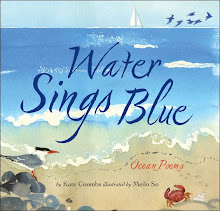
Second, I now have cover art for my collection of ocean poems, Water Sings Blue, which is also up on Amazon and has a pub date of March 14. Isn't it pretty? Meilo So is the illustrator, and her interior artwork just knocks my socks off. Interesting note: Meilo lives in the Shetland Isles. (I discovered this while trying to FedEx galleys when they wound up at my house instead of hers!)

Third, I have had a picture book manuscript waiting for an illustrator at Atheneum for quite a while now, and voilĂ ! The Tooth Fairy Wars will be illustrated by Jake Parker. Check out his website. You can expect this book in late 2013 or early 2014.

Jake is known for his comic series, Missile Mouse, and for his work on animated films like Horton Hears a Who and Ice Age: Dawn of the Dinosaurs. His most recent project is Michael Chabon's picture book, The Astonishing Secret of Awesome Man, which came out on September 6.

In case you haven't seen it, this book tracks the adventures of a superhero and his sidekick, Moskowitz the Awesome Dog. Here's how the story begins:
Hi! I'm a superhero. My name is Awesome Man.

I have a cape as red as a rocket, a mask as black as midnight, and a stylin' letter A on my chest.

I'm just basically awesome.

The superhero goes on to list some of his superpowers (shown in application in the illustrations) and to recount his adventures with villains such as mutant talking Jell-O from Beyond the Stars, Professor Von Evil, and the hero's arch nemesis, the Flaming Eyeball.

But our superhero has his down moments, and we see him returning to his Fortress of Awesome under the Arctic Ocean to try and get a grip.

Parker's comic style art suits this superhero story. He even uses dot backgrounds like old newsprint comics in some of the early spreads. I like the way his fortress, while under the sea and the eye of a passing whale, is a suburban home beneath a set of glass domes. Despite the smoothness of the rendering, Parker can show his square-jawed hero sulking as well as preening.

As for Chabon's text, it's a tad tongue-in-cheek—watch, for example, for a supervillain named Sister Sinister. The wording has a nice casual tone, as in this excerpt:
I fly west. I fly east. I fly eight times around the earth and all the way to the heart of the sun. (The Flaming Eyeball hangs out there sometimes.)

Chabon is, of course, best known for his adult fiction, e.g., Pulitzer Prize winner The Amazing Adventures of Kavalier and Clay, but he has also written a YA (upper MG) novel, Summerland, which I quite liked.

I noticed that some Amazon customer reviewers were complaining that Chabon's new picture book doesn't have a stronger plot, but I think they're missing the point: this one is intended to be a profile of the superhero, not Die Hard 3. (If you want more plot in a picture book along these lines, try Barnett and Santat's Oh No! Or How My Science Project Destroyed the World.) I will say, the ending of The Astonishing Secret of Awesome Man isn't quite my cup of tea, but young readers will probably like it. For the kid who's a bit too young for Vordak the Incomprehensible, Chabon's new book may be just right.

Monday, October 31, 2011

Boo!

Best scary book ever for kids? Forget Goosebumps, forget all those YA paranormal novels; I'm voting for Eve Merriam and Lane Smith's Spooky ABC, previously published as Halloween ABC. Here's a phantasmal sample, under G:
Ghost

More gruesome than any groan,
more dreadful than any moan,
most trembling, terrifying sight:
white silence in the dark of night.

I'll give you an art sample, too. If you can't guess what P stands for, it's Pet. Mwa-ha-ha-ha! These poems never fail to give me the shivers. There are scarier ones than "Ghost," believe me you. The cumulative effect is really something, especially alongside Smith's hauntingly off-kilter illustrations.

So, what's your favorite spooky children's book? Leave a comment and let us know.

Happy Halloween!

Saturday, October 29, 2011

A Trio of Mice

Earlier this year I wrote a post about two new mouse books, one by Lois Lowry and the other by Cynthia Voigt. I also listed a number of great mouse books already in print.

So. With Halloween right around the corner, just begging to be a blog post, I'm really more in the mood to talk about mice again. Why? Because the great Richard Peck has thrown his hat into the ring of the mouse boxing match. (I wanted to say "mouse circus," but I looked up the origin of "throw your hat into the ring" and discovered it's a boxing expression.) What I mean to say is, Peck has written a mouse book, too: Secrets at Sea.

I have two questions about all of this. One is, why did three of the best children's books writers of all time come out with mouse books this year? The other is, quite frankly, how do the three books compare?

I'll start by summarizing each book for you, with a lot more detail for Peck's story, since his wasn't around for my February post.

Lowry's Bless This Mouse features a tribe of church mice who live in a Catholic church called St. Bartholomew's. Their leader, Hildegarde, must keep her people safe. She must also fend off attempts by a sneaky rival to take her top spot. In order to maintain the status quo, Hildegarde enforces a strict policy of birth control in the mouse population. I know, it sounds like China's Communist oligarchy, but the book is actually light-hearted, the proverbial rollicking read. It turns out Hildegarde faces a bigger threat than Lucretia—the humans have learned of the mice and are planning to exterminate them. Hildegarde decides that the best way to protect her tribe is to evacuate to the outdoors till the danger has passed. Meanwhile, the human parishioners are gearing up for a ceremony in which children bring their pets to be blessed by Father Murphy, a tradition honoring St. Francis of Assissi. Hildegarde takes note of the fact that the church mice are not exactly invited to the blessing of the animals, adding another wrinkle to the story.

Voigt's Young Fredle is a sort of Jonathan Livingston Seagull character. (If you're too young to get that reference, here's the Wiki article.) He's a house mouse living on a farm, but he winds up outside quite by accident and doesn't know how to get back inside to his family. Fredle manages to stay alive, has all sorts of adventures, and becomes such a different person that he no longer fits in with his clan. He learns about snakes, raccoons, reliable and unreliable friends, and the stars. He's a bit of a philosopher, and his growing view of the world permeates the book.

In Richard Peck's Secrets at Sea, Helena and her three younger siblings—Louise, Lamont, and Beatrice—live with a nouveau riche family in turn-of-the-century New York. Our story begins when Louise bursts in with the news that the Cranston household is in an uproar, planning to go on some kind of journey because older daughter Olive "must be given Her Chance." The sisters hardly have time to parse this information before Lamont bursts in, missing his tail.

You get some idea of just how determined and brave Helena is when she makes Lamont take her to the scene of the crime to get that tail back. They make it out alive—barely. Then Helena sits right down and sews Lamont's tail back on.

The little mouse family realizes that the Cranstons intend to take a sea voyage in hopes of finding a fashionable husband for Olive, who appears to be in danger of becoming an old maid. (The teenage Cranston daughter Camilla is actually friends with Louise, which makes Helena nervous.) Following the counsel of her eccentric, oracular Aunt Fannie, Helena and her siblings accompany the Cranstons on their voyage. Once onboard ship, they discover a large number of mice crew and passengers whose behavior quietly mimics that of the human crew and passengers. Helena and her family also intervene in the lives of the Cranstons, who could certainly use the help.

Peck's wording, as always, is perfectly crafted, and his humor is sly and witty. Here are a couple of examples:
We are mice, and as Mother used to say, we are among the very First Families of the land. We were here before the squirrels. The squirrels came for the acorns. We sold them the acorns. (8)

From the rear Lamont looked ridiculous without his complete tail. He paused and put a finger to his chin, though he has no chin. He was stalling. (27)

"Why don't boys ever want to be themselves? Why do boys always want to be somebody else?" asked Louise, who wanted to be Camilla. (124)

As Aunt Fannie points out, Helena has her hands full with her siblings: Louise consorts with humans, Lamont takes wild, life-threatening risks, and Beatrice sneaks out to meet unsuitable mouse boys. Between them and the Cranstons, Helena can hardly keep it all straight. But she's quick on her four little feet, and this ocean voyage promises to be the making of both human and mouse families in unexpected ways.

Humor, action, plot twists, romance: Secrets of Sea has it all, just as you'd hope for when reading the latest from a dab hand like Richard Peck.

Now, let's consider the three books together.

Setting

Bless This Mouse—The church mouse premise and setting makes for some very fun jokes as well as a nice counterpoint between the human and mouse users of the building. Lowry has a good time with things like the mouse-eye view of the stories of the martyrs depicted in the stained glass.

Secrets at Sea—An ocean voyage evocative of the Titanic, only without the iceberg. Throwing mice into this supposedly elegant mix is clever and often funny.

Young Fredle—The farmhouse, barn, and outlying land become an entire universe for a small mouse. This setting is the most realistic of the three, especially the way Voigt uses it.

Anthropomorphizing

Bless This Mouse—Clothes are never mentioned in the text, but the mice are depicted on the book cover and in internal illustrations as wearing clothes, something the author would have had to approve. Hildegarde and her people all talk, and they are aware of human history and doings.

Secrets at Sea—It threw me a little when Helena explained that mice wear clothes in their own homes, but not when out where humans might see them. The mice in this book act like humans in a lot of ways, but must hide from humans and especially from cats.

Young Fredle—No clothing here. The mice in this book really do act like mice, but they do think, and they talk to each other and other animals.

Main Character

Bless This Mouse—Hildegarde is determined and often exasperated, but she has courage and leadership that go for miles, or at least for feet.

Secrets at Sea—Helena has a wonderful, strong voice and you'll be cheering for her every step of the way. She's not perfect: she's bossy and she thinks she's always right. But then, that's a pretty good take on a lot of oldest sisters (I say, speaking as one)! This book is the only one of the three written in first person, which quite suits the story.

Young Fredle—Fredle is a very rich character. It's so easy to put yourself in his place and/or worry about him as he learns about the greater world. Fredle is hopeful and yearning and kind and quite bright, even though he's lacking in all sorts of knowledge.

Suspense/Plot Twists

Bless This Mouse—The peril keeps this plot popping, as do Hildegarde's attempts to deal with everything that comes up. There are two plot twists that you may not see coming.

Secrets at Sea—Peck twists his plot like a pretzel, and the ongoing threat of discovery by humans makes this book a game of cat-and-mouse, sometimes literally.

Young Fredle—Like Fredle, you will never know quite what to expect, though there is some foreshadowing about dangers such as a snake in the barn.

Favorite Scenes

Bless This Mouse—The mousey interpretation of the church and its doings is amusing throughout (e.g., thoughts on the edibility of crayons), but I particularly liked the town meetings Hildegarde holds, filled with interruptions, colorful personalities, and political maneuvering.

Secrets at Sea—There's a lot to love here, but I was especially fond of a scene in which Helena and a little boy with a bed full of contraband sweets face down a mean nanny.

Young Fredle—One of the most intriguing sections of the book has to do with a group of rowdy raccoons who take Fredle prisoner. Their captain finds a fellow thinker in Fredle, but he's perfectly realistic about the likelihood of eating the mouse should other food options fail to present themselves.

Themes and Spirituality

Bless This Mouse—Lowry has interesting things to say about which animals humans value and which they don't. (I suspect the author is a vegetarian, but couldn't find confirmation of that.) Other themes are the importance of community and of focusing on what needs to be done rather than on status. Religion plays a key role in the book, but you will feel you are wrapped in a warm blanket of spirituality rather than being urged to follow any particular tradition.

Secrets at Sea—We are told more than once that mice must live in the moment because their lives are short and indeed, are often cut short. Helena tries to control her siblings and their fates, but she learns to let go in many ways. Another message is that you have to take risks, and just plain take action, to make your life better. On another note, the mouse perspective on human antics makes those interactions seem sillier than ever, for a nice slice of satire.

Young Fredle—This feels like a very philosophical coming-of-age story, but it manages not to preach. What matters most in life? Is surviving all there is to our existence? These are the kinds of questions Voigt raises in her book.

Illustrations

Bless This Mouse—Eric Rohmann is the illustrator. The jacket art shows a handful of very cute mice, with Hildegarde front and center. Interior illustrations, some full page, continue to highlight mouse personalities, focusing on body language and facial expressions. The artwork adds to the book.

Secrets at Sea—Illustrator Kelly Murphy's jacket art shows the four mouse siblings jauntily holding onto some sort of ship's tackle, with the sea in the background. These mice are a bit less cute than the ones in Bless This Mouse, but are still appealing. Interior illustrations do include some full-page spreads. The art is nice, but I didn't pay a lot of attention to it. Peck's words outgunned it at every (page) turn.

Young Fredle—Louise Yates is the illustrator. The cover art makes Fredle look a little too cartoony for my taste, with a touch of Quentin Blake to the style. But having him look up at the stars is nice, as well as thematically correct. He does appear a bit hapless, which also fits. The interior illustrations are sparse, mostly spot art. They actually distracted a little from my experience of the story when I noticed them.

Overall Success

Bless This Mouse—A very fun story. I wasn't sure the ending worked with everything that had come before, but maybe that's just me.

Secrets at Sea—Clever and outrageously entertaining.

Young Fredle—Deeply involving and moving. Fredle instantly leaps to the front of the pack when it comes to animal and even people stories about young people finding their place in the world.

Of course, now that I've done it, I'll admit it's entirely unnecessary to compare these books. I can happily recommend all three for your bookshelf. Unlike the Disney group, this Mouse club consists of exalted company indeed.

So why did three Newbery award-winning authors write mouse books at this stage of their careers? The obvious answer is, to have fun. To take it a little farther, however, I think once you pass a certain point in your life and work, you might just have room for real, I-know-exactly-who-I-am humility. And what could be more humble than a mouse? Through the little voice at the baseboards, these authors give us timeless truths, whether in Lois Lowry's comfortable church lady-running-a-committee persona, Peck's erudite tongue-in-cheek style, or Voigt's yearning, wondering tones.


Note: If you're feeling deprived on the spooky front, please visit my best Halloween post ever, "Enter Three Witches."

Tuesday, October 25, 2011

Picture Book Proclamation

Be sure and read the Picture Book Proclamation, a project Betsy Bird tells us was spearheaded by the very creative Mac Barnett. He is joined by such luminaries as Jon Scieszka, Erin E. Stead, Adam Rex, and Sophie Blackall.

The group reminds us that the picture book is, at heart, a maverick form, and should not be allowed to stagnate, especially considering the loud talk about its impending demise.

This pleasingly off-the-wall manifesto insists that we celebrate creativity, concluding, "Every day we make new children—let us also make new children's books."

Note: Carson Ellis designed, lettered, and drew the proclamation. She is best known as the wife of Decemberist lead singer Colin Meloy and illustrator of his book, Wildwood.

Sunday, October 23, 2011

Halloween Giveaway: Mythological Creatures Stamps


A couple of years ago, I ordered a few sets of the British "Mythological Creatures" stamps, thinking they'd make a great Book Aunt giveaway. Besides their topic, they are linked to children's books because Neil Gaiman—a good stand-in for Jack Skellington, the Halloween King, in more than one way—wrote the text that describes each stamp on the lovely enclosure card. How cool is that? In fact, Gaiman teamed up again with his favorite illustrator, Dave McKean, who did the darkly beautiful artwork. Here is a sample of Gaiman's writing, from the description of giants:
The remaining giants sleep, lost in deep slow dreams, covered in earth and trees and wild grass. Some have clouds on their shoulders or long men carved on their sides. We see them from the windows of cars and tell each other that from some angles they look almost like people.

So here's how this works: leave a comment describing your favorite monster or mythological creature in 1-2 sentences. On October 31, I'll pick the best of the comments that actually do some describing, as opposed to simply naming a beast. You're welcome to throw in a metaphor or two! I have three of these stamp sets, so after selecting the best and second-best comments, I'll simply do a drawing for stamp set #3.

Meanwhile, I hope your costume plans are coming together, your leaves are turning orange or gold and falling in slow motion, your spiderwebs are trembling in the moonlight, and you have at least one jack-o-lantern on your porch, maybe even a tribe.

Note: As usual, this giveaway is open anyone on the planet. I'll be happy to pay the postage if you're a winner in Japan or New Zealand or Kenya! Wherever you're from, you should either leave your contact info in your comment, or just be sure to check back on November 1 to see if you won.

Update: Participants, see my note in the comments!

Saturday, October 22, 2011

A Review of Circus Galacticus by Deva Fagan

I hang out with Deva over at the Enchanted Inkpot, so I heard about her new SFF some time ago and have been looking forward to it ever since. After all, while the idea of an unhappy child running away with the circus goes back a long way, the idea of that circus being intergalactic is all new!

Orphan Trix lives in a boarding school aptly named Bleeker Academy where everyone looks down on her. Popular Della bullies Trix, but Trix is the one who gets in trouble with Headmistress Primwell, who is quick to remind her that she is a charity case and therefore should be grateful and cooperative. (Shades of Miss Minchin!) To punish Trix for Della's latest infraction, Headmistress Primwell refuses to let the girl go to the state gymnastics meet.

Meanwhile, the circus has come to town. Why is it that Trix can see more in the circus posters than anyone else? (I'll confess that I thought this book would have humans openly journeying through space, but instead, the people of earth are unaware that the circus travels across galaxies.)

There's something special about Trix, and not just because she is the keeper of a mysterious chunk of space rock.

Pretty soon a creepy alien is trying to get the rock away from Trix, and yes, she is running away to join the circus, which is led by the charismatic Ringmaster with the assistance of a cold-hearted computer entity, Miss Three.

You'll find a touch of Hogwarts in this section as Trix settles in with her roommate and tries to get along with various cliques in the circus. (Thanks to another fantasy trope, the spaceship/circus is a lot bigger inside than it looks.) Because Trix has no magical/super-scientific abilities such as telekinesis, she is assigned to work with the clowns. In this stage of the book, Della is replaced by a new mean girl called Sirra, while Headmistress Primwell is replaced by the hostile Miss Three.

Of course, joining the circus brings up new mysteries for Trix to solve, and the alien from the evil Mandate is still after her meteorite.

Fagan gives us a theme of self-worth ("Am I special or not?") as well as a grand conflict between an imperialist/authoritarian government and freedom-loving rebels.

I will mention that the Ringmaster has a nearly Edward Cullen-esque romantic appeal, but Fagan makes sure that Trix notices this here and there without getting too YA of a crush on the guy. The Ringmaster may also remind you of Pierrot because of his melancholy, solitary nature. Or you may find him more like Willy Wonka, or perhaps Dr. Who.

Trix herself is a likable main character, though often filled with self-doubt. Thrust into a great adventure, she embarks on her role of heroine with good sense, creativity, and determination.

The author's style is clean and reader friendly. Here's a sample:
Miss Three's simulacrum winks out, her taunting smile lingering in a ghost of photons. Nola starts packing up her tools, moving about as slow as molasses. She gives me an encouraging nod, but there's a worried crinkle between her eyes. I try to smile back. Then finally she snaps the toolbox closed. The door shuts behind her, and I'm alone with the Ringmaster.

I stand miserably, trembling all over from the aftereffects of the test and the fear of what he's about to say.

"So, would you prefer nachos or cakes?"

"What?"

"Ah, you're quite right. Why choose? We'll have both. Excellent!"

I stare at him, wondering if one of the aftereffects of my thrashing is hallucinations.

Oh yes, the book is written in present tense. I didn't find this distracting, however. Circus Galacticus is a fun new take on science fiction for the middle grade/tween reader, with action and suspense building alongside moments of comedy. It's also one of those books that leaves you eager to read the sequel.

Note for Worried Parents: There's a little peril here and a hint of romantic attraction. I think the book will be most appealing to the older end of middle grade, the 10- to 13-year-old crowd.

Also: I requested a copy of Circus Galacticus from Amazon Vine. It will be on shelves November 15.

Finally: Check out Deva's blog, where she talks about
Circus Galacticus and shares the book trailer.

A Review of Tuesdays at the Castle by Jessica Day George

The main character in this book is arguably Princess Celie, but the Castle itself runs a close second, often stealing the stage. This self-remodeling castle usually rearranges itself on Tuesdays, but has been known to surprise people on other days. If you are a visitor, you had better hope the Castle likes you. It will give you an ugly, cramped little guest room with few comforts if it does not.

Celie and her siblings see their parents off on a journey, but then King and Queen Glower disappear in an ambush and are presumed dead. Creepy Prince Khelsh comes to visit almost immediately. He offers to help, but is obviously intent on stealing the throne from Celie's teenage brother Rolf.

Other key characters include Celie's older sister Lilah, a helpful commoner named Pogue, and another visiting prince, Lulath, who seems to care for nothing but his fluffy little yappy dogs.

It's important to understand that the magical Castle has historically held the role of choosing the next monarch. The Castle has already selected Rolf as Crown Prince, but does it think young Rolf is ready to be king?

For that matter, can it be that some of the kingdom's ministers are scheming against Rolf?

What follows is a cat-and-mouse game as the royal children—especially Celie—spy on the "guests" and try to find out what really happened to the missing king and queen. But even with the Castle on her side, all does not go smoothly for our girl Celie. The action escalates nicely to a final showdown and resolution.

I really enjoyed seeing the various ways the Castle helped Celie and the ways it expressed its more-than-brick-and-mortar personality. The pranks Celie and her siblings play on their unwanted guests are another fun piece of the action.

Jessica Day George's work has a cheerful, imaginative middle grade feel, a nice change from so many darker, YA-influenced books. George is more of an Eva Ibbotson type than, say, a Neil Gaiman. I'll give you an excerpt so you can see what I mean:
She paused for just a moment in the hallway, but she heard Lilah say, "Oh, let her go, Rolf. She's determined to be difficult."

So Celie stomped off down the hall. She found some stairs, and climbed them, and then a hallway and more stairs and just kept going. She didn't have her atlas with her, and wasn't sure she'd ever seen this particular staircase, but she was trying too hard to hang on to her disagreeable mood and told herself she didn't care if she got lost.

Not that she thought she'd get lost. All of the royal children knew the Rules very well, and besides, it was fairly obvious that the Castle liked them. But Celie was trying to make an atlas of Castle Glower, the first ever, and normally carried colored pencils and paper with her to sketch anything she hadn't seen before. So far she had three hundred pages of maps, and could get to most of the major rooms (Winter and Summer Dining Halls, Chapel, Library, Throne Room) in record time as long as the Castle wasn't bored and looking to stretch.

The interplay between siblings, the invasion by nefarious "ambassadors," the treachery within the kingdom, and the ongoing question of just what the Castle will do next make this a light and delightful read for the fantasy crowd, especially those with a fondness for rambunctious princesses and magical architecture.

Note: I requested a copy of Tuesdays at the Castle from Amazon Vine. This book will be on shelves October 25.

Visit the author's website for more info about the book, as well as signings, etc.

A Review of Au Revoir, Crazy European Chick by Joe Schreiber

This is one of those books I wanted to read mostly because of the title, also because it seemed to have that Cohn/Levithan flavor. While Au Revoir is certainly a clever read, it zooms by a little too fast and will most certainly make you think of a screenplay treatment (as another blogger pointed out—can't remember who!). Big surprise: I did a Google search and discovered that this book is already being made into a movie. Oh, and the author is another crossover from the adult side. He's been writing horror novels.

So. You are likely to feel like you are reading a movie novelization with this one, and you wouldn't be too far off. Check out the action flick premise—a teenage boy has had a dull Eastern European exchange student staying at his house for a few months. Unlike the girl in Better Off Dead, this one is not attractive. She lacks social skills, too, and Perry Stormaire has been razzed by his friends for having her around. Even so, he has persisted in being kind to her. Then, just when his band finally gets a gig, his parents make him take Gobija to prom instead.

Pretty soon we've got what the book jacket copy bills as "Ferris Bueller Meets La Femme Nikita" because Gobi turns out to be, not only more hot than previously anticipated (Where are Clark Kent's glasses when you need them?), but also a woman with a mission. The kind that involves getaway cars (Perry's dad's Jag, to be precise) and flying bullets.

Perry handily plays the scared-but-decent schmuck in this scenario. He even gets to stop by for his band's performance. Meanwhile, the bullets just don't quit. Neither do Perry's gripes, shrieks, or attempts to escape. But one way or another, Gobi's going to get the job done. Leaving Perry to figure out just what she's up to, and why.

During the course of the evening, these two form an odd and somewhat romantic bond. Teens might get a kick out of the non-stop action and humor here, but actual readers may find themselves annoyed by the lack of multi-dimensional storytelling, not to mention by an overall sense of being commercially manipulated. That evokes an analogy, doesn't it? You, the reader, can be hapless Perry, while the marketing machine can be dark, driven Gobi. She basically holds him captive, as you can see in this passage:
She glanced at the lit office window twelve floors off the street, then back at me. "Here," she murmured, leaning over to wrap the plastic handcuffs from her bag around my wrists.

"Wait, what's this?"

She hooked the restraints through the Jaguar's steering wheel, cinching them to the skin.

"Ow, that's too tight!"

"Stay here."

"Like I could go anywhere!"

She reached into the bag and took out the gun I had seen earlier.

"Gobi, wait—"

She got out and sank into the shadows half a block off Pearl Street, a Lithuanian ninja. I jerked tentatively on the wrist restraints but that only made them tighter. She had left her bag sitting on the passenger seat, and I wondered what else she had in there—passports, more weapons, a bazooka?

Thematically speaking, we learn that Perry's dad has been really hard on him and kept him from developing his own identity. I'm not sure this works because the speed of the plot doesn't leave much room for it to be convincing. Gobi's mysterious backstory also suffers from the pell-mell pace of the book. Schreiber does manage to throw in a few plot twists, which I appreciated. The one truly great thing about Au Revoir is the chapter headers, each a supposed entrance exam essay question from a university. I think my favorite is "You've just written a 300-page autobiography. Send us page 217. (University of Pennsylvania)."

I won't say it wasn't fun reading this book, but I do feel a little cheap after the fact, as if my virgin strawberry margarita wound up having alcohol in it, maybe even a roofie.

Note for Worried Parents: There is a lot of violence in this one, as well as a couple of mature plot details having to do with sex. The book has a kind of comic book feel, however, so it's not as bad as it sounds. Still, we're definitely talking teens.

Also: I requested a copy of this book from Amazon Vine. Au Revoir, Crazy European Chick will be on shelves October 25.

You can watch the book trailer here.

Saturday, October 15, 2011

Crossing Over: Adult Authors Writing MG/YA

You've heard of Philippa Gregory, right? She's the British author of best-selling historical novels like The Other Boleyn Girl, which is already out as a movie. Now Gregory is joining what's starting to feel like a mad rush for authors of adult fiction to write Young Adult and sometimes even middle grade books.

First it was celebrity authors, now it's the crossover crowd. Those of us who've been writing for younger readers all along—well, it is for to sigh.

But onward. In an online article from USA Today, we read:

"Asked if she is 'genre-poaching,' Gregory says that 'the important thing—surely—is that young-adult readers should get the very best writing that might be available to them so that they extend their reading into adult life.'"

I am tempted to dissect that statement, but will limit myself to giving you a list of other authors who've already done the crossover dance, along with any insights I have about their relative success in making the switch. After which I will freely offer some advice, i.e., rules, for other adult authors who are feeling inclined to write MG/YA fiction.


Meet the Crossovers

KELLEY ARMSTRONG (YA)—Known among adult paranormal fans for her Otherworld series, she started her Darkest Powers YA books with The Summoning and has since finished that trilogy and moved on to a new group of books called Darkness Rising, beginning with Book 1: The Gathering.

How Good Is It?—With teens who have magical powers trying to evade an evil organization, Armstrong's work transitions easily to the YA format. Scroll down through my Scary YA Extravaganza for a review of The Awakening (Darkest Powers, Book 2). I liked The Gathering even more.

Adult Overlap—If you've read the adult series, you'll see the connections and meet the occasional familiar character. But you can read these books without knowing anything about Armstrong's adult paranormal writing, so that's a plus.


DAVE BARRY and RIDLEY PEARSON (MG)—Dave Barry is famous for his nonfiction humor writing, which is truly funny stuff, while Ridley Pearson wrote adult thrillers in the 90s. When Pearson's daughter asked him how Peter Pan met Captain Hook, a series was born, beginning with Peter and the Starcatchers. (Pearson is also known for writing the Kingdom Keepers, a series unabashedly set at Disney World. I'll admit the in-your-face commercial aspect of those books has kept me away.)

How Good Is It?—I've only read the first book in the Starcatchers series and was not thrilled out of my gourd. Then again, I wasn't especially disappointed. From all accounts, i.e., reviews, these two are doing a pretty darned good job. They're now on Book Five, The Bridge to Never Land, which came out in August.

Adult Overlap—None.


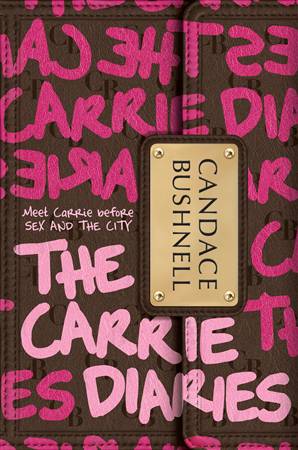
CANDACE BUSHNELL (YA)—The Carrie Diaries and Summer and the City: A Carrie Diaries Novel, about a young Carrie Bradshaw. I'm sure you've heard of, if not watched, the TV series Sex in the City.

How Good Is It?—I haven't read these books, but the professional reviews for Book 1 are quite positive.

Adult Overlap—Tons! According to reviewers, Bushnell is very successful at writing a teen Carrie who is turning into the person you've seen in Bushnell's adult novels and in the television series.


HARLAN COBEN (YA)—This author is well known for his mystery/suspense novels, especially the ones featuring Myron Bolitar. His first book for teens stars Myron's nephew, Mickey.

How Good Is It?—Here's my recent review of Shelter. The sex trade plot premise is pretty harrowing, and overall you get a kind of Alex Rider feeling. It's not a bad adventure series start.

Adult Overlap—As mentioned above, the hero is the nephew of this author's well-known adult character. But Mickey dominates the book; he even distrusts and avoids Myron!


RICHARD PAUL EVANS—You will no doubt either be thrilled or dismayed to learn that this author of maudlin, popular books like The Christmas Box has just had a teen superpowers novel published by none other than Glenn Beck. No, really! I read somewhere that RPE wanted to write a less violent heroic sci-fi/fantasy. The result is Michael Vey: The Prisoner of Cell 25 wherein teens have electric powers and are pursued by an evil organization that wants to harness those powers for nefarious purposes. ('Twas ever thus.)

How Good Is It?—Evans and possibly Beck fans are giving this book a lot of love on Amazon. I personally haven't read it, but it sounds like another solid teen adventure. One reviewer did mention the ethical/moral dilemmas Michael faces, which makes me hope it isn't too messagey.

Adult Overlap—None, except perhaps for the feel-good factor that characterizes Evans' adult work. Of course, this may work just fine in a good vs. evil sci-fi story!


JASPER FFORDE (MG)—The author of The Eyre Affair and other Thursday Next literary fantasy novels turns his hand to middle grade fiction. The Last Dragonslayer is already out in the UK, so I expect it to hit the U.S. next year.

How Good Is It?—This book has gotten a number of glowing reviews in the UK, and the plot sounds like a lot of fun: In a contemporary-type world in which magic has been fading away, a girl named Jennifer Strange runs an employment agency for washed-up wizards. But now something big is happening, and Jennifer's right smack in the middle of it.

Adult Overlap—None, but I predict you'll enjoy Fforde's style as applied to a new genre.


JOHN GRISHAM (MG)—Two books so far, Theodore Boone: Kid Lawyer and Theodore Boone: Abduction. (Trust me, Encyclopedia Brown is rolling over in his grave.)

How Good Is It?—Where do I begin? Perhaps with a quote from Leila Roy of Bookshelves of Doom, who remarked of Book 1, "As you've probably already predicted, I want to punch this book in the face." Here are her succinctly scathing reviews of the first and second books, along with my lightly damning review of Book 1 and two more reviews from Monica Edinger and Kim Werker, respectively. I'll just point out that Grisham breaks rules 1-3, 5-7, and most definitely rule 9 repeatedly. (See below.) Per Leila, he also throw in things I don't even touch on in my list, such as sexism, ethnic stereotyping, and trying to turn a supposedly contemporary town into some kind of lawyer-loving Mayberry. Too bad—I like the guy's adult fiction.

Adult Overlap—Technically none, except that Grisham never actually leaves the land of adults when writing these books. If only Theo were half as cool as 11-year-old Mark Sway from The Client!


KIM HARRISON (YA)—Known for her urban fantasy series about Rachel Morgan, she launched a young adult series with Once Dead, Twice Shy, about a girl named Madison Avery who dies, almost, and winds up caught between life and death, dealing with light and dark reapers, guardian angels, and more. There is the requisite teen love triangle, of course. The third book in the trilogy came out in May 2011.

How Good Is It?—Book 1 was a bit of a muddle as it tried to set things up, but Madison is a pretty appealing character. I haven't read the other two books; however, the pro reviewers gave Book 2 mixed marks and felt that Harrison really hit her stride with Book 3.

Adult Overlap—None. Harrison has built a different world from her adult fiction. It will remind you of a lot of the other YA paranormal out there, though.


SHARON LEE and STEVE MILLER (YA)—Fledgling, Saltation, and Ghost Ship take this husband-and-wife author duo's Liaden universe to the teen reader with heroine Theo Waitley, who is considered a "nexus of violence" at school but a potential spaceship pilot by her mysterious father and the powerful clan he left behind.

How Good Is It?—I'm a real fan of space opera and Theo Waitley is a very fun character. But if you haven't read the adult series, you might get lost at times.

Adult Overlap—Lee and Miller clearly continue the story they've been telling in their adult novels about Clan Korval with the Theo books, including scenes driven by adult characters. I like these YA novels very much, but then, I have read the adult series. The new books may be a little difficult unless your teen is an avid sci-fi fan and a fairly sophisticated reader.


KATHY REICHS—The creator of a series of adult novels about forensic anthropologist Temperance Brennan and the related TV series Bones has come out with two books about Temperance's teenage niece, Tory: Virals and next week's Seizures.

How Good Is It?—I haven't read these, but the reviews are pretty positive. Reichs is a seasoned writer who, like Harlan Coben, brings a knowledge of pacing and thrills to her new teen books.

Adult Overlap—Prequels about the adult series' heroine as a teen.


DAVID WEBERA Beautiful Friendship is a prequel to the author's adult novels about Honor Harrington; here we meet his heroine's ancestor, Stephanie, at ages 12 and 13. See my review.

How Good Is It?—Not bad, though he does wax pedantic and political in spots (as he does in his adult books, frankly!).

Adult Overlap—Prequel about an ancestor of the adult series' heroine.


PAUL WILSON—Another author who turns back the clock on the hero of his adult series, Repairman Jack, with Secret Circles and Secret Histories. Take a look at my review of Secret Circles.

How Good Is It?—The books read like an amped-up version of the Hardy Boys. Pretty good, but not great, especially as compared to the adult books. Wilson does deal with an intriguing moral dilemma in Book 2.

Adult Overlap—Prequels about the adult series' hero as a teen.


A Few Thoughts and Questions

Of these crossovers, how many are publisher initiated? Or market impelled?

Is the line between YA and adult fiction blurring to the point of disappearing? The audiences have certainly been mixing, but what about the books themselves? What continues to differentiate the two genres?

Compare also adult fiction about teens to YA books, which are always about teens... E.g., The Lovely Bones by Alice Sebold vs. Thirteen Reasons Why by Jay Asher.

Books about an adult series author's main character as a teen are a special bunch—they mostly seem to work, but do they have more appeal to people already reading the adult books than they do to the teens they supposedly target?

When adult authors start fresh, are the books more successful than when there's clear overlap?


And now...

Tips for Adult Authors Writing for Kids or Teens

Rule #1—Do NOT talk down to young readers.

Rule #2—Do NOT talk down to young readers.

Rule #3—Do NOT talk down to young readers.

Rule #2, for Real—Okay, I'll get a grip and give you a few more pointers. This may seem like the flip side of Rule #1, but please try to separate them: Do not blithely ramble into adult concerns or get all caught up in telling us about your adult characters because they're what you know and not-so-secretly like best.

Rule #3—Closely related to Rule #2 and even more important: The young main character should not only dominate, but drive the plot. Especially when it comes to solving the major plot problem. Though minor ones, too, of course. (Are you listening, John Grisham?)

Rule #4—Ease up on the setting descriptions. Lay it in, then move on. Kids don't want endless vistas; they'll feel like they've been dragged on one of those educational vacations in the family car by their parents: "Look at the beautiful scenery, my child!"/"Uh, right. How is this different from the beautiful scenery we saw five minutes ago?"

Rule #5—Watch out for anachronisms. No, today's kids really don't listen to the music or watch the TV shows that were popular when their parents were young.

Rule #6—Make sure you don't misrepresent children for their age group. One stunning John Grisham example was saying that 13-year-old boys have no interest in girls. You should be able to pinpoint the earlier "girls have cooties" stage, let alone know that middle school boys do have girlfriends, especially (for better or for worse) in the 21st century.

Rule #7—If you're writing any kind of action-adventure or sci-fi/fantasy, make the peril sufficiently perilous. And no matter what you're writing, challenge your main character! Children's or teen fiction does not equal tame. If this bothers you, keep in mind that kids know fiction is meant to provide experiences that are unlikely in real life. (The same reason adults read the Jason Bourne books or watch the movies.) Kids also watch a lot of TV, just like you. This should give you some inkling as to why characters in MG/YA books are able to sneak around and have some truly scary experiences without their parents noticing. For that matter, it's why the mothers in fairy tales are usually dead!

Rule #8—YA fiction can have sex and violence, but it is less likely to go into detail. (For examples of sex scenes that don't take pages and pages, see Melina Marchetta's Jellicoe Road or Simone Elkeles' Perfect Chemistry.)

Rule #9—PLEASE, PLEASE: Read extensively in the genre before you try it! For YA contemporary realism, start with Speak by Laurie Halse Anderson, Thirteen Reasons Why by Jay Asher, Looking for Alaska by John Green, Jellicoe Road by Melina Marchetta, Monster by Walter Dean Myers, and Dash and Lily's Book of Dares by Rachel Cohn and David Levithan, also Sarah Dessen's novels (e.g., The Truth about Forever and Along for the Ride). For YA paranormal, you obviously need to read Stephenie Meyer's Twilight, but should also try Holly Black's Tithe, Maggie Steifvater's Shiver, Becca Fitzpatrick's Hush, Hush, and many more. For YA dystopian, read Suzanne Collins' The Hunger Games, Uglies by Scott Westerfeld, Mortal Engines by Philip Reeve, and The Maze Runner by James Dashner. For YA fantasy, try Franny Billingsley's Chime, Cassandra Clare's City of Bones, Garth Nix's Sabriel, Erin Bow's Plain Kate, Terry Pratchett's Nation, Libba Bray's A Great and Terrible Beauty, and Tamora Pierce's Terrier, among others.

For MG, I hardly know where to begin. See my post about 110 years' worth of great middle grade fiction over in the right margin for starters. But my Top 5 if you're utterly clueless about MG novels would probably be Charlotte's Web by E.B. White, Charlie and the Chocolate Factory by Roald Dahl, Holes by Louis Sachar, Maniac Magee by Jerry Spinelli, and Harriet the Spy by Louise Fitzhugh. Okay, top 6: add When You Reach Me by Rebecca Stead. But there are soooo many more! (Adult to YA is less of a jump, which is probably why more people do it.)

Rule #10—YA fiction is about the overwhelming feeling of being on the cusp; not a child anymore, but not quite an adult. There's joy and there's darkness, uncertainty tempered by boundless hope. Things hit hard when you're a teenager. You care with every ounce of your being about things grown-ups might scoff at—uncomprehending, boring fools that they are. Most important, you do NOT think of yourself as a child. And always: your friends are more real and dimensional than anyone else on the planet.

MG characters aren't quite as self-absorbed as teen characters, but they are also relatively uninterested in adult concerns. They want to be up and doing! So let them out the door and into the bright, awaiting world.

What most adult authors bring to the MG/YA world is professionalism and a solid knowledge of storytelling. As long as they don't condescend to their young audience and aren't completely driven by commercial motives, I think they have something to add to the genre. (Are you listening, Philippa Gregory?)

Note: I'm sure I've missed some authors, so feel free to add suggestions in the comments. I would just ask that you stick to post-2000 examples.


Additions from the Comments

Amy of Amy's Library of Rock brings up James Patterson and Terry Pratchett, who strike me as representing the depths and heights of crossover work. I began reading Patterson's (or, as Amy implies, his ghostwriter's—looks like that would be Michael Ledwidge, who eventually gets credit as co-author) first Daniel X book and couldn't get through more than a couple of chapters because it was so blatantly created for commercial reasons following a market-driven template. If the later books improved, feel free to share! As for Terry Pratchett, I'd like to think that he honed his craft by writing the adult Discworld books before trying MG/YA fantasy in the form of The Amazing Maurice and His Educated Rodents, award winner Nation, and the wonderful Tiffany Aching books.