Saturday, February 26, 2011

A Review of Kat, Incorrigible by Stephanie Burgis

This book is due out in the United States on April 5th, but I cheated and ordered it from England a few months ago because it looked like a lot of fun. So my copy is called A Most Improper Magick and has a different cover, and this review is jumping the gun as far as North America is concerned. But that rather suits the title character, who is nothing if not impulsive.

As Booklist puts it, "This first title in the Unladylike Adventures of Kat Stephenson series evokes Jane Austen, Georgette Heyer, Alfred Noyes, and Libba Bray with tongue firmly in cheek." Which tells you quite a bit about what's in the mix: Regency England, the marriage market, wit, a highwayman, and—I guess Libba Bray's on the list because of the inclusion of magic in this particular setting, with reference to Bray's Gemma Doyle trilogy.

Kat Stephenson has a plan to save her family from financial ruin. Unfortunately, her big sisters tend to keep track of her, and Elissa puts a stop to Kat's swashbuckling enterprise. This is how the book begins:
I was twelve years of age when I chopped off my hair, dressed as a boy and set off to save my family from impending ruin.
I made it almost to the end of my front garden.
"Katherine Ann Stephenson!" My oldest sister Elissa's outraged voice pinned me like a dagger as she threw open her bedroom window. "What on earth do you think you're doing?"
Curses. I froze, still holding my pack slung across my shoulder.
Undaunted, Kat tries to come up with another tactic. Because she is not going to stand by and watch Elissa marry a horrid older man, Sir Neville, playing the tragic heroine just because Kat's brother Charles has gambled till the family is in dire straits. Then there's Angeline, who is secretly tinkering with magic herself and learning that love spells are bound to backfire in unexpected ways. Her subplot is one of the most clever things about this book, along the lines of "Be careful what you wish for."

Besides her sisters' troubles, Kat must deal with a threat of her own, as an organization of magically gifted grown-ups becomes aware of Kat's abilities and puts the pressure on. They are determined to take Kat under their wing and tutor her in magic, but she doesn't trust them one bit.

Kat's father is ineffectual and distracted, but her mother is the more interesting parent, even though she's deceased. Her magical abilities are considered a shameful family secret. It's only because Kat is so nosy that she finds out Angeline has gotten her hands on their mother's magic books. As Kat admits, she isn't above a bit of blackmail when necessary. And she is eager to experiment with magic herself, leading to a whole new plan of attack, not to mention a lot more trouble.

Throw in a highwayman, a wicked stepmama, and a villain with secret, unpleasant motives, and you've got Kat, Incorrigible.

This book is a fairly light read, but it is eminently likable, especially due to the humor, much of which is generated by Kat's exuberant personality. Furthermore, Kat and her sisters are an entertaining trio whose interactions should ring true for anyone who has sisters. (I have four myself, so I know I can relate!)

Book Two is titled A Tangle of Magicks, at least in England. It's due out in April, as well, only across the Atlantic. I'm almost positive I hear Amazon UK calling my name....

Update, 5-25-11: Here's an interview with author Stephanie Burgis at the Enchanted Inkpot!

A Review of The Rise and Fall of Mount Majestic by Jennifer Trafton

I was trying to think of the right word to describe this book, and the list I came up with began with "gleeful" and went on to "playful," "giddy," "whimsical," and "a rambunctious romp." Which should begin to give you an idea about The Rise and Fall of Mount Majestic. Or, as Ingrid Law puts it in a cover blurb, "Magical! A buoyant, lively debut." Here's a sample, moments after we've been introduced to our heroine, Persimmony Smudge:

But then her hat had blown away, and with it all her heroism. It was a large-brimmed blue hat with embroidered fruit all over it. It looked more like a drowning apple tree than a hat, but she loved it. Usually she felt invisible—a poor girl with worn-out clothes, a forgettable face, and hair that was neither golden yellow nor chocolate brown nor fiery red, but rather like dirty dishwater. People didn't notice her, but they noticed her hat. It made her feel less Smudge-like.
Persimmony is one of a cast of colorful characters, including a guy named Worvil who has made worrying into an art form, a Rumblebump court jester named Guafnoggle, an army captain who's far more interested in poetry than fighting, a potter who makes pots that give people what they need most (not what they want!), and an amazingly bratty king who's about ten years old and likes making up words his teacher, Professor Quibble, will fuss about. King Lucas the Lofty is such a huge fan of pepper that he eats it with everything, and the island's pepper mill has become an oppressive place in its endless attempts to please the small monarch's palate.

After Persimmony breaks one of Theodore's magic pots and gets lost in the forest, she eavesdrops on the Leafeaters, a group of elf-like people obsessed with politeness. They live under the forest, where they complain about the humans. Most people don't go in the forest at all because of the poison-tongued jumping tortoises, which live in the trees and are really vicious. And the Rumblebumps choose their Grand Stomper using an orange starfish, and there's a mutiny at the pepper mill, and Worvil goes to the Snoring Cave and actually sees the giant's face, and Leafeaters Rhedgrave and Rheuben have been put in the stocks, while Persimmony winds up in the soup...

Uh—there's a lot to keep track of here. But it's all very fun, so just go with the flow! The most important plot point, which I don't mind spoiling since it's spelled out on the flap copy, is that Persimmony lives on an island with a mountain in the middle, and it turns out there's a giant sleeping beneath the surface of the earth. He's the reason Mount Majestic rises and falls daily, carrying Lucas's palace with it. When Lucas has somebody dig for gold in the dungeons, following the advice of a magical lyre, they do find gold, but are able to identify it as an enormous belt buckle.

Meanwhile, the Leafeaters are digging, too, down at the foot end of things, and someone should probably stop them before the unthinkable happens and the giant wakes up.

The author has a good time with her decidedly wacky premise. The tone of this one reminds me a little of some of my favorite older fantasies, such as Carol Kendall's The Gammage Cup and The Whisper of Glocken or Natalie Babbitt's The Search for Delicious.

The Rise and Fall of Mount Majestic is such a cheery, frolicsome book! Its antics are complemented by illustrations from Brett Helquist, whose name you might recognize. He's the artist who brought Lemony Snicket's A Series of Unfortunate Events to life. The book jacket is especially nice, and I like the deckle page edges, as well.

We get a few messages tucked in here and there—things like "Don't be a selfish brat unless you want to be really lonely" and "Who knows what the future may bring, so enjoy the moment." Every so often this book feels frenetic, and you may find yourself wishing for a quiet interlude... Fortunately, there are a couple of those, too. Come along with Persimmony as she exercises more common sense and courage than just about anyone else on her island, trying very hard to keep the giant under the ground from waking up.

A Review of The False Princess by Eilis O'Neal

This book reminded me a little of Palace of Mirrors by Margaret Peterson Haddix, which also deals with the idea of decoy princesses. Here we meet Princess Nalia the day after she turns sixteen, when she learns that, despite her upbringing and training, she is not really a princess, let alone the heir to the throne of Thorvaldor. Because of a dire prophecy, she has been merely a placeholder until the real Nalia can be brought to the palace.

The king and queen scarcely do right by Nalia, now known by her birth name of Sinda. They send her to live with her aunt, who turns out to be a dyer in a small village. Sinda's aunt can hardly stand her, and that's even before Sinda turns out to be inept at the smallest task involved in creating dyes. Aunt Varil's hostility is only one of the reasons Sinda suffers in her new life: she misses her best friend, a young aristocrat named Kiernan. But she is so miserable about her suddenly-low status that when he comes looking for her, she turns him away with harsh words.

For a time it seems that Sinda will be comforted by a village boy named Tyr. Ultimately, however, what changes is that Sinda learns she has magical ability. She returns to the capital, hoping to study in the college of wizards. Instead she winds up working as a scribe/apprentice to an eccentric magic-maker named Philantha. In time Sinda reconnects with Kiernan and even meets her replacement. In doing so, she discovers a conspiracy so convoluted that it will require the help of her friends as well as her own efforts to untangle all the skeins. Along the way, her peril grows greater, as does the danger to everyone else involved—until the day comes when she must face the entire court and tell the truth without losing her life.

This is a good story, a sort of fairy tale for teens. It's interesting to see an inversion of that childhood fantasy, "Am I really a misplaced princess, adopted by these commoners?" Looked at the other way round, the question seems especially pertinent for teens, who worry, "Am I really anything special?" By the time this story is over, Sinda has made a new place for herself in the world, though not one she would have anticipated a few years or even a week or so earlier, when she was struggling to get along with her resentful aunt. In fact, she plays at least five distinct roles in The False Princess, reminding me a little of the way young adults change their college majors, let alone their life plans. I doubt this is what the author specifically had in mind, but I do think the book is well suited to representing the kind of transitional uncertainty often felt by, say, sixteen- to twenty-three-year-olds.

Because Sinda is pretty unhappy for large chunks of the book, she is sometimes a bit depressing to hang around with; however, she guts it out, and that makes her rather appealing. Here's Sinda arriving at her aunt's cottage:

My aunt was a tall, thin woman with an angular set to her bones. Her hair was light brown, with strands of gray running through it, and her nose was long and sharp. I didn't see much of myself in her. We studied each other for a moment, and then she exhaled a puff of breath through her nose.
"You look like her," she said. "Your mother."
In my mind, I saw the queen, who was all softness and grace, whereas I had always been small and dark.
As if she could see my thought, my aunt pursed her lips. "I mean your real mother." It was a dry voice; it reminded me of reeds clacking together.
"I hope..." I licked my lips to wet them. "I hope that I have not inconvenienced you too much. It seems that you are my only living relative, and they could not think where else to send me."
My aunt looked at me for a long time, then barked at the footman, "Bring her things in, if she has any." Then, to me: "Well, you might as well come inside, too."
She turned, the light from the lantern suddenly hidden behind her body, and I followed, wanting whatever scrap of brightness I could find to push back the dark.

Solving the mystery behind Sinda's role as a substitute princess takes us in various surprising directions, some of them more fast-paced than others. (The part about researching the prophecy dragged a little for me.) In general, one of the best things about this book is the plot twists, but I also enjoyed Sinda's friendship with Kiernan, which is obviously heading toward something more. Though I wasn't completely surprised to see it, I was still pleased to note that Sinda's change in station had absolutely no affect on Kiernan's loyalty and affection.

In addition, I was intrigued by Sinda's relationship with her adoptive mother, the queen, who must give Sinda up without looking back after raising her for sixteen years. The glimpses O'Neal chooses to show us of the queen's feelings are poignant, all the more so because the queen tries so hard to keep her struggles in this regard to herself. There's some nice character work in The False Princess, alongside pleasing dollops of magic, adventure, and romance.

Note for Worried Parents: You'll find a little oblique talk about sex and some kissing at one point in this book for teens.

A lot of bloggers have weighed in on this one. Here's a
review at Charlotte's Library that provides links to a few other reviews.

Saturday, February 19, 2011

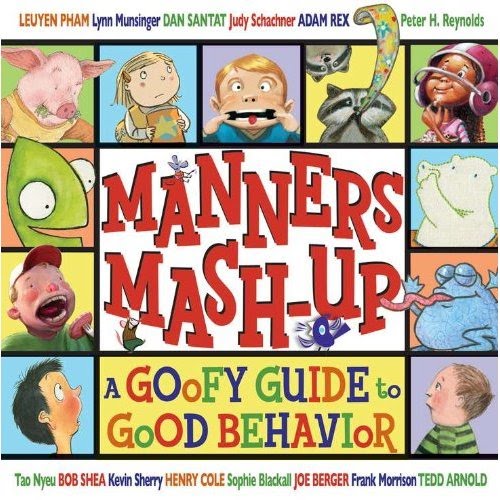
A Review of Manners Mash-up by a Bunch of People

Perhaps you've seen Why Did the Chicken Cross the Road? or Knock, Knock! by a team of terrific children's book illustrators, in which each artist presents a different take on the same theme. Now you can head to the library or bookstore in seach of the latest in this innovative series—Manners Mash-Up: A Goofy Guide to Good Behavior. This is definitely my favorite of the three, worthy of taking its place on the shelf next to such helpful manners books as Sesyle Joslin and Maurice Sendak's classic What Do You Say, Dear? and What Do You Do, Dear?

What's really great about this book—and the reason kids will like it—is that it mostly shows what not to do, though the written rules explain what should be done. That makes Manners Mash-up an outrageous demo of over-the-top behavior, as illustrated with great gusto by a top-flight array of illustrators. Each one addresses manners in a particular setting, starting with the school bus. I'll give you one or two of my favorite rules and illustrations from each spread.

Bob Shea, "Bus Manners": Here the animals match the rule-breaking, as the bear demonstrates the opposite of "Don't soak your seatmate with sleep drool," the skunk shows "Say 'excuse me' when you make a smell," and the giraffe doesn't do too well at "Try to keep your head in the bus," for example. The one about the driver is the best, also the most out there, but I'll leave you to discover that one for yourself.

Lynn Munsinger, "Cafeteria Manners": Featuring a darling cast of pigs, this spread shows us how not to break rules like "No food fights" and "Don't take all the desserts."

Henry Cole, "Don't Stare At": This one is going to please the bathroom humor crowd. It takes place in the main office of a school (with human characters), and includes several key things that should not be stared at, such as "Funny Outfits" and "Gross Things on People's Faces."

Leuyen Pham, "Playground Manners:" More animals! The chimps are throwing sand in the sandbox and a groundhog is hogging the ball, but there are some sweet ones, too, among them "Always watch out for little ones" and "Give friends a boost."

Peter H. Reynolds, "Classroom Manners": We're back to human children with Reynolds, who has the kids demonstrating positive rules with dialogue in voice bubbles. For example, beneath "Ask nicely" a girl says, "May I borrow the purple crayon, please?" (surely an allusion to Harold), while beneath "Share," the boy sitting next to her replies, "My pleasure, Holly! I have an extra one. Keep that one!"

Tedd Arnold, "Good Sports": Probably my favorite, but then, I'm a sci-fi/fantasy buff. Here we get to see "The All-Alien Slimeball Championship" on some moon or planet... There are only four rules, and each is illustrated by a little three-panel cartoon strip. Though the rules are ordinary, the way they play out is not. For instance, when one alien throws a slimeball, another eats it with a GULP and the coach says, "Eating the slime ball is against the rules. You're benched!"

Adam Rex, "Table Manners": The author-illustrator of Frankenstein Makes a Sandwich gives us a mad scientist attempting to have a nice, civil dinner with Igor and a three-headed boy he apparently created in his lab. (The good doctor looks like John Waters, if you ask me.) When the mad scientist says, "And chew with your mouths closed—were you raised in a barn?" the reply is quite literal. And what possible response is there to this instruction? "Igor—don't slouch."

Judy Schachner, "Party Manners": At first glance, Schachner's style doesn't seem to lend itself to poop jokes, but they're there... She can't resist playing with the idea of party poopers! And then we get a girl carrying an alligator I'm not entirely sure is stuffed, plus a raccoon in a party hat hanging upside down from a tree. Favorite rule? "Whack the piƱata. Not your friend."

Frank Morrison, "Be a Good Visitor": So far, the cast of characters has been nicely diverse, and now we get a living room gathering that consists mostly of African Americans. "Help out if you're asked" is a great idea, though "Don't play ball in the house" provides a more striking visual. I like the way the adults in this one look like they're at their wit's end over the kids' antics.

Sophie Blackall, "Good Behavior at the Doctor's Office": Sophie gets a little surreal with rules like "Prosthetic legs aren't toys." Watch out for the lady whose head is no longer attached and the child commandeering the receptionist's telephone, not to mention the doctor's name.

Dan Santat, "Proper Behavior at the Theater": Each rule at this opera performance has its own "do not" icon. You can imagine the one accompanying this admonishment: "Please don't pick your nose and leave the boogers under the seat. That spot is saved for old chewed gum wads only. Yummy! Yummy!"

Joe Berger, "Supermarket No-No's": "Don't eat all the free samples" shares shelf space with "Always take cans from the top of the stack" and, best of all, a warning about the produce section.

Kevin Sherry, "Pool Rules": These rules are pretty typical, but I like the artwork, especially the inclusion of a giant octopus who is just hanging out near the shallow end for some reason. Plus there's a nice big sign on top of the bathroom advising kids not to pee in the pool.

Tao Nyeu, "Please Don't Pick in Public": Yeah, this one's all about what not to pick! But the most astonishing thing about Nyeu's spread is that it's done in needlework. Which means that, not only is it darling, but a supposedly staid medium is used to show some decidedly unstaid activities. All animals again; I think my favorite is the crocodile picking his scabs, with a mouse saying, "Ew."

The last spread is a satisfying finale, giving us a small self-portrait or photo of each illustrator with the answer to this question: "What was your goofiest manners mishap?" Peter Reynolds's is a little off-topic and Bob Shea's is just plain weird (though kinda funny); the rest are pretty amusing. For some reason, I especially like the image of a two-year-old Dan Santat throwing chicken bones at the other diners in a restaurant.

So there you have it—a detailed modeling of mostly bad manners which should nevertheless provide fodder for a classroom or family discussion of good manners. What exactly does it mean to be polite? Why do we have rules like that in the first place? And hey, just what's wrong with asking total strangers why they're fat? (You should probably get your finger out of your nose and say "excuse me" before you answer these questions.)

A Review of Ribbit Rabbit by Candace Ryan and Mike Lowery

I met Candace Ryan at an SCBWI Conference in Los Angeles a few years ago, and every once in a while we get together to talk shop. A couple of weeks ago I attended her book launch for Ribbit Rabbit at Once Upon a Time in Montrose, California. (Cool children's bookstore—I want to go back!)

You should understand that Candace has a gift that makes for a particularly intriguing type of picture book—she's a master of wordplay. I'm guessing she's good at Scrabble, too!

In Ribbit Rabbit, Candace uses a mere smattering of words to create an entire plot about two friends and their interactions. Here's how the story begins:
Frog and Bunny are BEST friends.
Ribbit Rabbit.
Rabbit Ribbit.

They go swimming together.
Ribbit Rabbit.
Dip it, dab it.
Amazingly, all of the pair's activities, including a quarrel-and-making up scenario, are then chronicled using the same rhyme pattern. I think my favorite phrase is what is said when they eat peanut butter sandwiches. And there's a whole subplot about a robot toy which leads to a couple of new sounds on the very last page...

Illustrator Mike Lowery has a refreshing new illustrative style that plays particularly well in this book made up entirely of non-white pages of various hues. The predominant colors are beige, blue, green, and a brown-orange shade. A gray background is used only once, when the friends have quarreled.

Lowery's figures are drawn quite simply, but their facial expressions manage to say a great deal, e.g., when Bunny is shown wrapping something, his brows furrowed and his little tongue sticking out with concentration. (Note the child awareness there: a grown-up wouldn't sweat over the task of wrapping a gift, but it's a pretty challenging activity for a little kid.)

I like the way Frog and Bunny engage in imaginative play, the kinds of things they fight over, and the earnest way they make up. The few sentences given in addition to the rhymed phrases are thoughtfully selected. The author has a particularly good way of explaining what happens when two friends quarrel—how fighting can start out small and grow bigger. "Until every BIG and little thing makes them fight." Then after Frog and Bunny have quarreled, we are told, "And they find themselves all alone." Accompanied by a rather poignant spread showing each one on one side of the page, separated by a tall pile of toys, fiddling with two pieces of the toy they have pulled apart. This theme has been covered in dozens of picture books, but there's something especially sensitive about how it is handled in this book.

So, while lots of people out there are rhyming, few of them are creating stories quite as complex and emotionally satisfying as Ribbit Rabbit. It makes me smile to think that Candace's rather sophisticated wordplay is put through its paces in the seemingly humble context of a book for small children. The teacher in me says that little kids will not only like the sounds of this book and the way its story unfolds, they will also broaden their unconscious awareness about the possibilities of language.

Tuesday, February 15, 2011

Linda Gerber and Writing Tips

It's raining outside, which always makes me want to curl up with a book and some hot chocolate. Instead I shall venture out to teach my students and exercise my windshield wipers.

But first, I wanted to let you know that I have a guest post about how to write fresh up at Linda Gerber's very cool author blog today. Even better, Linda has created a weekly roundup of various posts from around the Blogosphere that offer writing tips. You will find the list of links at the bottom of my post. If you're writing, whether children's books or adult fiction, take a look! (I think my favorite is "Victims Are Not Sexy" with its comments about book-hurling readers and how to make your main character more proactive.)

Monday, February 14, 2011

I Heart the Cybils Winners

It's Valentine's Day, and you know what that means: a red, heart-shaped box of Cybils winners! Let's hear some book love, folks! Because the Cybils Awards famously attempt what some cynical souls call impossible, selecting the best children's books of the past year in terms of both literary quality and kid appeal. (They also give things like graphic novels and poetry their own categories, which is gratifying.)

Here is the link to the full list of winners. Happily, it's annotated so that you can get a feel for just why these bibliophilic blogger judges chose the books they did.

I should know, since I was a Cybils judge for middle grade sci-fi/fantasy. Take a look at the book jacket for the winner in our category, along with this ever-so-lovely blurb, which I shall not deny having a hand in writing:
Who wouldn't want to explore a house haunted by paintings that won't come off the walls and three colorful talking cats that slink in and out of attics as well as other dimensions? When Olive Dunwoody moves into a strange old house with her absent-minded mathematician parents, she falls headlong into the mysteries of the past and the dangers of the painted worlds. The judges especially liked the clear kid appeal created by The Shadows' humor, pacing and suspense, but they also admired the small-scale world-building and the metaphor-rich, well-crafted language in this fantasy novel from first-time author Jacqueline West. A book any teacher, librarian, or parent could easily sell to reluctant readers and skilled readers alike.
Congratulations to Jacqueline West and to all of the winners! There were two full rounds of judging involved in selecting these books and the final list is a nice little treasure trove, so check out the top picks and see if you've missed something you and your child would really love reading.

Saturday, February 12, 2011

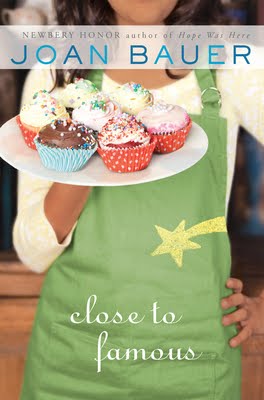
A Review of Close to Famous by Joan Bauer

You know how some authors are so reliably good that you simply buy their next book on auto-pilot, sight unseen? Joan Bauer is on that list for me. I especially liked Squash and Rules of the Road, but I've been pretty darn happy with all of her books. Now I've just finished her latest, Close to Famous, and while I wasn't quite as fond of it as I have been of some of her other titles, it nevertheless boasts Bauer's trademark strengths, including an appealing main character, colorful-yet-real secondary characters, and a small-town feeling of people pulling together to help each other. In my experience, this author's books are always feel-good reads, without being overly sentimental.

I was pleased to see that Close to Famous also features a main character who is half African American and whose mother is African American. This is inserted subtly, and once again (sigh) the jacket barely seems to indicate it. (Foster's hair is curlier in the book, for instance.) But it is there, I am happy to report.

When the story begins, Foster McFee and her mother are on the run from Mom's abusive boyfriend, an Elvis impersonator. They find shelter in a small town where someone kind gives them a tow, someone else kind gives Mrs. McFee a job, and the tow truck people then give them a place to stay. I would like to think that this would really happen. I'm sure it has, somewhere out there.

But I haven't even gotten to the good stuff, which is that Foster is incredibly talented as a self-taught young cook, especially when it comes to baking. At the same time, she is incredibly un-talented at reading. In short, she can't read, though she covers it up like a champion.

Now, as Foster spends the summer making connections with people like a young would-be documentary filmmaker and the actress who's hiding out from the pain of her all-too-public dumping by a big-time Hollywood flame, she finds that her secrets are coming out.

Plus she's worried about the location of a certain pillowcase that contains the few items she has remaining after her soldier father's death in Iraq.

Will this young cupcake maker be able to get in touch with her hero, TV chef Sonny Kroll? Will Miss Charleena ever come out of her house again? Will Foster's mom be recognized as having a star's voice, not a backup singer's? Will Macon ever make a documentary about the new prison down the road? Will Foster learn to read?

Quite probably!

Now for some quibbles... I have to say that I found the events of this book a little rushed. I wished for a slightly longer book to let things unfold more organically. Even so, I loved these characters and was hooked into their story.

The learning-to-read subplot felt didactic at times, yet it resonated with me overall, particularly because I have a dear friend who didn't learn to read till she was 18, faking it in all 11 of the schools her drug addict mother dumped her in for 10 years running. I am happy to report that my friend went on to get her GED and graduate from high school at the age of 32. (Like Foster, my friend has a learning disability. I'm guessing Close to Famous will be a Schneider Family Book Award nominee next year!)

One odd note: The author uses present tense for the first two chapters (the escape), then switches to past tense for the rest of the book. Plus there's a flashback in one of those chapters, which is of course in past tense. This back-and-forth with the verbs is distracting, but only for a few minutes, when you might find yourself, as I did, turning back pages and trying to figure out what's going on. It's smooth sailing after that.

In a Bauer book, however, strong characters, humor, and great dialogue far outweigh any minor concerns. For example, pay attention to the way Foster learned to cook in the first place—by falling hard for the art (initially with a friend) and working her butt off till she got it right, relying on listening and memory because she couldn't read the recipes. In an age when too many kids grow up scarcely lifting a finger to pick up their gym socks, it's great to see a kid who embraces a vocation and really puts in the required effort to make it happen. Eventually, Foster applies this same kind of effort to the far more daunting task of learning to read. Her determination and hard work are just a couple of the many nice things about this character. To begin to understand how endearing this kid is, watch Foster doing an episode of her so-far-imaginary cooking show:

I put on my shooting star apron, got out my baking pan, opened the refrigerator, and took out tortillas, tomato sauce, salami, and cheese.
"Today on Cooking with Foster we're going to make smiling pizzas for sad days." I put two tortillas down on the pan, spread red sauce over them, and sprinkled on mozzarella, garlic powder, and onion.
"Be careful the cheese doesn't go over the edge or it'll spill over on the pan and start smoking. That can make your whole kitchen stink. I'm going to turn the oven dial to four-fifty." I did that, smiling. "And now I'm getting my best knife"—I held it up—"and I'm slicing a thin round of salami into a smiley shape just like this. Don't make it too thick...."
Then Foster tells us about sad days and matter-of-factly relates that to losing her father in the war before she takes the mini-pizzas out of the oven.

Thank you, Joan Bauer, for giving us a girl to care about, as well as people to care about her.

Note for Worried Parents: This is listed on Amazon as a book for teens, though it reads as upper middle grade to me. Foster's mother is not extensively abused, but she does get hit by her boyfriend, who later stalks her and her daughter. That isn't the dominant story line, however; it's just one of many plot threads. I would be happy to share this book with middle school students and most fourth and fifth graders, as well.

Update: Peter D. Sieruta wrote about Close to Famous this week on his blog, Collecting Children's Books. He makes an interesting connection between an epic theatrical performance from his boyhood in Detroit and Foster's actress friend, Miss Charleena.

A Review of Saraswati's Way by Monika Schrƶder

If you liked the film Slumdog Millionaire, take a look at Saraswati's Way, a YA novel about a young math whiz living in a small village in the Indian countryside.

Akash's life is not good, and it's about to get worse. His teacher has been kind enough to tutor him on the side, but has already taught Akash everything he knows. Akash won't be able to get more schooling without a scholarship because his family has no money. His mother is dead, and his father works very hard to support the entire household, including Akash's ruthless grandmother, who will hear no wrong spoken of her eldest son, Akash's uncle, even as he drains the family's limited financial resources with his opium addiction and gambling.

The loan shark who owns their farm insists on being paid the back rent he's owed despite the drought, and then the unthinkable happens: Akash's father dies. (Sorry for the spoiler, but it happens pretty early in the book, your basic inciting incident.) Akash has barely stumbled through the mourning rites when the creditor comes calling and the boy's grandmother sends him to work in Kumar-ji's quarry, ostensibly to pay off the family's debts. Except—Akash sneaks a peek at the quarry ledgers and swiftly calculates that none of the workers ever actually get out of debt; their debt even increases. Determined to escape what is clearly a life of slavery, Akash hops a train and runs away to New Delhi, hoping to continue his math studies somehow.

Once there, he joins a little gaggle of boys living in the train station and becomes a street kid before he can find his way, or rather, Saraswati's way. Saraswati is the Hindu goddess of knowledge and the arts. Akash prays to her, worrying about his future. He also frets over the past, especially an odd incident with his father and a tortoise shortly before the man's death. Akash tries to figure out how his father's last words might be fulfilled, which seemed to indicate that he will be able to achieve his dreams. He eventually learns that the quick road to his goals is dishonorable and is not meant to be.

This is a fairly quiet book, or at least a serious one, but Akash's adventures keep it moving forward as readers wonder what he will do next and how he will fulfill his dreams. We also get an excellent introduction to what India is like. While the author's descriptions of New Delhi and various aspects of Indian culture occasionally feel pedantic, they provide an intriguing glimpse of a way of life that many young readers may never have encountered before.

In addition, we learn a little about Akash's math prowess and strategies, some of which are even derived from the ancient Hindu scriptures, the Vedas. (Saraswati is the Vedas's patron deity.) Math ability isn't always honored in children's literature, so this was a nice aspect of the book. I especially like how Akash uses his talent to overcome some of the problems he encounters. And, perhaps even more important, Akash learns to value his integrity. After a disastrous encounter with a drug dealer, he seems unlikely to compromise it again.

I'm afraid we really don't have enough reader-friendly books set in countries like India. Add Saraswati's Way to your list of multicultural titles about genuine kids living their lives in other lands.

And by the way, what a pretty cover! Did you notice the numbers literally written in the stars?

I will mention that Saraswati's Way feels a little rushed in spots. Lately, I'm beginning to suspect a conspiracy on the part of publishers pushing plots to move faster, ever faster! In any case, the book ends a bit abruptly, with solutions to Akash's woes which seem to come too easily. Then again, whether his fairy godmother is Saraswati or a kindly street vendor, I think you'll agree that this boy deserves his happy ending.

Note for Worried Parents: At first I thought this was a middle grade novel. Akash is 12 and seems very much a tween. But the mature situations push it over into YA—homeless children, glue sniffing, scary drug dealers, and, at one point, a vague threat from a man who's obviously a pedophile.

A Review of The Big Crunch by Pete Hautman

I've seen this one recommended by a couple of bloggers and was intrigued by the idea of an "ordinary" high school romance. As the jacket flap puts it, "Jen and Wes do not 'meet cute.' They do not fall in love at first sight. They do not swoon with scorching desire. They do not believe that they are instant soul mates destined to be together forever. THIS IS NOT THAT KIND OF LOVE STORY."

Except—it is. But first I'll just mention that at least in this printing, someone screwed up: Throughout the actual book, the girl's name is not Jen, it's June, whereas she's called Jen for the entire flap copy. Thankfully, the boy is in fact named Wes on both the flap and in the book itself. Now...

1. The "meet cute" doesn't happen when Wes and June first meet; it takes place later, when they crash into each other during a late-night run to a convenience store and June's glasses are broken, giving her a black eye (hence the heavy makeup in the excerpt below).

2. I acknowledge that they don't fall in love at first sight. However, when they do make out, I would argue that they "swoon with scorching desire." Here Wes simply touches her face:

June nodded. She was having trouble breathing. His hand reached out and touched her cheek, a touch as soft as a breeze. She became acutely aware of her body, of every square centimeter of her skin, of the sound of air molecules striking her eardrums...
[This is Wes a few sentences later.] What was it about this girl, this fish girl with her fake aqua eyes too far apart and that thick layer of makeup? Wes could feel the pressure building in his throat, his chest, in his
groin, as if he was about to explode. Spontaneous Human Combustion. He had never felt this way around Izzy. His fingers still tingled where he had touched her cheek.

3. And if they don't feel like they're soul mates, why do they both pine so when this Romeo and Juliet are separated, to the point where Wes borrows a car (illegally, as it turns out) and drives all night to see her, feeling, well—driven?

Still, all evidence to the contrary, very late in the book June points out that they might break up at any time, and then their relationship will just become a nice memory. (Thanks for that, June! We were trying not to think about it!)

All this may sound like I didn't like this book, but you know what? I did like it. Very much! Because one thing the jacket flap gets right is that June and Wes seem like real people, which is the true strength of Hautman's book.

As a bonus, I love the cover; don't you? You will also find the artwork showing Wes and June in each of the four seasons used as section breaks inside the book (in black and white).

The Big Crunch is a leisurely examination of how two people slowly get to know each other, become attracted, and deal with creating a role for the new relationship in their less-than-cooperative lives. The random thoughts they have along the way are one of the things that make this book feel so real. That's where the "ordinary" factor comes in, giving the book a nice sauntering pace, a satisfying unfolding feeling. (Oh, and in case you were wondering what the title refers to, the "Big Crunch" is apparently the opposite of the universe's Big Bang. I know you can see the symbolism there!)

The villain of the piece, if there is one, would be June's dad, who moves his family randomly and frequently because of his work. It's especially funny seeing June's father, a motivational speaker, through Wes's eyes. June becomes a tiny bit more sympathetic toward her mother during the course of the book, or rather, more aware of her mother as a person with problems of her own. Her dad does show a touch of compassion at one point, which is nice.

A side plot about Wes's friend Jerry, who wants to be class president and whom June ends up dating more out of guilt than anything else, is fun because the guy is such a weirdly fresh character. Hautman's humor is one of the best things about this book. For example, when June and her friend Phoebe are watching Phoebe's crush in track practice, Phoebe yells "Go, Josh!" right as he jumps a hurdle, causing him to wipe out. Josh is angry, but as Phoebe later explains to June, "We made up. I just had to promise not to yell his name at any track meets." Subtle, perhaps, but funny. Plus it reflects the author's theme that young love is a bumpy road, every time.

Bottom line: I really enjoyed getting to know Wes and June and watching them flail around trying to figure out their relationship. I think you will, too!

Note for Worried Parents: This is a book for teens. There's some teen drinking with the requisite vomiting afterwards and the use of words like "bitch." No actual sex, but characters ponder the possibility.

Saturday, February 5, 2011

I Think Mice Are Rather Nice

Some years ago when I was teaching first grade, I posted Rose Fyleman's classic poem about mice on the wall. I remember one little boy, a kid who thought of himself as very cool, really fell in love with that poem. He used to stand there and read it to himself each morning.

What is it about mice? If we think too hard about it, they're invasive rodents, pests that call for traps and even exterminators. (Hint: Use peanut butter, not cheese.) But they're also awfully cute, with their babyish faces and small, clever bodies. They kind of look like little kids... And of course, there you have it. Which no doubt explains the numerous children's books about anthropomorphized mice!

I was particularly intrigued to note that two very famous children's authors came out with books featuring mice this spring—Lois Lowry and Cynthia Voigt, to be precise. Both of these authors are known for their serious, award-winning work for older middle grade readers. Lois Lowry is the author of the amazing book, The Giver, which won the Newbery in 1994, and of Number the Stars, which won the Newbery in 1990. Cynthia Voigt wrote the also-amazing Tillerman series, including Dicey's Song, the Newbery Award winner in 1983, and A Solitary Blue, a Newbery Honor book in 1984.

More recently, Lowry followed a string of serious books with a giddy tongue-in-cheek fairy tale, The Birthday Ball. And now there's this mouse book. Is she actually... having fun, our Ms. Lowry? And Voigt, of the rather dark, character-driven books—she wrote a mousy confection, too?

But I digress just a titch (mouse-like). Let me tell you about these books.

Bless This Mouse by Lois Lowry, illustrated by Eric Rohmann (April 12, 2011)

This is a sweet book, with a delightful main character in the form of Hildegarde, leader and even pastor of a clan of church mice. The story starts off with Hildegarde reprimanding a flighty young mother mouse for having another litter—too many mice, and the humans will catch on and call for a Great X, an extermination. (No actual mention of birth control, though!) We meet Hildegarde's friend Roderick, who appears to have a crush on Hildegarde. We also meet the thoroughly sniffy Lucretia, who would love to take over Hildegarde's position. And we get to explore the church building and spy on humans such as Father Murphy through mouse eyes, which is very entertaining.
Hildegarde rose from her night nest behind the expression pedal of the pipe organ. She always rose very early, particularly on Sundays, when the organist arrived to practice well before anyone else had entered the church. Sometimes Hildegarde scurried away just as he came up the stairs to the choir loft. But she had never been seen, and he had never noticed her small nest there, just behind the pedal where he placed his foot when he wanted a dramatic increase in volume. Sometimes the expression pedal was called the "swell" pedal because it caused the music to swell gloriously. But Hildegarde thought that was a rather vulgar term.


The Great X isn't Hildegarde's only fear for her people. A more immediate worry is the Blessing of the Animals, an event that will be moved indoors if it rains. An event bringing with it dozens of cats!

Hildegarde is clever, pragmatic, and likable as a main character who provides the narrative viewpoint. It probably won't occur to young readers that if she were human, she would be fifty or sixty. She comes up with plans for rescuing her clan from the various threats that hang over them and implements those plans nicely, with a few twists and turns along the way.

Hildegarde's character, the adventurous escapes from peril, the humor, and the mouse-eye view of the church are definitely the strengths of this book.

A couple of plot turns seem unconvincing, however, including a hint of romance and a final twist that tosses in fantasy elements not previously established. The scene also has Hildegarde acting in a way that seems a little out of character, aside from the general fact that she's courageous. You may find the ending reminiscent of Rabbit Hill by Robert Lawson (1945 Newbery winner) and even Elizabeth Coatsworth's tale, The Cat Who Went to Heaven (1931 Newbery Medalist).

Religion plays a relatively significant role in this book set in a church, so I suppose Bless This Mouse might be less appealing to families who aren't religious. Of course, you can always think of it as simply another setting and subculture in that regard.

I should note that this is a slim book at 152 pages, which will make it a good pick for younger or reluctant readers. I'm guessing 8 to 10 is about the right age range, or you can use it as a read-aloud with second graders.

Bless This Mouse has a few glitches, but it's well crafted and fun. I especially like Hildegarde's solution to those horrible sticky traps. (I used one once while I was living in Chicago. Never again!) Give this cheery little book a try and see what you think!


Young Fredle by Cynthia Voigt, illustrated by Louise Yates (January 11, 2011)

Although humor gleams through this book like the stars which so attract the title character's attention, Voigt quickly moves past cute to write a character-driven story, a coming-of-age tale, an exploration of life and what it means to be—okay, well, not human so much as mouse, but still, Fredle is a hero for the ages.

He reminds me of the boy Jonas in Lowry's The Giver in some ways (ironically)—the daydreamer and visionary who comes to question tradition and go his own way. Fredle has a natural curiosity, a little more than most mice. "Fredle was curious about curiosity, and he did wonder if mice weren't right to be afraid of it." The only other mouse that seems to share his feelings is his girl cousin Axle. Together the two get into mischief in the house where they live. Their family of kitchen mice is conservative in its approach to danger and good health: The word "went" is used as a verb to describe dying and as a noun to describe the state of death in Fredle's clan. In fact, if a mouse is ill or injured, he is put out on the kitchen floor to die so that he won't endanger the others. Unfortunately, when Fredle and Axle find a Peppermint Pattie in the pantry and eat the entire thing, he gets so sick that his family thinks he's dying and shoves him out into the pantry. The cat would be happy to deal with him, but the human Missus can't quite bring herself to kill a baby mouse and carries him outside instead, dumping him in the backyard.

Talk about a fish out of water! Fredle isn't even sure what he's looking at half the time. It doesn't help that at this point he is still pretty sick. Having discovered dirt and grass, he encounters the lattice around the porch, a new hiding place:

...Fredle made his way cautiously toward the bright white wall. He pushed his way through the stalks, trying not to let his nails dig into the soft floor, because how could he know that his feet wouldn't sink so deeply into the softness that he'd be trapped? He trod as lightly as he could—and, being a mouse, that was very lightly—until he arrived at the wall with openings all along it as small as mouseholes, and some of them so low he could easily peer through.
He saw a shadowy light beyond the wall, and the odd floor smell was stronger in there. Nothing moved that he could see or hear, although it wasn't the same kind of empty quiet as a nighttime kitchen. Waiting beyond the white wall there seemed to be a dark, quiet territory, crowded with shadows and smells and sounds too soft and fine even for his ears, as if it was inhabited by creatures much smaller even than a mouse.
Most importantly, it smelled and sounded and felt safe, which the green stalks and bright air behind him did not. So Fredle scrambled up through one of the holes and tumbled down into darkness.


Note that none of these things (the dirt, the grass, and the lattice) are named at this point, so that readers have to figure out what Fredle's seeing right along with him. Thanks to Voigt's craft, Fredle's experiences feel very real. You will no doubt get a sense for what it's like to be a small, vulnerable animal out in the big world as you read this book. (You may just find your whiskers twitching!)

Little by little Fredle learns more about the backyard. He is sort of assisted by a field mouse named Bardo, though he quickly realizes that this new mouse is holding out on him and has a fairly limited interest in Fredle's survival. The compost heap holds food treasures for Fredle to nibble, but he must watch out for owls and other predators. Bardo's sister Neldo ends up being more helpful, as well as more open to getting to know Fredle.

Fredle also has encounters with the dogs; one of them, Sadie, is fairly friendly. And he avoids the cats, who are decidedly unfriendly. Besides which, Fredle gets to see the stars. He loves the stars!

But one night Fredle finds the garbage and is investigating the sweetness at the bottom of an almost-empty ice cream carton when he is captured by the Rowdy Boys, a crew of raccoons who save him to eat later.

The raccoons are one of Voigt's best creations. They keep Fredle prisoner for a few days, and it becomes clear that their leader, Captain Rilf, enjoys the mouse's company, if only because Fredle is nearly as smart as he is, unlike the other raccoons. But true to his nature, Rilf does plan to eat Fredle eventually, and Fredle must figure out how to escape and make his way back home. The odd little relationship between Fredle and Rilf is just one of the many nice touches in this book. And watch for the way the raccoons laugh; even better, note how Fredle picks up their style of laughing and takes it back home with him, to the astonishment of the other mice!

When Fredle does get back into the house, it is not to stay. He is not the same mouse he used to be. He meets the cellar mice first. To his surprise, they live in a sort of boring utopia free from predators. And Fredle's family really doesn't know what to make of their prodigal son, who is no longer amenable to every single one of their traditions.

On a poignant note, the formerly bold Axle has had an adventure of her own, but her reaction to the experience is far different from Fredle's.

Of course, one of the issues facing writers who anthropomorphize animals is how far to go with it. Voigt's mice are the perfect balance of very typical animal behaviors and human-like personalities. For example, the mice who live in the barn are stoic about the black snake who lives there, too. (Bardo remarks philosophically that the snake only eats one mouse every so often, so it's no big deal.)

And then there's Sadie, who is such a dog, playful and loyal and a little dense. Fredle helps her out at one point, and she later helps him, too.

All kinds of things happen, weaving in and out of the young mouse's world. When the human baby gets sick, Sadie worries a great deal, and Fredle is astonished to see that the baby comes home again, healed—as opposed to being left out on the human equivalent of the pantry floor to be "went." It's all rather intricate, considering the apparent simplicity of a mouse's life. Among other things, Fredle's understanding of the meaning of "home" changes along the way. His initial impulse is nothing more than to get back inside the house with his family, but eventually his hopes broaden even as his literal horizon has broadened.

I suppose this is a book for thoughtful children, as descriptions such as the one excerpted above take a little patience to read. But really, I think "becoming Fredle" might fascinate any reader but the most reluctant.

To tell you the truth, I'm not usually a fan of talking-animal books. But this one really got me. Fredle's adventures and evolution are just that good.


MORE MOUSE BOOKS

The following is a list of some of the many nice mouse books available in children's literature:

Picture Books

--Anatole (and sequels) by Eve Titus, illustrated by Paul Galdone
--Angelina Ballerina and sequels by Katharine Holabird, illustrated by Helen Craig
--Beatrix Potter's mouse stories, including The Tailor of Gloucester, The Tale of Two Bad Mice, The Tale of Mrs. Tittlemouse, The Tale of Johnny Townmouse, and The Story of Miss Moppet
--City Mouse, Country Mouse by Aesop—various illustrators, perhaps most notably Jan Brett
--If You Give a Mouse a Cookie by Laura Joffe Numeroff, illustrated by Felicia Bond
--Kevin Henkes' mouse stories, including Julius the Baby of the World, Lilly's Purple Plastic Purse, and Lilly's Big Day; also Sheila Rae the Brave, Wemberly Worried, Owen, Chrysanthemum, A Weekend with Wendall, and Chester's Way (fantastic books, every single one!)
--Library Mouse by Daniel Kirk
--The Lion and the Mouse by Jerry Pinkney (Caldecott winner 2010)
--The Little Mouse, the Red Ripe Strawberry and the Big Hungry Bear by Don Wood
--Little Mouse's Big Book of Fears by Emily Gravett
--Maisy (and sequels) by Lucy Cousins
--Mice Twice by Joseph Low
--Mouse Mess by Linnea Riley
--Mouse Paint by Ellen Stoll Walsh (and sequels)
--The Princess Mouse, retold by Aaron Shepard, illustrated by Leonid Gore
--The Story of Jumping Mouse by John Steptoe
--The Sugar Mouse Cake by Gene Zion, illustrated by Margaret Bloy Graham (out of print and hard to find, but worth it)
--A Visitor for Bear (and sequels) by Bonnie Becker, illustrated by Kady MacDonald Denton
--Whose Mouse Are You? by Robert Kraus, illustrated by Jose Aruego


Easy Readers

--Geronimo Stilton series, starting with Lost Treasure of the Emerald Eye
--The King, the Mouse, and the Cheese by Nancy Gurney, illustrated by Eric Gurney (a classic!)
--Mouse Tales by Arnold Lobel


Middle Grade Fiction

--Babymouse series by Jennifer L. Holm and Matthew Holm
--Basil of Baker Street (series) by Eve Titus
--Ben and Me: An Astonishing Life of Benjamin Franklin by His Good Mouse Amos, by Robert Lawson
--The Black Paw, etc. (Spy Mice series) by Heather Vogel Frederick, illustrated by Sally Wern Comport
--Miss Bianca and other books by Margery Sharp (see also the Disney movie, The Rescuers)
--The Mouse and His Child by Russell Hoban, illustrated by David Small (a classic, rather somber, about two clockwork mice)
--The Mouse and the Motorcycle, Ralph S. Mouse, and Runaway Ralph by Beverly Cleary
--A Mouse Called Wolf, Martin's Mice, and The Mouse Butcher by Dick King-Smith
--Poppy by Avi, illustrated by Brian Floca
--Redwall and other books in the series by Brian Jacques
--The Sands of Time by Michael Hague
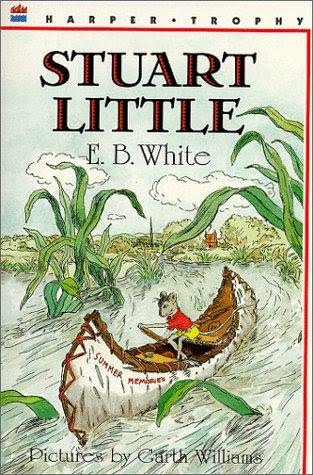
--Stuart Little by E.B. White
--The Tale of Despereaux by Kate DiCamillo
--Tucker's Countryside by George Seldon, illustrated by Garth Williams


Young Adult

--Maus I and Maus II by Art Spiegelman (graphic novels about the Holocaust)


And of course, that's not counting mice who are strong secondary characters, such as Reepicheep in the Narnia books and Willie Fieldmouse in Lawson's Rabbit Hill. Plus movie and cartoon mice like Jerry of Tom and Jerry fame and his alter-ego, Itchy of the Simpsons' "Itchy and Scratchy Show," not to mention all those mice in Disney's Cinderella and Mickey Mouse. (I won't get into their cousins the rats except to give a shout-out to Ratatouille.)

Face it, our culture has quite the love affair with fictional mice! Perhaps it's only fitting that the very talented Lois Lowry and Cynthia Voigt have chosen to add to the mouse canon.


Mouse Book Suggestions from the Comments

--Jean Van Leeuwen's Lost Treasure series, starting with The Great Cheese Conspiracy (middle grade fiction)
--A Nest for Celeste by Henry Cole (MG)
--mouse characters in Felice Holman's Cricket Winter, which was reissued a few years ago (MG)
--Ernest and Celestine picture books by Gabrielle Vincent
--mice in And Then There Were Gnomes, #2 in the MG graphic novel series Guinea Pig, Pet Shop Private Eye, by Colleen AF Venable, illustrated by Stephanie Yue
--Mouse Goes Out and Mouse Has Fun, early readers by Phyllis Root, illustrated by James Croft
--Ned Mouse Breaks Away, a surreal little MG by Tim Wynne-Jones, illustrated by Duran Petricic
--mice in Mrs. Frisby and the Rats of NIMH by Robert C. O'Brien (MG)
--the Tumtum and Nutmeg series by Emily Bearn (Adventures Beyond Nutmouse Hall and The Rose Cottage Tales)

Feel free to list your favorite mouse books in the comments if I've missed them.

Note: I requested copies of Lowry's and Voigt's books from the Amazon Vine program.

Friday, February 4, 2011

Springy Giveaway Winner

Daffodils don't grow very well here in Southern California for lack of a winter, but I have a pot of mini-daffs on my window sill and a daffodil screensaver up on my computer. I will confess, in the interest of veracity, not smugness, that the tree by my front gate is blooming like a bride. Which gives me L.A. guilt as I read the news on the Internet about drivers on Lake Shore Drive in Chicago being stuck in the snow and about the blizzards on the East Coast. Anyway, spring being here is clearly some kind of illusion, or, as Amy of Amy's Library of Rock put it in the comments, "Okay, silly California person with your warped science fiction climate!" But you can at least wish and hope for spring, and for daffodils, even with snow piled up to the rafters, right?

In any case, we have a winner! Saskmom will be receiving a signed copy of my picture book, The Secret-Keeper.

Saturday, January 29, 2011

Thoughtful Picture Books You've Never Heard Of

I have a shelf in my library that's just for the sort of picture book of which reviewers tend to write, "This might appeal more to adults than children." Or at least, for the kind of book called "quiet," the kind for thoughtful children: philosophical, contemplative books. And because I'm in a contemplative mood myself, today I thought I'd share a selection of such books. (Some of them are out of print, just so you know.) I'll match up the ones with similar themes.


How to Paint the Portrait of a Bird, by Jacques PrƩvert, illustrated by Mordecai Gerstein

The first book is not actually in my house at all. I loaned it to a 17-year-old student who is doing an art project about birds and is using it for visual reference (along with half a dozen other picture books about birds!). Gerstein, author/illustrator of the more familiar The Man Who Walked Between the Towers and the recent metafictive work, A Book, has got to be one of the most creative people in picture books today, right up there with Emily Gravett. Here he has taken a poem by a French surrealist poet and made it into a stunning picture book about creativity, art, and hope. A boy artist tries to capture a bird in his painting—literally. The bird is alternately a muse, a work of art, and a kind of friend. The boy is patient in a way that few children are, but it's not a bad idea to present young readers with the possibility of such patience.


To Everything There Is a Season, Ecclesiastes (The Bible), illustrated by Leo and Diane Dillon and Turn! Turn! Turn!, Ecclesiastes (The Bible) and Pete Seeger, illustrated by Wendy Anderson Halperin

These two books are celebrations of that beautiful passage in the Bible about the changing seasons of life. Halperin specifically bases hers on Pete Seeger's lyrics, which are drawn from Ecclesiastes. Each of her watercolor illustrations is presented in a circle, evoking the mandala as well as the circle of life and other classic seasonal imagery. And each circle is broken into smaller illustrations that reflect the verses on the page. This is the kind of book where you sit and look at each part of each spread, commenting together with a young reader or just thinking by yourself.

Much as I like Halperin's take on the famous words from Ecclesiastes, I have no qualms about saying that Leo and Diane Dillon's book is even better—though perhaps less kid friendly. Well, unless you have an older child studying art history. No, really. The Dillons illustrate each couplet with a different art style from around the world. There's a nice annotated list at the end of the book explaining all this. Suffice it to say that they include everything from Inuit stone-cut art to shadow play from Thailand, from Russian icon paintings to Japanese woodcut. (No Impressionism here, but Europe is represented. The spread shown above, which you will no doubt guess is inspired by Egyptian art, illustrates "A time to be born and a time to die.") It's all very beautiful and inspiring in a way I can't even explain. Just try to get your hands on this book!


The Little Stone Lion, written and illustrated by Kim Xiong

This is a simple book written in the voice of a small stone lion who is the guardian spirit of a Chinese village. He speaks in measured tones of his role protecting the village. And—that's about it. But there's a good feeling to this book, which is quietly upbeat in spite of being illustrated in dim, nearly monochromatic tones. While it's not exactly a hot addition to your children's book collection, there's just something nice about this haiku-like book. If you like rock gardens and classic Asian poetry, take a look at The Little Stone Lion.


Thank You, World by Alice B. McGinty, illustrated by Wendy Anderson Halperin; Homeplace, by Anne Shelby, illustrated by Wendy Anderson Halperin; and Love Is, 1 Corinthians 13 (The Bible), illustrated by Wendy Anderson Halperin

Hmm. I hadn't realized how many of these were illustrated by Halperin! Actually, I don't have Love Is, but it obviously complements Turn, Turn, Turn, listed above. Thank You, World has a sort of Good Night Moon rhythm as a child's voice expresses thanks to things like the sky, the sun, and the grass. What makes this one really great is that each spread is accompanied by art showing children in eight different countries around the world: the U.S., Mexico, Bolivia, France, Mali, Saudi Arabia, India, and China. So we see how the kids interact with whatever is being thanked in the text. (Pair this book with Jeannie Baker's Mirror.) A great choice for showing children that kids around the world do and care about the same things.

Shelby and Halperin's Homeplace tracks a house through generations of the same family somewhere in small-town America. The house gets additions, and so does the family as members come and go, love and grow. Halperin creates a feel of ordinary intimacy with her watercolor artwork. It's one of the coziest books you'll ever read and is also an excellent introduction to ideas like heritage and the passage of time.


The Fox by Margaret Wild, illustrated by Ron Brooks

I was reminded of this book when I saw it on a blog list of best Australian picture books while participating in the Comment Challenge a few weeks ago. There are times I'm not sure I even like this book, but it's gorgeous in a brooding, brutal way. Aesop's fables meets YA dystopian fiction—that's the tone here. You know those YA novels where the girl has a nice relationship with the boy next door, and then she is seduced away by the false promises of a hot bad boy, only to learn that he is using her and go back to the first boy, emotionally damaged by her experience? It's that story, only with friendship instead of romance. Plus the boy is a dog and the girl is a magpie. Oh, and they are both crippled and help each other with their disabilities. Then there's Fox, whose hunger has envy and malice in it. The artwork is brilliant, but sort of scary, all blacks and oranges and a touch of blue. Even the text is written by hand in a rough, apocalyptic style. The title character himself is the most stunning incarnation of "fox" you'll ever see, his oranges blazing across the duller backdrops. The author, aptly named Margaret Wild, sets up a sweet little scenario of friendship and then proceeds to destroy it. And yet, the last page leaves us with a flicker of hope.


This Is a Poem That Heals Fish by Jean-Pierre Simeon, illustrated by Olivier Tallec

This is actually a book about defining poetry, or a book showcasing a poem about poems, but it doesn't really matter because the story is a happy meander through a world where various neighbors, relatives, and even canaries are willing to pause in their work (or their singing) to take a stab at defining poetry, all because a boy is asking. And he is asking because his goldfish is sick, dying of boredom. One of my favorite couple of lines in the book is his mother's response to the problem: "—Hurry, give him a poem! And she leaves for her tuba lesson." There's also a quiet humor to the way the boy replies to each definition of "poem" he's given: "—Oh...? Okay." There's a bit of metafiction going on as the boy puts all of the definitions together into a poem about poems which he recites to his sick fish, but the fish has a response of his own, giving the book's ending the kind of twist you expect to find at the end of a good poem. Of course, the definitions are tiny poems in their own right. They'd make a good writing prompt; you could have kids write their own definitions of what a poem is and create a class poem. Here's an example from the book, the canary's definition: "A poem is when words beat their wings. It is a song sung in a cage." The canary's name is Aristophanes. Of course.


The Weaver by Thacher Hurd, illustrated by Elisa Kleven

I like both Hurd and Kleven, and while I don't know if this book quite works in some ways, it makes me smile because it's lovely and symbolic and expresses a great fondness for the world and all the people in it. The author and illustrator envision a young girl in a red dress high up in the sky who weaves our days—the beauties of nature, each smile and moment—then sort of flings them over the world into being. Pragmatic children may question the concept. But there's a nice feeling to this book, and I think it makes a very soothing bedtime story. The Weaver quietly emphasizes the way all of us share the same world.


I Want to Paint My Bathroom Blue by Ruth Krauss, illustrated by Maurice Sendak, and
I Am Cherry Alive by Delmore Schwartz, illustrated by Barbara Cooney

Okay, maybe you've heard of these two. Both are written in a child's voice, and some might argue that they're a little self-conscious that way. On the other hand, I think both of them do a good job of capturing the joie de vivre of childhood. Krauss's book is just a ramble of dreams, beginning with words that seem ordinary but gradually lead us into the world of the imagination: "I want to paint my bathroom blue—my papa won't let me paint it blue—once I painted a rocking-chair blue and it was pretty. I want to paint my kitchen yellow and my sitting-room white with turtles and all my ceilings green." The dreams then move off in a new direction, and then another. It's slight, and it ends rather abruptly, but it moves readers into a place they might not otherwise go, a place Harold might have created with his purple crayon. Instead of a story starter, this book is a dream starter. Sendak's illustrations, as always, are just right.

I Am Cherry Alive is a proclamation of uniqueness, far more convincing than the stuff generated by hopeful self-esteem movement types. Its words are heartening, and the illustrations are just plain pretty. The book begins: "'I am cherry alive,' the little girl sang./Each morning I am something new./I am apple, I am plum, I am just as excited/As the boys who made the Halloween bang:/I am tree, I am cat, I am blossom too." Besides Krauss and Sendak's book, try pairing this poem about a child imagining herself to be any number of things with Don and Audrey Wood's Quick as a Cricket. Or with Sendak's Really Rosie.


Switch on the Night by Ray Bradbury, illustrated by Leo and Diane Dillon, and
The Boy and the Cloth of Dreams by Jenny Koralek, illustrated by James Mayhew

Bedtime stories are a dime a dozen, and Mercer Mayer's There's a Nightmare in My Closet is the quintessential book for soothing kids who are frightened of the dark. But here are a couple of unusual, touching books that address the same issue. Switch on the Night is Bradbury's one and only picture book, first published in 1955. Whichever editor chose the Dillons to illustrate this new edition was a genius (1993, with a reprint in 2004). The book tells the story of a little boy who is afraid of the dark. When night comes, he turns on every light in the house. And he is still scared of the night, lurking outside. Then a little girl named Dark comes and points out that the boy isn't switching off the light, he's switching on the night. She introduces him to the beauties of the night, and he goes outside and plays with other children who are there enjoying a moonlit romp. (You might want to pair this one with The Moon Jumpers by Janice May Udry, illustrated by Maurice Sendak.) Of course, a lot of people don't let their kids play outside after dark these days, except maybe in the backyard. But the book still works, especially when the boy and his new friend figure out that switching on the Night also means switching on the crickets, the frogs, and the stars. Here Bradbury's text really begins to soar, overcoming a certain didacticism. The book is further elevated by the illustrations, some of the Dillons' most stunning ever.

The Boy and the Cloth of Dreams is a sort of allegory, yet it works as a story. What's really marvelous is that the illustrator created a real "cloth of dreams" for the jacket and endpapers, framing his watercolor narration. When the story begins, a small boy (he looks about five) tears the cloth of dreams his grandmother made him—a very special blanket. When she first spread it over his cradle, she said, "It will keep the dark night things away...but only, of course, until he is big enough to forge his own courage." Now, when the boy wakes with nightmares for the first time ever at his grandmother's house because the cloth is ripped, he must seek her help. But instead of simply comforting him, she explains that he must go to the top of the house by himself and fetch the threads of moonlight and sunlight that she needs for mending the blanket. This book is a quest book, a fairy tale, and a story about growing up, all within a very small space. When you read it, you'll appreciate why the tone of the text is slightly elevated, like the storytelling of a Homer or a Tolkien. The illustrations are rich and mythical, dark and mysterious, yet touched by gold. It's no surprise that The Boy and the Cloth of Dreams was one of the New York Times best illustrated books of the year in 1994.


When I Heard the Learn'd Astronomer by Walt Whitman, illustrated by Loren Long

I suspect mostly grown-ups would appreciate this book, in which Walt Whitman's poem is brought to life by Loren Long's artwork. The poem is small, the narrative slight, and the paintings rather dark. And yet—what a wonderful poem. What elegantly effective illustrations. Perhaps a slightly older child will appreciate the meaning of the moment captured by this book, in which a young boy accompanies his parents to hear a lecture by an astronomer and winds up going outside to just look at the night and the stars. There are a couple of nice touches here. For one thing, Loren Long adds spot illustrations of rocket ships and stars done in pencil by his own young sons on the white pages bearing the text opposite the deeply colorful narrative paintings. And I like the Einstein quote included on the last page. (Pair this with Billy Collins's poem, "Introduction to Poetry," perhaps.)

This is a good book to end on, with the image of a boy looking up at the stars alone, thinking and dreaming. Because, much as I love a rowdy story like The Three Little Pigs or No, David!, sometimes it's best to go slow, and to let your imagination find its own path. Perhaps one of these books will help you—and your young reader—to do just that.

See also my Amazon Listmania list, "Simply Beautiful Picture Books."

Note for Worried Parents: The little girl in I Am Cherry Alive is very innocently nude in a couple of the illustrations, e.g., when she goes swimming in a pond. And, as I explained above, The Fox is awfully dark in tone for the picture book crowd. Perhaps older children would enjoy reading and discussing it.

Update: Thanks to Tabatha for this link about an award-winning short film based on the same poem Gerstein used, To Paint a Portrait of a Bird.

Friday, January 21, 2011

A Review of Small Persons with Wings by Ellen Booraem

All you other MG fantasies out there, beware: this is the one to beat in 2011! Funny, poignant, and original, Small Persons with Wings carves out an instant niche for itself in the world of children's literature.

Mellie Turpin is the first-person narrator, explaining that she still hasn't lived down her kindergarten humiliation as the girl who claimed she had a fairy and then couldn't prove it. Fidius had played with her endlessly—until she said she wanted to take him for show-and-tell. Then he disappeared, leaving her to face the wrath of a class full of five-year-olds who soon came up with a nasty nickname for chubby Mellie: Fairy Fat. To top things off, Mellie's artistic parents, who had seemed to accept Fidius's existence as real, called him her imaginary friend when questioned by the horse-faced school counselor. Under the weight of so much betrayal, Mellie told herself sternly that there was no such thing as fairies and retreated into the world of facts. She dedicated herself to earning straight A's and became a minutiae-spouting know-it-all, especially with regards to numbers and art history. For years she continued to be bullied by the other kids, still called Fairy Fat.

Now 13-year-old Mellie's parents have received word that her dad's father has died and they have inherited his old inn. The Turpins move there, planning to renovate the inn and sell it. Only once they arrive, things get weird fast, beginning with the introduction of one of the book's most marvelous characters, a fairy named Durindana. Mellie is in the pub part of the decrepit inn when she sees something fall out of the chandelier. As she gets a closer look, she panics:
No, no, no, not again not again notagainnotagainnotagain...
...Options: (a) Unfreeze, run out the door; (b) Count the bricks in the foundation; (c) Both of the preceding options; (d) Stomp on her, just in case.
There's never a school counselor around when you need one.
Eventually Mellie realizes that the fairy is terrified of her and, um, drunk. Looks like Durindana has been into grandpa's liquor! She starts babbling in French, but eventually switches to English, calling Mellie a "warm dolt." (The Parvi are very chilly to the touch, capable of leaving freezer burn on human skin.) In talking to Durindana, Mellie finds out more about the fairies, enough to realize that her parents have known about them all along! Mellie storms off to confront them. She's just spent eight years being bullied and forcing herself to worship facts, and for what? "All the time I'd been counting stuff and organizing stuff and keeping King Kong under control, I could have been reading Roald Dahl."

Mellie's parents confess that the Turpin family has a long tradition of sustaining the Parvi Pennati or "small persons with wings" (apparently they hate being called "fairies"). While she stews over that one, the police chief who lives next door shows up with his son Timmo in tow. He's suspicious about Grand-pĆØre's death. Mellie wonders if Timmo might become a friend, but quickly rejects the idea: she's been treated too badly to believe that's possible.

Next a strange woman named Gigi who says she's the real estate agent comes along and pokes her nose into things, obviously using some kind of magic to get people to do what she says. Gigi doesn't seem quite human, though Mellie can't figure out why. After that the entire SPWW tribe moves into the inn's pub, which they redecorate using illusion in a French Baroque style to rival Versailles. Timmo finds out about the Parvi and gets roped into the subsequent adventure involving a missing ring that holds part of the diminutive tribe's magic. But Gigi wants the ring, too. And the grandfather clock on the second floor of the inn just won't shut up...

The portrayal of the Parvi as a sort of madcap miniature version of the French court is hilarious, but the real heart of this book is Mellie. She's prickly, she's stubborn, she's soft-hearted, and she's very real, not to mention a wonderful narrator. Here's another excerpt:
Left temporarily to myself, I wandered down to look at the Bishop's Miter Pub, which I'd never been alllowed to see. I stood out on the sidewalk for a minute, enjoying the fresh air. A freckled kid about my age came out of the regular two-story house next door and started walking over. Oh great, I thought. Animal life. He was pretty scrawny, but he looked to be my age. His light brown hair was longish and straightish and flipped out at the ends like a misshapen ski hat.
The boy, Timmo, is another solid character, as are Mellie's parents, who are surprisingly nice. (Booraem has said she did this on purpose. She was tired of all of the terrible parents in children's literature!)

In addition to the humor, the adventure, and the magic, Small Persons with Wings has a strong anti-bullying theme. Mellie is the main victim of bullying, but if you count carefully, I think you'll find that there are four more victims in this book. Yet Booraem doesn't let her story get bogged down by her theme, instead weaving it naturally into the narration. And she has the good sense to show how Mellie changes in her response to bullies rather than simply punishing them or removing them from Mellie's orbit.

About the only thing I found distracting were a few passages explaining the different types of Parvi magic. Otherwise, the book flows beautifully. The missing ring is found and turns out to be capable of conveying the truth to people and destroying all illusion. Only, as the author points out, would that really be such a great thing? Magic starts flying fast and loose, with Gigi menacing everyone and more than one plot twist to keep readers guessing.

There's also a lovely idea about Mellie "growing into her grandeur" that I know you'll like. So find this book. Read it. And stop using the F word. Because obviously, the correct term is "small persons with wings"!

Also: Check out the interview with Ellen Booraem at The Enchanted Inkpot!

Note for Worried Parents: This is a book for middle grades. I will mention that one of the tricks the bullies play on Mellie is to put a tampon in her back pocket as she goes up to solve a math problem on the board. So there are a couple of references to that. Then we get some drinking by both fairies and by Mellie's grandfather, who is an alcoholic and needs to get help.