Well, pretty soon I'm off to a complete geek-fest, a sci-fi/fantasy conference appropriately titled Life, the Universe and Everything. I fully expect the answers to, well, everything! (Wasn't it the white mice who knew that? Or their computer did? I guess it was just the meaning of life. That would be sufficient for me, too.)
Anyway, I will be back blogging next weekend. I may even give you some info from the conference! Can't go wrong with workshop titles like "Lloyd Alexander: High King of Fantasy," "Mary Sue and Gary Stu: Avoiding the Dreadful Downfalls of Bad Fiction" (a panel), "Cryptography 101," "Military in Fantasy," "Space Eldritch," "How to Kill a Zombie," (I thought they were already dead!) and my personal favorite, "Everything I Need to Know about Writing I Learned from the Matrix." That's merely a sampler from the first day.
Best of all, the keynote speaker and and sometimes panel member is Megan Whalen Turner, quite possibly the best writer in MG/YA fantasy today. Yep, be envious. Be very, very envious. And read some good fantasy this week!
Showing posts with label Megan Whalen Turner. Show all posts
Tuesday, February 12, 2013
Sunday, January 22, 2012
Queen's Thief Week at Chachic's Book Nook
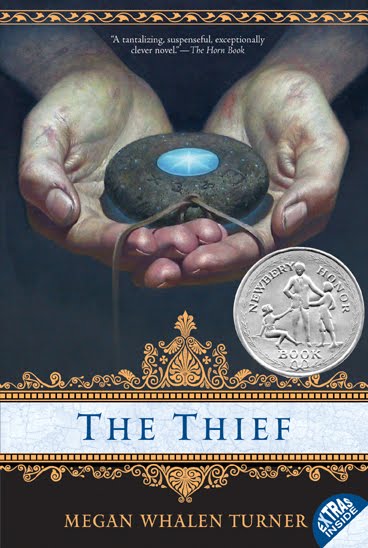
One of the most intelligent, dimensional, and rewarding MG/YA fantasy series out there today is Megan Whalen Turner's Queen's Thief books: thus far The Thief (a Newbery Honor winnter), The Queen of Attolia, The King of Attolia, and A Conspiracy of Kings. Thanks to Chachic of Chachic's Book Nook, you can read all about it during Queen's Thief Week, jump starting yesterday but officially posting January 22-28.
Her first guest post is by noted fantasy author Sherwood Smith, whose Crown Duel and other books are also favorites of mine. Though there are a few spoilers, Sherwood manages to keep them to a minimum as she gives a brilliant analysis of the four books.

Today's guest post is by Checkers from Sounis. I'll translate that: Checkers is one of the moderators at the series fan blog. Her gift to you is a really great list of SFF books recommended by Sounis participants over the past few years. (I can't even begin to describe how smart this bunch of Queen's Thief fans are!)

For those of you who haven't tried the books, they tend to read like historical fiction with just a touch of fantasy. Well, the world-building certainly qualifies them as fantasy; Turner has created a group of kingdoms centered around a sort of Byzantine Greece, complete with gods who make themselves known occasionally, to the chagrin of people like her main character. The author's greatest gifts are elaborate plots, rich characterization, and a subtle sense of humor. Follow Gen (Eugenides) from prisons to palaces in this complex, challenging, and utterly satisfying series.
Of course, the fun over at CBN will continue for another six days. Thank you, Chachic!
Update: Guest posts by Melina Marchetta, Sarah Rees Brennan, and even Megan Whalen Turner herself! Not to mention posts from uber-fans Holly and Angie, who are also bloggers of note. Don't miss the comments, which include dialogue between Marchetta and Turner about being tourists in Rome, among other cool conversations.
Tuesday, July 19, 2011
Queen's Thief Series Honored
YES!!! Megan Whalen Turner's Queen's Thief series has won the 2011 Mythopoeic Fantasy Award for Children’s Literature! If you are a fan of fantasy, court and political intrigue, adventure, and complex character development and you haven't read this series, you are really missing out.(FYI, the 2011 Mythopoeic Fantasy Award for Adult Literature went to Karen Lord's book, Redemption in Indigo.)

Together with the L.A. Times Book Prize to A Conspiracy of Kings for best YA book of 2010, this award to the Queen's Thief series should put to rest the fuss from certain awards committees that shall not be named, a fuss which denied Turner's books her due because "they couldn't stand alone." Others have complained that the books are too sophisticated for young readers, and while I might not hand them to a 9-year-old, I would certainly consider them for a thoughtful 12-year-old, let alone a teen.
Alone or together, Megan Whalen Turner's books are among the best in the business.
Thursday, May 5, 2011
Conspiracy of Kings Takes Home the Prize
It's about time! Those of us who are endlessly impressed by Megan Whalen Turner's writing in her Queen's Thief series have been a little frustrated this year as various committees have said of her latest, "Yeah, the book is very good, but it's part of a series, and since we're not convinced it can stand alone, we won't select it for this prize" (to, um, paraphrase).

So if a book from a series is waaaay better than any of the standalones, it's nevertheless out of luck, essentially by default?
But the most wise L.A. Times Book Prize committee rose above all that and chose A Conspiracy of Kings for its best Young Adult book of 2010, as announced this past weekend. Hooray!
Congratulations to the marvelous Ms. Turner, whose craftsmanship, subtlety, and world- and character-building enchant readers and fellow fantasy authors alike.
Of course, A Conspiracy of Kings did get five starred reviews! I will just add that this series is so intelligent that some people say the books are too smart for kids, to which my response is, "There are some pretty smart kids out in Readerland."
Note for Worried Parents: Book 1, The Thief, a Newbery Honor winner, is considered (upper) middle grade fiction, but the rest of the series is being marketed as YA (for teens). I know a lot of adults who also read the books. Kids who like sophisticated fantasy by writers such as Diana Wynne Jones, Susan Cooper, Terry Pratchett, N.D. Wilson, and J.R.R. Tolkien should give these a try! Book 2 does begin with a rather upsetting (violent) event, but the series builds from there, using that pivotal event in thought-provoking ways, so see what you think based on your child's maturity.
See my review from last year here.

So if a book from a series is waaaay better than any of the standalones, it's nevertheless out of luck, essentially by default?
But the most wise L.A. Times Book Prize committee rose above all that and chose A Conspiracy of Kings for its best Young Adult book of 2010, as announced this past weekend. Hooray!
Congratulations to the marvelous Ms. Turner, whose craftsmanship, subtlety, and world- and character-building enchant readers and fellow fantasy authors alike.
Of course, A Conspiracy of Kings did get five starred reviews! I will just add that this series is so intelligent that some people say the books are too smart for kids, to which my response is, "There are some pretty smart kids out in Readerland."
Note for Worried Parents: Book 1, The Thief, a Newbery Honor winner, is considered (upper) middle grade fiction, but the rest of the series is being marketed as YA (for teens). I know a lot of adults who also read the books. Kids who like sophisticated fantasy by writers such as Diana Wynne Jones, Susan Cooper, Terry Pratchett, N.D. Wilson, and J.R.R. Tolkien should give these a try! Book 2 does begin with a rather upsetting (violent) event, but the series builds from there, using that pivotal event in thought-provoking ways, so see what you think based on your child's maturity.
See my review from last year here.
Sunday, March 27, 2011
The Loss of Diana Wynne Jones
I woke to the news that Diana Wynne Jones passed away night before last. (Thanks, Charlotte's Library.) Due to some random difficulties I will not get into, I will not be posting reviews this weekend, but I really must acknowledge such a tremendous loss to the world of children's literature in general and fantasy in particular.Did you know that Diana Wynne Jones was a major influence on Megan Whalen Turner as well as Neil Gaiman? (Um, and on me?) She actually hooked Megan up with her editor at Greenwillow.
And yes, there's a reason Diana received a Lifetime Achievement Award from the World Fantasy Association in 2007.
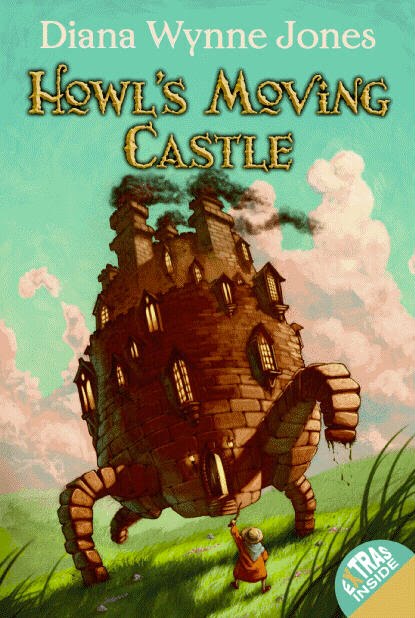
Diana's fantasy is known for its humor, its intricacy, and its creativity. Perhaps you're familiar with her book, Howl's Moving Castle, which was made into an animated feature film. And who else has ever used a conga line as a magic weapon, as in her adult fantasy novel, A Sudden Wild Magic?
And yes, there's a reason Diana received a Lifetime Achievement Award from the World Fantasy Association in 2007.
Diana's fantasy is known for its humor, its intricacy, and its creativity. Perhaps you're familiar with her book, Howl's Moving Castle, which was made into an animated feature film. And who else has ever used a conga line as a magic weapon, as in her adult fantasy novel, A Sudden Wild Magic?Here is my detailed post about Diana Wynne Jones and her work, "The Queen of Children's Fantasy," from a year or so ago. See also my review of her book, Enchanted Glass, which was published last year.
Good-bye, Diana. You will be missed very much.
Note: Look for one last book, Earwig and the Witch (for younger readers), this fall.
Update: Two more links from Charlotte, an obituary in The Guardian and thoughts from Neil Gaiman. See also Amy's thoughts at Amy's Library of Rock.
Really good update: Judith of Misrule has compiled an extensive list of links to obituaries and musings on the great Diana Wynne Jones. Thank you, Judith!
4/13/11 update: We have a Diana Wynne Jones tribute post up at the Enchanted Inkpot. (Thanks, Grace Lin!) You can stop by and leave your own thoughts about Ms. Jones in the comments.
Really good update: Judith of Misrule has compiled an extensive list of links to obituaries and musings on the great Diana Wynne Jones. Thank you, Judith!
4/13/11 update: We have a Diana Wynne Jones tribute post up at the Enchanted Inkpot. (Thanks, Grace Lin!) You can stop by and leave your own thoughts about Ms. Jones in the comments.
Friday, April 16, 2010
Trickster Fiction
I have tricksters on the brain right now, probably because A Conspiracy of Kings just came out and Megan Whalen Turner's trickster Gen is one of my favorite characters of all time. I know why I like Gen, but what, really, is the appeal of the trickster? I suspect that readers delight in being surprised, if only on the page. In real life, a trickster makes us uneasy or even angry. But watching someone else get bamboozled—now, that's entertainment! We feel like we're in on the con, a sort of "Ocean's Two" of trickster and reader, especially when we find ourselves pitted against a ruthless and powerful foe—say, a Mede and his entire army. (Art above left is from Fred Marcellino's award-winning Puss in Boots.)Tricksters often seem to read as minor gods, or at least, not as major ones—perhaps because they play the additional role of court jester to more dignified mythological figures like Zeus on his great throne or Apollo in his golden chariot. In contrast, there's something kind of tacky about a trickster, more than a slight resemblance to a two-bit grifter or a pool shark. Tricksters are shady, slinking down alleys and flashing bright, untrustworthy grins. They're the kind of characters you expect to get their throats cut early on in Sam Spade stories.
Although the most famous tricksters come from world mythology, Lewis Hyde and others state that the archetype represents eccentric real-life geniuses, e.g., Leonardo da Vinci, Einstein, and Picasso. Such figures think outside the box, thoroughly upsetting the status quo. They walk into the meeting late, tell jokes while everyone else is completely focused, and then, just as a sensible, well-organized plan has been decided, point out a flaw nobody else noticed, but which suddenly seems glaringly obvious and problematic. You occasionally love having these people around, but are just as likely to hate them.

Loki from Norse mythology, Coyote and Raven of the Southwest and Northwest Native American traditions, Hermes and Pan from the Greek myths, British Jack and Puck, Irish leprechauns, Brer Rabbit from the American South, Reynart the Fox from France, Nasreddin of Islamic tradition, the Chinese Monkey King and the West African Anansi, Jewish Hershel of Ostropol and the Nordic Till Eulenspiegel—the list goes on and on. (Check out this discussion of tricksters and a longer list on Wikipedia.) That's not counting modern incarnations like Bugs Bunny, Bart Simpson, and Captain Jack Sparrow.
And what about tricksters in children's literature? Some of them are found in big-name classics like Peter Pan, Tom Sawyer, and Robin Hood, but here are more books you might want to look for in the trickster tradition, whether the characters are freshly invented or are derived from marvelous folktales and legends.
ANANSI TALES
The Anansi stories are among my favorite trickster tales, so here are a number of retellings starring the funny, lazy, and clever West African spider.
—Anansi and the Moss-Covered Rock, Anansi Goes Fishing, Anansi and the Magic Stick, and Anansi and the Talking Melon, retold by Eric A. Kimmel and illustrated by Janet Stevens—all very funny. My favorite is Anansi and the Moss-Covered Rock: just imagine what the trickster does when he discovers a rock that knocks people off their feet when a certain phrase is said! (I will mention that I didn't like Anansi's Party Time as well as the others, which are really terrific.)
—Ananse's Feast: An Ashanti Tale, retold by Tololwa M. Mollel and illustrated by Andrew Glass—Ananse is a poor host to the dinner guest he has invited, eating all of the food himself. But the turtle invites him over in turn and gives Ananse some payback. (Aesop's fable, "The Fox and the Stork," has a similar plot.)—Anansi the Spider: A Tale from the Ashanti, adapted and illustrated by Gerald McDermott; a Caldecott Honor book in 1973—Anansi goes on a journey and gets into trouble, but his six sons help him out. How should he reward them?
—A Story, A Story, retold and illlustrated by Gail E. Hailey, won the Caldecott in 1971—the tale of how Anansi wins the stories from the Sky God, who has been hoarding them.
—Anansi Does the Impossible! An Ashanti Tale, retold by Verna Aardema, illustrated by Lisa Desimini—another retelling of how Anansi claims the stories from the Sky God so that the people on earth can enjoy them.
—Ananse and the Lizard: A West African Tale, adapted and illustrated by Pat Cummings—Ananse learns the secret of the name of a chief's daughter and thinks he will get to marry her, but he is tricked by a lizard and loses out.
—Aunt Nancy and the Bothersome Visitors by Phyllis Root, illustrated by David Parkins—I first came across a satisfying single book called Aunt Nancy and Old Man Trouble, in which our heroine uses reverse psychology to get rid of bad luck personified, but this volume includes three other stories. The illustrations are especially good. Note that "Aunt Nancy" is a Southern American folk character derived from the West African spider trickster, Anansi.

—For a collection of these tales, try The Pot of Wisdom: Ananse Stories, retold by Adwoa Badoe and illustrated by Baba Waque Diakite.
STEALING FIRE OR THE SUN
The Greek Titan Prometheus is far too dignified to be considered a trickster, but in other cultures, it is the trickster who steals fire or the sun for mortals.
—Fire Race: A Karuk Coyote Tale, retold by Jonathan London and illustrated by Sylvia Long—Old Man Coyote steals fire from the fearsome Yellow Jacket Sisters.
—Grandmother Spider Steals the Sun: A Cherokee Story, retold by Geri Keams and illustrated by James Bernardin—when the animals agree to steal the sun from the Sun Guards, tiny Grandmother Spider succeeds where larger creatures fail.
—Raven: A Trickster Tale from the Pacific Northwest, retold and illustrated by Gerald McDermott; a Caldecott Honor book in 1994—how Raven connives his way into the Sky Chief's household and steals the sun for the people of the earth, who suffer in darkness.
OTHER PICTURE BOOK TRICKSTERS—Beware of Boys by Tony Blundell—a wolf thinks he's pretty clever to have caught a boy in the forest, but pretty soon the kid has the wolf running himself ragged fetching ingredients for various boy-based recipes. A funny, off-the-wall book and one of my personal favorites.
—Clever Beatrice, retold by Margaret Willey and illustrated by Heather Solomon—described as "a tall tale from Michigan's upper peninsula," this story has roots in European folklore, e.g., "The Valiant Tailor." Clever Beatrice repeatedly worries and tricks a rich giant to win gold for her mother.
—Duffy and the Devil, retold by Harve Zemach and illustrated by Margot Zemach; won the Caldecott medal in 1974—in this Irish folktale, lazy Duffy sells her soul to the devil in return for a gift of work without any effort, but she soon finds a way to win it back and keep all that she's gained, besides. (Sounds bad, but it's really very funny!)
—The Emperor's New Clothes, by Hans Christian Anderson and illustrated by Angela Barrett—there are a lot of nice versions of this story about a clothes horse of a ruler who falls prey to an unscrupulous (and creative) duo, but this is my favorite, with its 1920's-era illustrations. I love the final shot of the emperor's naked bum going away down the street.

—The Flim-Flam Fairies by Alan Katz—one by one, an obnoxious parade of fairies comes on-page to work their patter, which is, that you should stop saving teeth for the tooth fairy and save various other bodily substances instead. Meet the Snot Fairy, the Clipped Toenail Fairy, and of course, the Bellybutton Lint Fairy, among other hopefuls. What will the Tooth Fairy do when she finds out?
—The Fool of the World and the Flying Ship, retold by Arthur Ransome and illustrated by Uri Shulevitz; the Caldecott winner in 1969—wise fool Ivan knows about kindness, loyalty, and friendship, so he gains a flying ship and defeats a duplicitous king to win the hand of a princess.
—Hershel and the Hanukkah Goblins, retold by Eric Kimmel and illustrated by Trina Schart Hyman; a Caldecott Honor book in 1990—when Jewish folk hero Hershel comes across a village held hostage by a pack of goblins, he uses his wits to defeat them.
—Jack and the Beanstalk, retold and illustrated by John Howe—Jack ascends to the sky realm on a magical legume and steals from a hungry giant three times without getting eaten. There are a lot of other versions, including one by Steven Kellogg, but the art in this one appeals to me.
—Just a Minute: A Trickster Tale and Counting Book by Yuyi Morales—draws on the Mexican folklore tradition (and Day of the Dead festivities) to show us an old woman who tricks Death into leaving without her.—Puss in Boots, text by Charles Perrault, translated by Malcolm Arthur, illustrated by Fred Marcellino; a Caldecott Honor book in 1991—the classic story of a cat so smart he wins land, a castle, and the hand of a princess for his young master.
—Stone Soup, retold and illustrated by Marcia Brown; a Caldecott Honor book in 1948—the timeless tale of a peddler who teaches a selfish woman to make soup from a stone.
—Three Sacks of Truth, retold by Eric A. Kimmel and illustrated by Robert Rayevsky—when a king doesn't honor his promise to let the man who brings him a perfect peach marry the princess, Petit Jean uses a magic whistle and wins a battle of wits with the royal family. (Note: Very funny blackmail scenarios involving non-ribald kissing in the meadow where our hero has been assigned to herd rabbits, a task which is supposed to be impossible!)
—Tops and Bottoms, retold and illustrated by Janet Stevens; won a Caldecott Honor book in 1996—a tale derived from Europe and the American South, in which clever Hare tricks lazy Bear not once, but twice, each time splitting the crops they have planted and harvested together (with Hare and his family doing all of the work).

—Wiley and the Hairy Man, retold by Judy Sierra and illustrated by Brian Pinkney—it takes the smarts of both a swamp-dwelling boy and his mother to win out over the terrible Hairy Man in this tale from the Southern African-American tradition. There are other versions, including one illustrated by Molly Bang.
STORIES AND STORY COLLECTIONS
Here are a few of my favorites from the numerous trickster tales in world literature anthologies, along with some story collections.
—"The Barber's Wife"—an Indian woman tricks a band of robbers, who try to get revenge but cannot win against her wits (from The Serpent Slayer and Other Stories of Strong Women, collected by Katrin Tchana and illustrated by Trina Schart Hyman).
—"The Brave Little Tailor"—he starts out killing flies, then sets out to look for bigger foes. When he finds a giant, he must use his wits to win a series of contests. Next he defeats three mythical beasts to win the hand of a princess from a reluctant king. (Grimms' Fairy Tales)
—Brer Rabbit and Friends, adapted by Karina Amin, compiled by Joel Chandler Harris, and illustrated by Eric Copeland—I haven't read this collection myself, but the Amazon customer reviews expressed relief that it leaves out the racism of earlier versions while retaining the fun of these stories and joy in the African-American storytelling heritage. (Standalone books of "Brer Rabbit and the Tar Baby," the most famous of the tales, are also available.)
—"Molly Whuppie"—another defier of giants from the British tradition, Molly saves her sisters' lives, then comes back over the terrifying Bridge of One Hair three times to rob a giant and win husbands for herself and the other two girls. Gruesome, since the giant kills his own daughters when he means to kill Molly and her sisters, yet lively and empowering. (from Not One Damsel in Distress: World Folktales for Strong Girls, collected and retold by Jane Yolen, with illustrations by Susan Guevara)—Porch Lies: Tales of Slicksters, Tricksters, and Other Wily Characters, by Patricia McKissack, with illustrations by Andre Carrilho—original trickster stories inspired by African-American folklore and other bits of Americana.
—A Ring of Tricksters: Animal Tales from America, the West Indies, and Africa, retold by Virginia Hamilton and illustrated by Barry Moser—a collection of 11 well-told tales from the African diaspora, many of them funny.
—Trickster Tales from Around the World, by Josepha Sherman—40 trickster stories from a broad selection of cultures. These retellings are brief, 2-3 pages each, but the book covers a lot of territory.
INTERMEDIATE FICTION
—Eight Days of Luke by Diana Wynne Jones—when the modern incarnation of Loki comes to stay (on the run from the other gods, as usual), his new friend David has to deal with ancient challenges to save the volatile "Luke."
—A Long Way from Chicago (Newbery Honor Book in 1999), A Year Down Yonder (Newbery Medal Winner in 2001), and A Season of Gifts by Richard Peck—it took me a while to figure out that Peck's Grandma Dowdel is a trickster, but trust me on this; or at least, read these beautifully crafted, hilarious books set in the 1930's to find out why. When her grandchildren come to visit for the summer, they are in for some crazy adventures as Grandma Dowdel takes on pretty much the entire town.

—Runemarks by Joanna Harris—Loki features prominently in this book by the author of Chocolat about a girl whose runemarked hand draws the attention of murderous religious leaders as well as quarrelsome gods. Worth reading for the opening sentence alone!
—The Thief, The Queen of Attolia, The King of Attolia, and A Conspiracy of Kings by Megan Whalen Turner—Turner is a superb stylist and plotter, not to mention an astute observer of human nature. Her trickster Gen is brilliant, vain, lazy, determined, and all kinds of other adjectives that don't seem like they should meet up in one person.
YOUNG ADULT FICTION
—Trickster's Choice and Trickster's Queen by Tamora Pierce—After Alanna's daughter Ally slips away on her boat because she is annoyed by her strong-willed family, she is captured by pirates and sold into slavery. Pretty soon she is making deals with the trickster god Kyprioth and having the adventure of a lifetime.
—The Tricksters by Margaret Mahy—17-year-old Harry (Ariadne) deals with the arrival of three young men who seem ordinary to others, but ominous and supernatural to her. Are they ghosts? Fictional characters? Or just catalysts? A mature coming-of-age tale with supernatural elements by a very talented writer.I should point out that I've noticed tricksters are more often secondary characters than main characters, especially in middle grade and Young Adult fiction. This is probably because tricksters tend to be extraordinary, and we like to read about ordinary main characters, although they may be thrust into extraordinary situations. Tricksters aren't always easy to relate to, of course; when you're around them, you might just find yourself muttering, "Smartass," and heading for the door.
Now, you may be asking yourself, "Why would I want to give a kid a book about a liar and a cheat?" I know I've caught discussions about Jack of beanstalk fame being a poor role model, a plain old thief. So does reading these books encourage kids to embrace deceit and laziness? My own response is no, and not just because tricksters often fail to foresee the consequences of their devious plans and are shocked when they find that the tables have been turned on them.
I am reminded, rather, of the power of fairy tales as pointed out by Bruno Bettelheim in The Uses of Enchantment. So many times, a weak character triumphs over a powerful foe by using his wits, e.g., in "Hansel and Gretel," a story of truly ghastly peril. The lesson young readers should take away from these tales is that they can solve some pretty tough problems by using their heads. Also, that they'd better not get too full of themselves, because even the most clever tricksters tend to get their comeuppance. Better still, children might just observe that a trickster's talents can be used for good, carrying out such minor projects as stealing the sun for humankind.
Really, tricksters are a lot like kids: they think in unique ways, not yet locked in by society's assertions; they delight in pranks; they are selfish, yet unexpectedly kind. A child is the ultimate trickster.
Please suggest other trickster books for kids in the comments! I'll list them here:
—Love and Roast Chicken: A Trickster Tale from the Andes by Barbara Knutson
—The Tale of Tricky Fox: A New England Trickster Tale by Jim Aylesworth, with illustrations by Barbara McClintock
—My Lucky Day by Keiko Kasza
Labels:
Anansi,
Brer Rabbit,
Coyote,
Gen,
Loki,
Megan Whalen Turner,
Peter Pan,
Raven,
tricksters
Saturday, March 27, 2010
A Review of A Conspiracy of Kings by Megan Whalen Turner
There are only a handful of writers whose work I admire with near-slavish devotion, and Megan Whalen Turner is one of them. So I awaited Book 4 of The Queen's Thief series with vast anticipation. And yep, Kirkus, School Library Journal, Booklist, Horn Book, and Publishers Weekly all gave A Conspiracy of Kings starred reviews. That's practically unheard of: Five. Starred. Reviews. In case you haven't been following the adventures of trickster Gen (Eugenides), I will attempt to explain why.
But first, an introduction to the plot. In Book 3, the marvelous The King of Attolia, we were told in passing that Sophos was missing and feared to be dead. Sophos, nephew of the tyrannical king of Sounis, first appeared in The Thief (Book 1). Despite being heir to the throne, Sophos was basically a wimp. He was also a sweet kid who developed a crush on the queen of Eddis.
Now we backtrack to find out where Sophos has been. He barely survives a kidnapping and escapes, but only in part. He ends up being a slave on a great estate, working outdoors as a digger. Here Turner brings up questions about destiny: what if you're supposed to become a king, but you'd really rather just keep your head down? But events—and gods—conspire to bring Sophos out of hiding, and he must begin to make still more difficult choices.
One such decision is how to deal with Gen, who is being aloof for reasons everyone but Sophos seems to understand. Turner doesn't explain this to readers, either. The grandmaster of "Show, don't tell," she lets us draw our own conclusions.
Eventually, our low-key hero takes action, and events play out in surprising, satisfying ways. If anything, A Conspiracy of Kings is Sophos's coming-of-age story, in which he figures out who he is and what he wants. We get another one of Turner's refreshing romances, too, where people don't just follow a Barbie/Cinderella pattern, but act in real and awkward ways, compelled by an array of motives.
One of the key lessons of this book is, "You can't be a king and be a softie." This may sound like egotism, but it's really just Turner being a shrewd pragmatist, like her trickster hero, Gen. However, Turner tops this off by teaching Gen a rather startling lesson about friendship. In Book 3, Gen pointed out to Attolia's spymaster that even the strongest person needs to be able to trust someone. Now Gen himself is on the receiving end, reminded that while power may be the currency of kingship, trust is the currency of humanity. And hey, who trusts a trickster—rightly? What effect does it have on a trickster to be so trusted? Turner raises more intriguing questions about human nature in one scene than most authors raise in an entire book. And she respects her readers enough to expect them to truly think about these things, staunchly resisting the ever-present authorial temptation to hand out easy answers.
For example, Spiderman may have told us that "With great power comes great responsibility," but Megan Whalen Turner shows us what that really means!
Rich characterization, intricate plotting, thought-provoking explorations of human dilemmas, and finely tuned craftsmanship are this writer's hallmarks, the reason why, not just fantasy readers, but other fantasy authors look up to her (e.g., most of the folks at The Enchanted Inkpot). It should also explain why Turner takes more than a year to write each book! Then again, this sounds like a literature lesson: it doesn't begin to explain the appeal of these stories, and especially of the vain, obnoxious, tender-hearted, and ruthlessly clever Gen.
I will say I liked Book 3 better than this one, but that's basically because Book 4 focuses on Sophos rather than on the inimitable Gen. Other Gen fans will probably feel the same, but still—just the chance to visit this world and experience Turner's writing again is well worth the read. It's one of those situations where you should spend your time reading this author's "A" book instead of whining that it isn't an "A+," when you consider that most books out there are in the B, C, and even D range. (We Megan Whalen Turner fans are a spoiled bunch!) Of course, if you haven't already done so, what you really need to do is read all four books in order. I strongly recommend against reading A Conspiracy of Kings without reading its predecessors.
And by the way, I'm not the only person who thinks The King of Attolia should have won the 2008 Newbery Award.
Although the publisher says the Queen's Thief books are for readers ages 9-12, Booklist wisely recommends them for readers in grades 7-10. There is a complexity to the thinking in this series that transcends the adventures and makes them a better fit for more sophisticated readers, including adults.
I was pleased to see that A Conspiracy of Kings is dedicated to Diana Wynne Jones, another of my favorite fantasy writers and the person who "discovered" Megan Whalen Turner, recommending her to an editor at Greenwillow. I was even more pleased to learn that Megan Whalen Turner has plans for two more Queen's Thief books.
Here is a delightful interview with the author at Hip Writer Mama, including a list of Turner's numerous book awards. (When HWM asks, "What is your writing routine?" MWT replies, "Routinely, I wish I had one.") You can also visit the author's website. A new interview with Megan Whalen Turner has been posted at The Enchanted Inkpot. Another interview appears on Literary Life Notes. And one more at Damsels in Regress. There's a review I really like at Book Smugglers, too--take a look!
Update [with Spoiler!]--Some of MWT's fans over at Amazon have been concerned about the way Gen makes himself king over all three of these small kingdoms. Here's my response, posted in an Amazon review:
For those of you who worry that Gen is exploiting Sophos and Eddis, I refer you to the title, A Conspiracy of Kings. Gen and Eddis are already conspiring when the book starts, and they push Sophos to grow up so that he can conspire with them. Because the mountain really is going to fall down on Eddis, and the Medes really are going to invade these three smaller countries one of these days. Is Gen the king of kings here? Well, yeah--but we were told about that on the last few pages of The King of Attolia. (And Sophos would have been killed by a Mede or one of his barons in about five minutes if he'd tried to take the throne of Sounis without Gen as an ally/mentor.)
Update #2: This book ended up having SIX starred reviews! I think #6 was VOYA.
But first, an introduction to the plot. In Book 3, the marvelous The King of Attolia, we were told in passing that Sophos was missing and feared to be dead. Sophos, nephew of the tyrannical king of Sounis, first appeared in The Thief (Book 1). Despite being heir to the throne, Sophos was basically a wimp. He was also a sweet kid who developed a crush on the queen of Eddis.
Now we backtrack to find out where Sophos has been. He barely survives a kidnapping and escapes, but only in part. He ends up being a slave on a great estate, working outdoors as a digger. Here Turner brings up questions about destiny: what if you're supposed to become a king, but you'd really rather just keep your head down? But events—and gods—conspire to bring Sophos out of hiding, and he must begin to make still more difficult choices.One such decision is how to deal with Gen, who is being aloof for reasons everyone but Sophos seems to understand. Turner doesn't explain this to readers, either. The grandmaster of "Show, don't tell," she lets us draw our own conclusions.
Eventually, our low-key hero takes action, and events play out in surprising, satisfying ways. If anything, A Conspiracy of Kings is Sophos's coming-of-age story, in which he figures out who he is and what he wants. We get another one of Turner's refreshing romances, too, where people don't just follow a Barbie/Cinderella pattern, but act in real and awkward ways, compelled by an array of motives.
One of the key lessons of this book is, "You can't be a king and be a softie." This may sound like egotism, but it's really just Turner being a shrewd pragmatist, like her trickster hero, Gen. However, Turner tops this off by teaching Gen a rather startling lesson about friendship. In Book 3, Gen pointed out to Attolia's spymaster that even the strongest person needs to be able to trust someone. Now Gen himself is on the receiving end, reminded that while power may be the currency of kingship, trust is the currency of humanity. And hey, who trusts a trickster—rightly? What effect does it have on a trickster to be so trusted? Turner raises more intriguing questions about human nature in one scene than most authors raise in an entire book. And she respects her readers enough to expect them to truly think about these things, staunchly resisting the ever-present authorial temptation to hand out easy answers.
For example, Spiderman may have told us that "With great power comes great responsibility," but Megan Whalen Turner shows us what that really means!
Rich characterization, intricate plotting, thought-provoking explorations of human dilemmas, and finely tuned craftsmanship are this writer's hallmarks, the reason why, not just fantasy readers, but other fantasy authors look up to her (e.g., most of the folks at The Enchanted Inkpot). It should also explain why Turner takes more than a year to write each book! Then again, this sounds like a literature lesson: it doesn't begin to explain the appeal of these stories, and especially of the vain, obnoxious, tender-hearted, and ruthlessly clever Gen.
I will say I liked Book 3 better than this one, but that's basically because Book 4 focuses on Sophos rather than on the inimitable Gen. Other Gen fans will probably feel the same, but still—just the chance to visit this world and experience Turner's writing again is well worth the read. It's one of those situations where you should spend your time reading this author's "A" book instead of whining that it isn't an "A+," when you consider that most books out there are in the B, C, and even D range. (We Megan Whalen Turner fans are a spoiled bunch!) Of course, if you haven't already done so, what you really need to do is read all four books in order. I strongly recommend against reading A Conspiracy of Kings without reading its predecessors.
And by the way, I'm not the only person who thinks The King of Attolia should have won the 2008 Newbery Award.
Although the publisher says the Queen's Thief books are for readers ages 9-12, Booklist wisely recommends them for readers in grades 7-10. There is a complexity to the thinking in this series that transcends the adventures and makes them a better fit for more sophisticated readers, including adults.
I was pleased to see that A Conspiracy of Kings is dedicated to Diana Wynne Jones, another of my favorite fantasy writers and the person who "discovered" Megan Whalen Turner, recommending her to an editor at Greenwillow. I was even more pleased to learn that Megan Whalen Turner has plans for two more Queen's Thief books.
Here is a delightful interview with the author at Hip Writer Mama, including a list of Turner's numerous book awards. (When HWM asks, "What is your writing routine?" MWT replies, "Routinely, I wish I had one.") You can also visit the author's website. A new interview with Megan Whalen Turner has been posted at The Enchanted Inkpot. Another interview appears on Literary Life Notes. And one more at Damsels in Regress. There's a review I really like at Book Smugglers, too--take a look!
Update [with Spoiler!]--Some of MWT's fans over at Amazon have been concerned about the way Gen makes himself king over all three of these small kingdoms. Here's my response, posted in an Amazon review:
For those of you who worry that Gen is exploiting Sophos and Eddis, I refer you to the title, A Conspiracy of Kings. Gen and Eddis are already conspiring when the book starts, and they push Sophos to grow up so that he can conspire with them. Because the mountain really is going to fall down on Eddis, and the Medes really are going to invade these three smaller countries one of these days. Is Gen the king of kings here? Well, yeah--but we were told about that on the last few pages of The King of Attolia. (And Sophos would have been killed by a Mede or one of his barons in about five minutes if he'd tried to take the throne of Sounis without Gen as an ally/mentor.)
Update #2: This book ended up having SIX starred reviews! I think #6 was VOYA.
Subscribe to:
Posts (Atom)