Sunday, April 1, 2012

2nd Annual Pistachio Awards

It's that time of year again, when I give out a bunch of semi-random children's book awards, the Pistachios, here at Book Aunt. (You can see last year's awards here.) The time frame is mostly March 2011 to March 2012, except for the classic awards. Which means I'm only a day behind!

You may be wondering, who are my influences? Betsy Bird of the lovely Golden Fuse Awards, of course. Also Sofonisba Anguissola and Snowshoe Thompson. Plus somebody really wordy, like maybe William Faulkner.

Note: In case you feel there's a fantasy emphasis here, you are absolutely right! But we've still got picture books. We'll always have picture books...


GENERAL

Painful Losses in 2011

—Russell Hoban, author of Bread and Jam for Frances and other Frances books, The Mouse and His Child, and more; he also wrote adult fiction
—Brian Jacques, author of the Redwall and Castaways of the Flying Dutchman fantasy series
Diana Wynne Jones, author of Howl's Moving Castle, Dogsbody, and many more fantasy books
—Dick King-Smith, author of Babe the Gallant Pig (U.S. title) and many more animal books
—Anne McCaffrey, author of the Dragonriders of Pern series and many more fantasy books
—William Sleator, author of Interstellar Pig and many more sci-fi books
—Simms Taback, illustrator of Caldecott winner Joseph Had a Little Overcoat, Caldecott Honor book There Was an Old Lady Who Swallowed a Fly, and more


PICTURE BOOKS

Most Beautiful Picture Books

Winner: Me...Jane by Patrick McDonnell

Honors: All the Water in the World by George Ella Lyon and Katherine Tillotson, And Then It's Spring by Julie Fogliano and Erin Stead, and Jazz Age Josephine by Jonah Winter and Marjorie Priceman


Breath of Fresh Air Storytelling Award

Extra Yarn by Mac Barnett and Adam Rex


Funniest Picture Books

Winner: Z Is for Moose by Kelly Bingham and Paul O. Zelinsky

Honors: I Want My Hat Back by Jon Klassen and What Animals Really Like by Fiona Robinson


Best Picture Book Playing with the Fourth Wall

Chloe and the Lion by Mac Barnett and Adam Rex (Okay, it comes out in two days, but close enough!)


Best Japanese Import

999 Tadpoles by Ken Kimura and Yasunari Murakami


Best Class Warfare and Mark Twain Homage in a Picture Book

The Princess and the Pig by Jonathan Emmett and Poly Bernatene


Best Use of Ninjas

The Boy Who Cried Ninja by Alex Latimer (I predict Corey Rosen Schwartz and Dan Santat will win next year with their book, The Three Ninja Pigs!)


Best Ghost Story

Eric Rohmann's Bone Dog


Best Book Trailers

Winner: Grandpa Green by Lane Smith

Honors: Blackout by John Rocco and Goodnight, Goodnight Construction Site by Sherri Duskey Rinker, illustrated by Tom Lichtenheld


MIDDLE GRADE

Best Book Jackets

Winner: The Apothecary by Maile Meloy, illustrated by Ian Schoenherr


Honors: The Other Felix by Keir Graff (artist Oriol Vidal) and The Mostly True Story of Jack by Kelly Barnhill (artist Juline Harrison)


Best Newcomer of 2011

Catherynne M. Valente for The Girl Who Circumnavigated Fairyland in a Ship of Her Own Making (Valente had previously published adult fiction and first posted this book online before it was printed.)


Best First Lines

Winner: "He was the best of toms. He was the worst of toms" —The Cheshire Cheese Cat: A Dickens of a Tale by Carmen Agra Deedy and Randall Wright, illustrated by Barry Moser

Honor: "Nin had never liked Wednesdays, but this one took the cake. On this Wednesday, she woke up to find that it was pouring rain and her little brother had ceased to exist." —Seven Sorcerers by Caro King

Honor: "Once upon a time, a girl named September grew very tired indeed of her parents' house, where she washed the same pink-and-yellow teacups and matching gravy boats every day, slept on the same embroidered pillow, and played with the same small and amiable dog. Because she had been born in May, and because she had a mole on her left cheek, and because her feet were very large and ungainly, the Green Wind took pity on her and flew to her window one evening just after her twelfth birthday." —The Girl Who Circumnavigated Fairyland in a Ship of Her Own Making by Catherynne M. Valente


MG Books I Personally Most Anticipated

Caddy's World by Hilary McKay, The Penderwicks at Point Mouette by Jeanne Birdsall, and Diana Wynne Jones's last book, Earwig and the Witch


Double Whammy Award

Kadir Nelson, author and illustrator of the epic Coretta Scott King winner, Heart and Soul: The Story of America and African Americans


Best Under-awarded MG Book of 2011

Young Fredle by Cynthia Voigt


Best Series Start

Dragon's Tooth by N.D. Wilson


Best Graphic Novels

Winner: Sidekicks by Dan Santat

Honors: Zita the Spacegirl by Ben Hatke, Nursery Rhyme Comics: 50 Timeless Rhymes from 50 Celebrated Cartoonists, and Squish #1: Super Amoeba by Jennifer L. Holm and Matt Holm


Best New Alternate History Fantasy

The Inquisitor's Apprentice by Chris Moriarty


Best Title Pun and Film Allusion

Darth Paper Strikes Back by Tom Angleberger


Best Bullying-Themed Books

Winner: Warp Speed by Lisa Yee

Honor: Small Persons with Wings by Ellen Booraem


Most Appealing Ongoing Series Character

Atinuke's Anna Hibiscus


Best Tribute to a Mentor

Drawing from Memory by Allen Say


Best (Well, Worst) Evil Grandmother

Mistress of the Storm by M.L. Welsh


Best Ghost Story

Lauren Oliver's Liesl and Po


Best Fairy Tale Retellings

Winner: Breadcrumbs by Anne Ursu

Honors: Princess of Glass by Jessica Day George and Princess of the Wild Swans by Diane Zahler


Nellie Oleson Award (Best Ringlets/Mean Girl)

Bliss by Kathryn Littlewood

... Then a singular voice rose from the back of the crowd. "If he doesn't come out now, I will rip someone's face off!" One girl, taller and stronger than all the others, was hurtling toward the front of the crowd, throwing shorter girls to the ground as she passed them. That girl was Ashley Knob.

Her long hair had been curled into fancy ringlets so shiny and so blond that you had to squint to look at them directly. Her lip gloss shimmered like an expensive watch. Slung over one shoulder was a bag from which a frightened Chihuahua looked out, clearly wishing he were somewhere else. A ring of space opened up around her. Even in the depths of a spell, the girls of Calamity Falls always knew to make way for Ashley Knob.

Best Invented SFF Sport Since Quidditch

Bongo Fishing (from book of that title by Thacher Hurd)


Strangest Premise Award

The Rise and Fall of Mount Majestic by Jennifer Trafton


Drool Awards

Winner: Close to Famous by Joan Bauer

Honors: The Magic Cake Shop by Meika Hashimoto and Pie by Sarah Weeks


Best Mob-on-the-Playground Comedy/Thriller

The Fourth Stall by Chris Rylander


Best Reinvention of Fairies

Small Persons with Wings by Ellen Booraem


Most Impressive Author PR

Shawn Thomas Odyssey, author of The Wizard of Dark Street. Check out these three videos to see why he won. We've got an in-your-face rap; a performance of the prologue, complete with porkpie hat and British accent; and a song-and-dance number featuring STO and... himself! All right, plus this other lady. But—wow!


Best Book Trailers

Winner: The Girl Who Circumnavigated Fairyland in a Ship of Her Own Making by Catherynne M. Valente

Honors: Peter Nimble and His Fantastic Eyes by Jonathan Auxier, Kat, Incorrigible by Stephanie Burgis, and Wildwood by Colin Meloy, with illustrations by Carson Ellis


YOUNG ADULT

Best Newcomers of 2011

Winner: Rae Carson for The Girl of Fire and Thorns

Honor: Ari Marmell for Thief's Covenant


Best YA Voice

Chime by Franny Billingsley (The cover will not be shown because it's all wrong. But the book is terrific!)


Best First Lines

Winner: "I've confessed to everything and I'd like to be hanged. Now, if you please." —Chime by Franny Billingsley

Honor: "The screw through Cinder's ankle had rusted, the engraved cross marks worn to a mangled circle. Her knuckles ached from forcing the screwdriver into the joint as she struggled to loosen the screw one gritting twist after another. By the time it was extracted far enough for her to wrench free with her prosthetic steel hand, the hairline threads had been stripped clean." —Cinder by Marissa Meyer


Best YA Graphic Novels

Winner: Anya's Ghost by Vera Brosgol

Honors: Friends with Boys by Faith Erin Hicks, Page by Paige by Laura Lee Gulledge, and Pandemonium by Chris Wooding and Cassandra Diaz


Books I Personally Most Anticipated

Mastiff by Tamora Pierce, What Happened to Goodbye by Sarah Dessen, and Daughter of Smoke and Bone by Laini Taylor


Best Title of 2011

How I Stole Johnny Depp's Alien Girlfriend by Gary Ghislain


Best Sound-alike Titles

The Girl of Fire and Thorn by Rae Carson and Daughter of Smoke and Bone by Laini Taylor


Now, here is a small sampling of recent one-word YA titles:

Afterlife, Angel, Bitterblue, Bloodlines, Chime, Clarity, Crossed, Defiance, Divergent, Delirium, Entwined, Exposed, Everlasting, Fear, Forever, Hades, Illusions, Incarnate, Pandemonium, Passion, Shine, Silence, Starcrossed, Steel, Unearthly, and Wither

Which should prepare you for our next category...

Best Long YA Titles

Winner: How I Stole Johnny Depp's Alien Girlfriend by Gary Ghislain

Honors: The Girl Who Could Silence the Wind by Meg Medina and Miss Peregrine's Home for Peculiar Children by Ransome Riggs

Special Mention: The age range is apparently 10 and up, which technically makes it upper middle grade rather than YA, but still—let's hear it for The Girl Who Circumnavigated Fairyland in a Ship of Her Own Making by Catherynne M. Valente


Bloodiest YA Book Titles

Winner: Anna Dressed in Blood by Kendare Blake

Honors: Blood Magic (The Blood Journals) by Tessa Gratton, Bloodrose (A Nightshade Novel) by Andrea Cremer, and Bloodlines by Richelle Mead

Also, best bloody title of a book that's not really about blood: Blood Red Road (Dustlands) by Moira Young


Best YA Book Jackets

Winner: Slice of Cherry by Dia Reeves (shivery, but so well done!)


Honors: I'll Be There by Holly Goldberg Sloan and Skyship Academy: The Pearl Wars by Nick James


Note: I was unable to find the names of the jacket artists for the YA jacket awards. Let me know if you can add this information.


YA Book Jacket Red Carpet Awards (You know, all those girls in ball gowns?)

Grand Prize: Entwined by Heather Dixon (because that dress truly rocks)


Best Basic Black: Fallen in Love by Lauren Kate


The Juliet Award (Best Dress on a Balcony): Always a Witch by Carolyn MacCullough


Best Lake Launch in a Ball Gown: Dragonswood by Janet Lee Carey


Best Scarlet Satin and Scary Corset Combo: Girl in the Steel Corset by Kady Cross


Best Use of Shimmer and Glitter Since the First Twilight Movie: Fever by Lauren DeStefano (plus Bonus Award for Confusingly Cool Font Use in a Title)


Best Blue Dress with Hem Turning into Squiggles: Carrier of the Mark by Leigh Fallon


Best Red Dress with Hem Turning into Flower Petals: Shattered Souls by Mary Lindsey


Maddest Feathery Ruffles Ever: The Selection by Kiera Cass (Okay, this won't be out till next month, but check out those ruffles, complete with mirrorized amplification!)


Best Classic White Nightgowny Dress on a Girl Lying in Vegetation Hoping to Be Abducted by Hades: The Goddess Test by Aimee Carter


Note: See blog post about this cover trend at Read in a Single Sitting. Also this Goodreads list.


Special Category—Best Use of a Single Red Pump in YA Jacket Art

Winner: Cinder by Marissa Meyer

Honor: Sirenz by Charlotte Bennardo and Natalie Zaman


Book Jacket Guys Who Really Should Hang Out

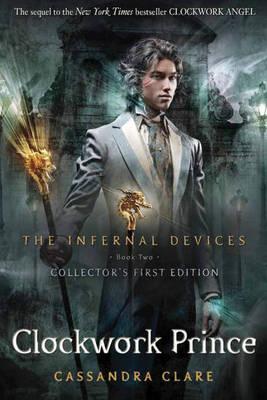
Young Sherlock Holmes from Andrew Lane's Death Cloud and Cassandra Clare's Clockwork Prince


The Sorcery and Cecilia Award, or Best Magical Teapot/Chocolate Pot

Entwined by Heather Dixon (What the heck are silver teeth, though?)


Best Scary Angel Boyfriends

Tie between Raffe in Susan Ee's Angelfall and Akira in Laini Taylor's Daughter of Smoke and Bone


Books Whose Deadly Horse-Type Creatures Should Battle it Out

The Scorpio Races by Maggia Steifvater and 2010's Rampant by Diana Peterfreund


Darkest New Dystopian YA

Enclave by Ann Aguirre


Darkest YA Overall

Slice of Cherry by Dia Reeves


Absolute Best Use of Insects

Everybody Sees the Ants by A.S. King


Best Jack the Ripper Story

The Name of the Star by Maureen Johnson


Cappuccino Award (Frothiest Fun in a Well-told Tale)

Anna and the French Kiss by Stephanie Perkins


Best Use of Amnesia

Tie between Franny Billingsley's Chime and Ally Carter's Out of Sight, Out of Time


Best New Horror/Fantasy World Incorporating the Word Lovecraft

The Iron Thorn by Caitlin Kittredge


Best Ghost Story

Anya's Ghost, graphic novel by Vera Brosgol


Best Fairy Tale Retellings

Winner: Cinder by Marissa Meyer

Honors: Entwined by Heather Dixon and Snow in Summer by Jane Yolen


Best Soccer Match-ups Combined with Wry Authorial Homilies and Brotherly Love

John Green


Best Book Trailers

Winner: The Scorpio Races by Maggie Stiefvater

Honor: A Monster Calls by Patrick Ness


CLASSIC BOOK AWARD

Best Literary Dogs

Last year, Bigfoot of Bigfoot Reads suggested I do a category for Best Literary Dog; his picks were Beverly Cleary's Ribsy and the hat-loving dog in Go, Dog. Go! Thank you, Bigfoot! All you cat fans, we'll do Best Literary Cats next year... Either that or hamsters.


So here are my Top 20+ Book Dogs:

1. All of the dogs in Go, Dog. Go! But especially the two hat-loving dogs. Okay, and that dog trying to swipe the other dog's ice cream up in the tree.

2. Author Gene Zion and illustrator Margaret Bloy Graham's Harry the Dirty Dog

3. Maurice Sendak's terrier Jenny, now deceased, that he has put in many, if not all, of his books (most famously in Where the Wild Things Are)

4. Henry Huggins' dog Ribsy (series by Beverly Cleary)

5. Dodie Smith's The 101 Dalmations

6. Wynne-Dixie in Kate DiCamillo's book, Because of Winn-Dixie

7. Old Dan and Little Ann (Where the Red Fern Grows), Old Yeller, and Sounder—a three-way tie for dog tragedy (See No More Dead Dogs by Gordon Korman.)

8. Nana in J.M. Barrie's Peter Pan

9. Toto in L. Frank Baum's The Wizard of Oz

10. Hagrid's dogs Fluffy and Fang from J.K. Rowling's Harry Potter books

11. Luath and Bodger from The Incredible Journey by Sheila Burnford

12. Phyllis Reynolds Naylor's Shiloh

13. Gloria from Officer Buckle and Gloria by Peggy Rathmann

14. Steven Kellogg's Pinkerton (e.g., in A Rose for Pinkerton)

15. Alexandra Day's Good Dog, Carl

16. Mr. Mutt from Janet Stevens and Susan Stevens Crummel's book, Help Me, Mr. Mutt!

17. Ike from Dear Mrs. LaRue: Letters from Obedience School, etc., by Mark Teague

18. Eric Hill's board book puppy, Spot

19. The Poky Little Puppy from Little Golden Books

20. Sirius in Dogsbody by Diana Wynne Jones (I know, but still!)

21. Searchlight and Willie's other sled dogs in Stone Fox by John Reynolds Gardiner

22. Hank the Cowdog from books by John R. Erickson, illustrated by Gerald L. Holmes

23. Fine, fine! Lassie (in Eric Knight's book, Lassie Come-Home; yes, there really is a hyphen)


If I've missed any important children's book dogs, please let me know in the comments.

Dog Notes from the Comments

Lark: Dog lovers also ought to check out Ginger from "Ginger Jumps" (one of our all-time favorites); Mudge from Cynthia Ryland's Henry & Mudge books; "Maxi the Taxi Dog"; the dog in James Herriot's "Only One Woof"; and Jump from Tamora Pierce's Protector of the Small Quartet.

Amy of Amy's Library of Rock points out that Kit has a dog in Diane Duane's Young Wizard series.

Also: Lark's note reminded me that Pierce's Beka Cooper books have a scent hound named Achoo!

Saturday, March 17, 2012

A Review of Friends with Boys by Faith Erin Hicks

I'm surely not the only one who will immediately compare this graphic novel from Canadian author Hicks to Anya's Ghost by Vera Brosgol. After all, it has a similar visual style with its stark black-and-white illustrations, it's about a high school girl trying to get along socially, and it features a ghost. Which makes it sound, in thumbnail form, derivative, until you read the book and find out that it really, truly is not. Friends with Boys is a wonderful book in its own right.

Maggie is starting high school, which would be scary enough, except that she has also been homeschooled her entire life—and the mother who taught her has abandoned the family. Maggie would like to think her three older brothers could give her some support, but her oldest brother Daniel is busy with his many friends and theater, while her twin brothers Zander and Lloyd are locked in an epic battle of their own.

At her new school, Maggie does make two friends, peppy Lucy and her moody brother Alastair. But she wonders what's going on between Alastair and hotshot soccer captain Matt. Then there's Maggie's shortcut through the cemetery on her way home, which brings her into contact with a sad-looking nineteenth century woman ghost. Eventually she learns who the silent ghost is and why she is sad, but what does it have to do with Maggie, who feels like the ghost is following her around?

This book is made up of small incidents, like the fact that Maggie's father finally cuts his longish hair short and how that bothers Maggie. But the incidents add up to matter, just the way they do in real life.

Hicks's characters are so angular that they sometimes look older than they are, especially the boys with their strong noses and jaws. But I soon got used to her style. And Hicks is a dab hand at dialogue, not to mention humor. The high school play Daniel stars in is about zombies, for example. Here are a few lines that come up after the play:
"You were great in the play. I completely believed you were horribly killed by zombies."

"Thanks. It's a gift."

I like the way Maggie's brother Daniel is popular, but with a different group of kids than most books show, and he is a little chunky. There is a bullying theme here, but it's not handled in the usual way. Hicks manages to create a minor mystery out of that subplot, and we find that boys have their struggles and secrets, just as girls do.

I should mention that this story is not about high school romance, though there's just a hint of it in spots. Being friends with boys seems to have as much to do with Maggie's brothers as with people like Alastair. I found this rather welcome! Maggie has enough on her plate without a gigantic romance, too.

Besides the challenges of being the new girl and bullying, two themes at the heart of the book are sibling loyalties—especially when they are tested—and the pain of a family whose mother has left them. This is all handled subtly, building beautifully to a quiet but satisfying conclusion. Hicks is not into easy answers, but the answers she does give are real and possible and right.

Scoot Anya's Ghost over on your book shelf and make room for Friends with Boys!

Also: See Page by Paige by Laura Lee Gulledge, another graphic novel about a shy high school girl who's new in town and finding her place in the world.

Note: I will be at a history education conference in Kansas City next weekend, so I won't be posting. But then I'll come roaring back with my annual Pistachio Awards the weekend of March 31.

Water Sings Blue Launch

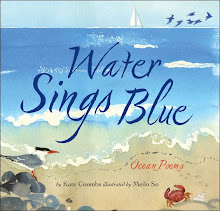
Big week for my ocean poems! They started shipping on Wednesday, but are already being reprinted. Today I'm doing a story time/book launch at a very cool indie bookstore in Salt Lake City, The King's English. Trying to think how to present well to 6-year-olds and my elderly aunts, who will turn out in force to support me!

Meanwhile, I've done some interviews around the blog and gotten a few nice reviews, to boot. (There's a little overlap among the interviews, but I tried to say different things when possible!) Here are the links:

Blog Interviews/Reviews

Seven Impossible Things Before Breakfast (Julie Danielson, also about Hans My Hedgehog)

Jama's Alphabet Soup (Jama Rattigan)

Cracking the Covers (Jessica Harrison; click here for a complete transcript)

Paper Tigers (Marjorie)

Thanks very much to all those who hosted and interviewed me!


Press/Journal Reviews

Wall Street Journal (short but sweet!)

Deseret News (Salt Lake City)

Kirkus Reviews

Publishers Weekly

Oh, and check out the seashell gallery I put up on my author's website.

Wish me luck today...

Update, 3/25: For those of you wondering why Amazon says "11 to 14 days" to ship WSB, it's because the first printing sold out and Chronicle is reprinting. (This is partly because B&N is going to use the book in a beach book display coming up soon, so they've ordered a lot of copies.)

Update, 3/27: Another starred review! This one's from Booklist. That makes three—hooray!

Update, 4/15: Take a look at this post in which Meilo and I interviewed each other for the Chronicle blog. Great pictures and stories from Meilo!

Saturday, March 10, 2012

When Maurice Sendak and Randall Jarrell Teamed Up

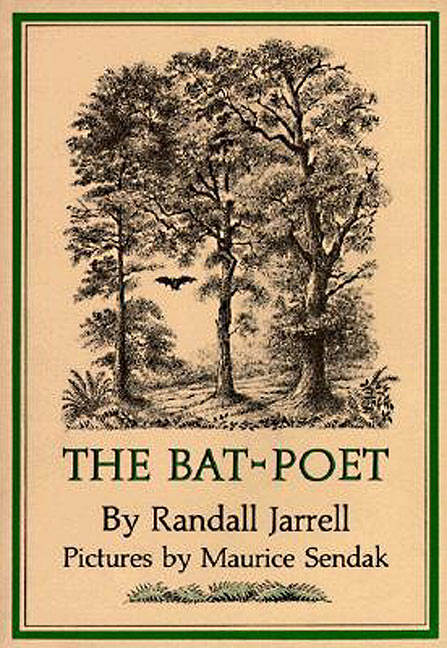
The other day I was in a great little used bookstore in Salt Lake City and found a book I'd never seen before by poet Randall Jarrell, with illustrations by Maurice Sendak, Fly by Night. I brought it home to form a trio with two other books created by Jarrell and Sendak: The Animal Family and The Bat-Poet. Here's a look at all three:

Fly by Night (1976)

This is a fairly random piece of writing, which I suppose makes sense, considering it's about the world of dreams. Jarrell tells of a boy who can fly—or float, actually—at night. He appears to be somewhere between 8 and 10. In the first few paragraphs David seems pretty ordinary, living in a pretty neighborhood where he climbs trees with the cat. But then we learn "At night David can fly." Though apparently he has trouble remembering these dreams and how to fly when morning comes. Anyway, we follow David one night as he floats into his parents' bedroom, where he can see what they are dreaming:
He comes to his mother's and father's bedroom, and floats in over them. His father is a big mound under the blanket, with his head sticking out at the top. His mother is a medium-sized mound, but where her head should be there's nothing but pillow—she's put the pillow over her head to help herself go to sleep.

His mother and father are dreaming: he can see their dreams. Just over his father's head it's round and yellow and warm, like firelight, and his father, looking very small, is running back and forth with David on his back, only David is as big as ever. His father is panting. His mother is dreaming she is making pancakes: she pours them out, and turns them over, and piles them in a pile on a plate. Her dream is round and yellow too, but it has got mixed up with the pillow, so that the feathers the pillow is stuffed with float through her dream like snowflakes.

After David floats out of the house, the cat on the porch advises him:
Wake by night and fly by night,
The wood is black, the wood is white,
The mice are dancing in the moonlight.

The mice and rabbits talk to him, too, and then David floats out into the woods, where he meets a female owl that takes him under her wing and back to her nest to join her nestlings till morning. This is where I came to my favorite metaphor in the book, when we're told that the owl has caught a fish which "shines in the moonlight like a spoon."

At the owl's nest, David meets the baby owls, which surprise him by being white and by having "a sad, absurd look." Then we get a long narrative poem from the mother owl titled "The Owl's Bedtime Story." (About this point you'll probably decide that the mother owl is a stand-in for David's own mother.) The owl escorts floating David home, and when he wakes up in the morning, as promised, he can't quite remember his dream.

This is a solemn tale, one that probably has more appeal for dreamy adults than for kids. It also makes an interesting counterpoint to the book Sendak published six years earlier, In the Night Kitchen (1970). Compare the two illustrations shown above right, for example. I should point out that Jarrell's piece was first published in 1969, so it's entirely possible that the text of Fly by Night was one of the inspirations for Sendak's own book, In the Night Kitchen, though that book is much more jovial in tone and takes off in a different direction. Still, both books feature naked floating boys who are dreaming. Which is to say, the child in Fly by Night looks a little like Mickey five years later, still up to nighttime adventuring.

I will say, aside from the fact that a lot of people dream about being naked in an embarrassing way, there's something inherently naked about dreaming, about the way one's psyche is bared in dreams.

The nicest piece of art in the book is a full spread of David floating away home, with the owl's face filling a large piece of space on the upper right and views of a mother with a baby below left and a lamb with its mother below right, plus other interesting things like a fox, a shepherdess, two ducks on a pond, a bridge, a couple of rabbits, and some marvelous trees (all in a scene vaguely reminiscent of the old masters).

Fly by Night is an odd book, but if you're a collector of Maurice Sendak's work, let alone Randall Jarrell's, it's worth tracking down a copy. There's something sweetly surreal about this one.


The Animal Family (1965)

Another slightly surreal tale from Jarrell, The Animal Family, is about a hunter who lives alone on the coast of a nameless country. He has no neighbors, and he is lonely now that his parents have died. But one night he hears someone singing, and he goes down to the shore to find out who or what it is. Little by little he befriends a mermaid, teaching her his language. He tries to learn hers, but he's pretty bad at it. There's gentle humor here:
The hunter said her words awkwardly and ruefully, like something learned too late, but she said his like an old magician learning a new trick, a trick almost too easy for her to need to learn. The hunter said to her, bewildered: "You never make mistakes."

"What is mistakes?"

"The wrong word—the wrong sound, one you don't mean to make. The way I do. Mistakes are what I make when I try to talk the way you talk."

The mermaid repeated in a satisfied voice: "Mistakes." She had one more word.

The mermaid ends up moving into the hunter's cottage. She is intrigued by his world, amused by things like the way he uses fishing gear to catch fish instead of just swimming and grabbing them like everyone else in the ocean does. I should not
e that she respects dolphins but thinks seals are numbskulls. (Like I said, funny!)

In time the hunter feels a longing for a child. This is expressed in a dream he does not understand, but the mermaid figures it out. "It means you want a boy to live with us. Then you'll be your father's shadow, and I'll be your mother's, and the boy will be yourself the way you used to be—it will all be the way it used to be." So the hopeful hunter goes out and brings home a bear cub. The new addition to the family turns out to be messy, yet loved. A few years later the hunter finds a lynx cub and brings home a second baby. But it is the lynx that finds the last child to join this strange little family...

Jarrell's story is full of funny details about how the mermaid perceives the hunter's world and about what it's like to raise the bear and lynx babies, not to mention the youngest child. The gentleness, even tenderness of the story is balanced out by the author's rather matter-of-f
act tone. Again, I'm having trouble picturing the child who will appreciate The Animal Family—maybe a creative kid, a bit of a deep thinker. The book might make a nice bedtime read-aloud. I do know a lot of grown-ups who would probably like it and would consider the book something of a fable. It is certainly a nice riff on families. (E.g., the way even the most seemingly homogenous families are made up of disparate, surprising personalities.)

I should note that Sendak deliberately avoids showing the characters in his illustrations. Instead he mostly gives us scenery in his pen-and-ink drawings (see example, right). About the only details that allude to the characters are a boat and a bow and arrow. I
think the illustrator was wise to go this route, since these characters, especially the mermaid, might have been spoiled by being captured in artwork. The timelessness of the tale is thus preserved.


The Bat-
Poet (1964)

I once loaned this third book to a friend who's a children's playwright, and when she returned it she said, "It's about what it's like to be a poet!" I would agree, but I will add that The Bat-Poet is more broadly about what it's like to be a writer or a creative person. Now, for the next few paragraphs, I'm going to steal from myself, since I wrote about The Bat-Poet in June 2010:

Character is king, and especially in this book. The little brown bat at the heart of poet Randall Jarrell's tale is just so eager and sweet and shy and curious, yet manages all this, like a real human child, without being overly sentimental. The small bat wants to know things, and then he wants to sing, and when that doesn't work, he begins to make up poems, trying to give shape to the yearning he has inside, a powerful need for self-expression. That description sounds like pop psychology, I'm afraid, but all of these ideas are couched in a nice little plot about a bat who's not like the others. He sets out to explore the day world, for example, and he gets a creative crush on the vain yet talented mockingbird. Little by little, he puts his observations into words.

Here's a piece of his first poem about the day, for example:
At dawn, the sun shines like a million moons
And all the shadows are as bright as moonlight.
The birds begin to sing with all their might.
The world awakens and forgets the night.

To which another bat responds, "The sun hurts... It hurts like getting something in your eyes." But the bat-poet eventually finds a better audience in the form of a semi-interested chipmunk.

Poetry fans will find two of Jarrell's most well-known poems embedded in this story, descriptions of an owl and of a baby bat. (The latter begins, "A bat is born/
Naked and blind and pale.") I'm noticing Jarrell really liked owls!

Sendak depicts the animal characters in this one, still using pen-and-ink. My only quibble is that Jarrell's owl in the poem is pretty terrifying, but Sendak's owl isn't. The chipmunk and the little bat are wonderful, however. And again, the illlustrator gives us a superb full spread near the end of the book. It shows a bat in flight above a forest with a lioness and her cub.

The Bat-Poet won't appeal to every child, only the more thoughtful, patient reader, probably in the 10-to-12 range. If you have a child who writes poetry, or if you write poetry yourself, this is a book for you to share, a peaceful yet gently humorous story about the joy of creating.

All three of these books are as much for adults as they are for children. At least, they are for a rather special kind of young reader. Randall Jarrell's poetic voice is clear and touched with perfect metaphors. It is also thought-provoking and poignant. I suggest you experience the quiet beauty of his children's books—and the power of Maurice Sendak's illustrations.

Sunday, March 4, 2012

Water Sings Blue and the Shetland Islands

Okay, so I just have to tell you: my poetry collection, Water Sings Blue, has gotten two starred reviews so far, from Kirkus and Publishers Weekly! (And they gave two starred reviews to Hans My Hedgehog a month or so ago).

If you go to Water Sings Blue illustrator Meilo So's new website, it currently features our book with the starred reviews. You can also explore more of her amazing artwork.

Alas, my envy of Meilo has reached epic proportions. She lives in the Shetland Islands. Where they have puffins! And pink flowers! And little white cottages! While, sadly, living across the Atlantic makes Meilo ineligible for the Caldecott (Betsy Bird and I both think she'd be up for it, though I'm slightly more biased), it's still an incredibly pretty place to live. So I will give you a glimpse of what the rest of us non-Shetlanders are missing out on, even if we're not ponies. Um, you know what I mean.

See? SEE? I think I should go on a book tour to the Shetland Islands. I'm pretty sure the fishermen (fisherpeople) would love to hear me read poems from the book. The puffins might enjoy it, too. (Which reminds me, you really should read Eleanor Farjeon's The Silver Curlew, a classic fairy tale retelling with puffins in it.) In the meantime, I'll just have to dream. And try to control my envy, which is as green as the Shetland Islands.

Update: Meilo and I interviewed each other for the Chronicle blog. Check out Meilo's photos and stories about her island home.

Saturday, March 3, 2012

BIG Numbers

Millionaire. Billionaire. Three hundred million dollars to make Spiderman 3 and $5 billion to clean up the BP oil spill. Nine million people living in Mexico City and 1.3 billion people living in China. More than 100 million homeless people in the world today... We throw these numbers around all the time, but they're so large that they're truly difficult to picture. Leave it to children's book makers to address that problem! A new book about the concept of a million just came out—so how does it stack up compared to earlier books on the same topic? Here's a look at the latest attempt to wrap our brains around big numbers, along with reviews of two its predecessors.

How Many Jelly Beans? A Giant Book of Giant Numbers! by Andrea Menotti, illustrated by Yancey Labat

Let me just start off by pointing out that the book, like the number it honors, is really big—I personally measured it (because this is a full-service book review blog, dontchaknow): we're talking 11 by 14 inches. Definitely going on the oversize shelf!

Where other authors have considered the question of large numbers using different objects and scenarios, Menotti keeps it simple; she merely considers jelly beans in bigger and bigger quantities. Which brings me to the framing plot, one that will appeal to just about any kid... two siblings are trying to decide how many jelly beans they want. Pretty soon they are imagining greater numbers, the question being, "Is there such a thing as too many jelly beans?" Emma and Aiden and their little dog, Murphy, mostly don't think so. Mostly.
How many jelly beans would you like, Emma?
TEN!
How about you, Aiden?
TWENTY!

And the jelly beans are shown in the children's hands. The kids and their dog are presented in strong, simple black lines on a white background, in contrast to the jelly beans, which are brightly colored and are not outlined. An occasional pool of blue and the use of contour in the ink lines add some depth to the rather flat scenes.

Of course, the kids start topping each other with bigger numbers. "He can have twenty? I'll have TWENTY-FIVE!" And we see bigger and bigger batches of jelly beans. "I changed my mind," Aiden says. "I'll have FIVE HUNDRED JELLY BEANS!" Whereupon Emma tells him, "That's too many. You can't eat five hundred jelly beans." Aiden replies that in a whole year he could eat a thousand jelly beans. Next we get a thousand jelly beans parsed out on a dozen calendar pages. As a teacher, I appreciated how Menotti made the number more accessible by breaking it down into pieces again, "two or three a day," as Emma realizes. And when Aiden says he can eat a hundred thousand jelly beans, we are shown the number first as one huge bunch and then divided into different batches by color—ranging from 50,000 grape jelly beans to an amusing "1 lemon."

In this way, Menotti keeps her progression of numbers and questions from becoming entirely predictable. She also throws in a single analogy, with Emma comparing 5,000 stacked jelly beans to the height of a building.

At last, in a feat of tiny computer-generated jelly beans on a REALLY big foldout spread, Menotti and Labat give us all 1 million pieces of candy—along with the punch line to Emma and Aiden's conversation.

I will just note that illustrator Labat's little dog Murphy quietly steals the show as his facial expressions and ears offer commentary on the kids' statements. Being a dog, he is of course interested in all things edible, and he is more than willing to partake in a jelly bean feast.

I suppose my only quibble with this book from a teaching standpoint is that not every number is given numerically. Some are presented only as words. I would have liked to see both forms for each number. Overall, however, this is a very nice addition to a special subgenre of math books for children, offering readers a clear, upbeat take on the big number question.


A Million Dots by Andrew Clements, illustrated by Mike Reed

Clements is best known for middle grade fare such as Frindle, but here he, too, tackles the concept of 1 million. This picture book doesn't include any particular narration or characters, but it does march kids right through a count that goes all the way up to 1,000,000 dots.

So how do the writer and illustrator add interest? On each counting page, we are given an interesting little factoid about just one of the numbers that appears along the way. Here are a few of the facts:
Dot Number 1,860—A person must climb 1,860 steps to walk to the top of the Empire State Building.

Dot Number 24,901—It is 24,901 miles around the Earth at the equator.

Dot Number 87,600—The sooty tern can fly nonstop for 87,600 hours after it leaves the nest—that's ten years on the wing!

Dot Number 134,000—A person blinks about 134,000 times each week.

Each page notes the spotlighted number, and additional signposts indicate how many dots have been counted so far. (I suspect these two numbers might be confusing for some young readers.)

The particular dots that accompany the facts are highlighted, though sometimes this is hard to see. To add visual interest, the background of the mass of ranked dots is rendered on each page as a fairly simple illustration. For example, the backgrounds of the facts mentioned above are the Empire State building, the planet Earth, a sooty tern wearing goggles and carrying a suitcase, and a goat winking in an airplane (we get mountain heights on that page, as well).

The so-so illustrations and the lack of characters and a narrative frame (however slim) make this one somewhat austere. However, the facts are compelling, as is the diligent build to 1 million.

I mean, come on: Did you know that "a queen-size bedsheet is woven from more than 153,000 feet of cotton thread?"

I will add that this book begins and ends on a page with just one dot—the first dot and the millionth one. I find this especially satisfying, both from the literary standpoint of a framing device and from the mathematical standpoint of recognizing that even a huge number like a million is made up of units, dot after dot after dot.


How Much Is a Million? by David M. Schwartz, illustrated by Steven Kellogg

This one is the gold standard for books on the topic of big numbers. I have read it, not only to first graders, but to third graders, sixth graders, and twelfth graders. So how does is stand up after 27 years? The answer is, really well.

The ambitious Schwartz gives us a series of analogies to help us envision, not only a million, but a billion and a trillion. Kellogg packages it all up using a group of exuberant kids and a mathematical magician, not to mention a dog, a cat, and a unicorn. The book begins:
If one million kids climbed onto one another's shoulders, they would be taller than the tallest buildings, higher than the highest mountains, and farther up than airplanes can fly.

The other analogies are how long it would take to count to each number, how big of a goldfish bowl you'd need to hold that many goldfish, and how many little stars would be needed to reach the number in question.

The stars section shows rows and rows of tiny stars for seven pages. The characters float across the pages in a hot air balloon, making funny little remarks. We're told we would have to take that same journey of seven pages ten times to pass a million. Later in the book, the star pages are referenced for other, larger numbers.

David Schwartz's genius lies, not only in making the idea of a million accessible, but in building a comparative understanding of a billion and even a trillion while he's at it. Steven Kellogg's genius lies, as always, in creating slightly nutsy, appealing characters to humanize the concepts.

I think my favorite pages are the depictions of the counting question: With counting to a million, we get our little cast under a tree and learn it would take about 23 days. But counting to a billion would take 95 years—and Kellogg shows the kids all elderly, with a gravestone for the mathematical magician. Counting to a trillion would take almost 200,000 years. Not surprising, Kellogg gives us gravestones for the entire group this time (after showing the alarmed kids faced with boxes and boxes of calendars.)

I'll admit I am book greedy, and I would want to own all three of these books about big numbers if I were you. If you really must choose, I still think Schwartz and Kellogg's book is the best. But I have to say—I do love those jelly beans. And Murphy!

On a related topic, I recommend Betsy Franco and Shino Arihara's poetic book on the concept of zero, Zero Is the Leaves on the Tree. (See my review from a few years back.)

Note: Chronicle Books sent me a copy of How Many Jelly Beans?