Saturday, October 15, 2011

Crossing Over: Adult Authors Writing MG/YA

You've heard of Philippa Gregory, right? She's the British author of best-selling historical novels like The Other Boleyn Girl, which is already out as a movie. Now Gregory is joining what's starting to feel like a mad rush for authors of adult fiction to write Young Adult and sometimes even middle grade books.

First it was celebrity authors, now it's the crossover crowd. Those of us who've been writing for younger readers all along—well, it is for to sigh.

But onward. In an online article from USA Today, we read:

"Asked if she is 'genre-poaching,' Gregory says that 'the important thing—surely—is that young-adult readers should get the very best writing that might be available to them so that they extend their reading into adult life.'"

I am tempted to dissect that statement, but will limit myself to giving you a list of other authors who've already done the crossover dance, along with any insights I have about their relative success in making the switch. After which I will freely offer some advice, i.e., rules, for other adult authors who are feeling inclined to write MG/YA fiction.


Meet the Crossovers

KELLEY ARMSTRONG (YA)—Known among adult paranormal fans for her Otherworld series, she started her Darkest Powers YA books with The Summoning and has since finished that trilogy and moved on to a new group of books called Darkness Rising, beginning with Book 1: The Gathering.

How Good Is It?—With teens who have magical powers trying to evade an evil organization, Armstrong's work transitions easily to the YA format. Scroll down through my Scary YA Extravaganza for a review of The Awakening (Darkest Powers, Book 2). I liked The Gathering even more.

Adult Overlap—If you've read the adult series, you'll see the connections and meet the occasional familiar character. But you can read these books without knowing anything about Armstrong's adult paranormal writing, so that's a plus.


DAVE BARRY and RIDLEY PEARSON (MG)—Dave Barry is famous for his nonfiction humor writing, which is truly funny stuff, while Ridley Pearson wrote adult thrillers in the 90s. When Pearson's daughter asked him how Peter Pan met Captain Hook, a series was born, beginning with Peter and the Starcatchers. (Pearson is also known for writing the Kingdom Keepers, a series unabashedly set at Disney World. I'll admit the in-your-face commercial aspect of those books has kept me away.)

How Good Is It?—I've only read the first book in the Starcatchers series and was not thrilled out of my gourd. Then again, I wasn't especially disappointed. From all accounts, i.e., reviews, these two are doing a pretty darned good job. They're now on Book Five, The Bridge to Never Land, which came out in August.

Adult Overlap—None.
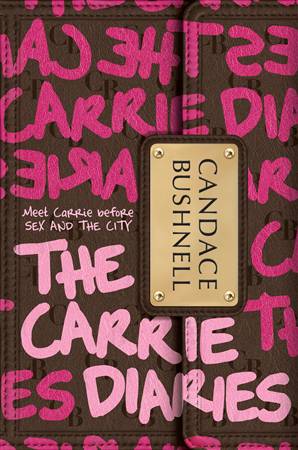

CANDACE BUSHNELL (YA)—The Carrie Diaries and Summer and the City: A Carrie Diaries Novel, about a young Carrie Bradshaw. I'm sure you've heard of, if not watched, the TV series Sex in the City.

How Good Is It?—I haven't read these books, but the professional reviews for Book 1 are quite positive.

Adult Overlap—Tons! According to reviewers, Bushnell is very successful at writing a teen Carrie who is turning into the person you've seen in Bushnell's adult novels and in the television series.


HARLAN COBEN (YA)—This author is well known for his mystery/suspense novels, especially the ones featuring Myron Bolitar. His first book for teens stars Myron's nephew, Mickey.

How Good Is It?—Here's my recent review of Shelter. The sex trade plot premise is pretty harrowing, and overall you get a kind of Alex Rider feeling. It's not a bad adventure series start.

Adult Overlap—As mentioned above, the hero is the nephew of this author's well-known adult character. But Mickey dominates the book; he even distrusts and avoids Myron!


RICHARD PAUL EVANS—You will no doubt either be thrilled or dismayed to learn that this author of maudlin, popular books like The Christmas Box has just had a teen superpowers novel published by none other than Glenn Beck. No, really! I read somewhere that RPE wanted to write a less violent heroic sci-fi/fantasy. The result is Michael Vey: The Prisoner of Cell 25 wherein teens have electric powers and are pursued by an evil organization that wants to harness those powers for nefarious purposes. ('Twas ever thus.)

How Good Is It?—Evans and possibly Beck fans are giving this book a lot of love on Amazon. I personally haven't read it, but it sounds like another solid teen adventure. One reviewer did mention the ethical/moral dilemmas Michael faces, which makes me hope it isn't too messagey.

Adult Overlap—None, except perhaps for the feel-good factor that characterizes Evans' adult work. Of course, this may work just fine in a good vs. evil sci-fi story!


JASPER FFORDE (MG)—The author of The Eyre Affair and other Thursday Next literary fantasy novels turns his hand to middle grade fiction. The Last Dragonslayer is already out in the UK, so I expect it to hit the U.S. next year.

How Good Is It?—This book has gotten a number of glowing reviews in the UK, and the plot sounds like a lot of fun: In a contemporary-type world in which magic has been fading away, a girl named Jennifer Strange runs an employment agency for washed-up wizards. But now something big is happening, and Jennifer's right smack in the middle of it.

Adult Overlap—None, but I predict you'll enjoy Fforde's style as applied to a new genre.


JOHN GRISHAM (MG)—Two books so far, Theodore Boone: Kid Lawyer and Theodore Boone: Abduction. (Trust me, Encyclopedia Brown is rolling over in his grave.)

How Good Is It?—Where do I begin? Perhaps with a quote from Leila Roy of Bookshelves of Doom, who remarked of Book 1, "As you've probably already predicted, I want to punch this book in the face." Here are her succinctly scathing reviews of the first and second books, along with my lightly damning review of Book 1 and two more reviews from Monica Edinger and Kim Werker, respectively. I'll just point out that Grisham breaks rules 1-3, 5-7, and most definitely rule 9 repeatedly. (See below.) Per Leila, he also throw in things I don't even touch on in my list, such as sexism, ethnic stereotyping, and trying to turn a supposedly contemporary town into some kind of lawyer-loving Mayberry. Too bad—I like the guy's adult fiction.

Adult Overlap—Technically none, except that Grisham never actually leaves the land of adults when writing these books. If only Theo were half as cool as 11-year-old Mark Sway from The Client!


KIM HARRISON (YA)—Known for her urban fantasy series about Rachel Morgan, she launched a young adult series with Once Dead, Twice Shy, about a girl named Madison Avery who dies, almost, and winds up caught between life and death, dealing with light and dark reapers, guardian angels, and more. There is the requisite teen love triangle, of course. The third book in the trilogy came out in May 2011.

How Good Is It?—Book 1 was a bit of a muddle as it tried to set things up, but Madison is a pretty appealing character. I haven't read the other two books; however, the pro reviewers gave Book 2 mixed marks and felt that Harrison really hit her stride with Book 3.

Adult Overlap—None. Harrison has built a different world from her adult fiction. It will remind you of a lot of the other YA paranormal out there, though.


SHARON LEE and STEVE MILLER (YA)—Fledgling, Saltation, and Ghost Ship take this husband-and-wife author duo's Liaden universe to the teen reader with heroine Theo Waitley, who is considered a "nexus of violence" at school but a potential spaceship pilot by her mysterious father and the powerful clan he left behind.

How Good Is It?—I'm a real fan of space opera and Theo Waitley is a very fun character. But if you haven't read the adult series, you might get lost at times.

Adult Overlap—Lee and Miller clearly continue the story they've been telling in their adult novels about Clan Korval with the Theo books, including scenes driven by adult characters. I like these YA novels very much, but then, I have read the adult series. The new books may be a little difficult unless your teen is an avid sci-fi fan and a fairly sophisticated reader.


KATHY REICHS—The creator of a series of adult novels about forensic anthropologist Temperance Brennan and the related TV series Bones has come out with two books about Temperance's teenage niece, Tory: Virals and next week's Seizures.

How Good Is It?—I haven't read these, but the reviews are pretty positive. Reichs is a seasoned writer who, like Harlan Coben, brings a knowledge of pacing and thrills to her new teen books.

Adult Overlap—Prequels about the adult series' heroine as a teen.


DAVID WEBERA Beautiful Friendship is a prequel to the author's adult novels about Honor Harrington; here we meet his heroine's ancestor, Stephanie, at ages 12 and 13. See my review.

How Good Is It?—Not bad, though he does wax pedantic and political in spots (as he does in his adult books, frankly!).

Adult Overlap—Prequel about an ancestor of the adult series' heroine.


PAUL WILSON—Another author who turns back the clock on the hero of his adult series, Repairman Jack, with Secret Circles and Secret Histories. Take a look at my review of Secret Circles.

How Good Is It?—The books read like an amped-up version of the Hardy Boys. Pretty good, but not great, especially as compared to the adult books. Wilson does deal with an intriguing moral dilemma in Book 2.

Adult Overlap—Prequels about the adult series' hero as a teen.


A Few Thoughts and Questions

Of these crossovers, how many are publisher initiated? Or market impelled?

Is the line between YA and adult fiction blurring to the point of disappearing? The audiences have certainly been mixing, but what about the books themselves? What continues to differentiate the two genres?

Compare also adult fiction about teens to YA books, which are always about teens... E.g., The Lovely Bones by Alice Sebold vs. Thirteen Reasons Why by Jay Asher.

Books about an adult series author's main character as a teen are a special bunch—they mostly seem to work, but do they have more appeal to people already reading the adult books than they do to the teens they supposedly target?

When adult authors start fresh, are the books more successful than when there's clear overlap?


And now...

Tips for Adult Authors Writing for Kids or Teens

Rule #1—Do NOT talk down to young readers.

Rule #2—Do NOT talk down to young readers.

Rule #3—Do NOT talk down to young readers.

Rule #2, for Real—Okay, I'll get a grip and give you a few more pointers. This may seem like the flip side of Rule #1, but please try to separate them: Do not blithely ramble into adult concerns or get all caught up in telling us about your adult characters because they're what you know and not-so-secretly like best.

Rule #3—Closely related to Rule #2 and even more important: The young main character should not only dominate, but drive the plot. Especially when it comes to solving the major plot problem. Though minor ones, too, of course. (Are you listening, John Grisham?)

Rule #4—Ease up on the setting descriptions. Lay it in, then move on. Kids don't want endless vistas; they'll feel like they've been dragged on one of those educational vacations in the family car by their parents: "Look at the beautiful scenery, my child!"/"Uh, right. How is this different from the beautiful scenery we saw five minutes ago?"

Rule #5—Watch out for anachronisms. No, today's kids really don't listen to the music or watch the TV shows that were popular when their parents were young.

Rule #6—Make sure you don't misrepresent children for their age group. One stunning John Grisham example was saying that 13-year-old boys have no interest in girls. You should be able to pinpoint the earlier "girls have cooties" stage, let alone know that middle school boys do have girlfriends, especially (for better or for worse) in the 21st century.

Rule #7—If you're writing any kind of action-adventure or sci-fi/fantasy, make the peril sufficiently perilous. And no matter what you're writing, challenge your main character! Children's or teen fiction does not equal tame. If this bothers you, keep in mind that kids know fiction is meant to provide experiences that are unlikely in real life. (The same reason adults read the Jason Bourne books or watch the movies.) Kids also watch a lot of TV, just like you. This should give you some inkling as to why characters in MG/YA books are able to sneak around and have some truly scary experiences without their parents noticing. For that matter, it's why the mothers in fairy tales are usually dead!

Rule #8—YA fiction can have sex and violence, but it is less likely to go into detail. (For examples of sex scenes that don't take pages and pages, see Melina Marchetta's Jellicoe Road or Simone Elkeles' Perfect Chemistry.)

Rule #9—PLEASE, PLEASE: Read extensively in the genre before you try it! For YA contemporary realism, start with Speak by Laurie Halse Anderson, Thirteen Reasons Why by Jay Asher, Looking for Alaska by John Green, Jellicoe Road by Melina Marchetta, Monster by Walter Dean Myers, and Dash and Lily's Book of Dares by Rachel Cohn and David Levithan, also Sarah Dessen's novels (e.g., The Truth about Forever and Along for the Ride). For YA paranormal, you obviously need to read Stephenie Meyer's Twilight, but should also try Holly Black's Tithe, Maggie Steifvater's Shiver, Becca Fitzpatrick's Hush, Hush, and many more. For YA dystopian, read Suzanne Collins' The Hunger Games, Uglies by Scott Westerfeld, Mortal Engines by Philip Reeve, and The Maze Runner by James Dashner. For YA fantasy, try Franny Billingsley's Chime, Cassandra Clare's City of Bones, Garth Nix's Sabriel, Erin Bow's Plain Kate, Terry Pratchett's Nation, Libba Bray's A Great and Terrible Beauty, and Tamora Pierce's Terrier, among others.

For MG, I hardly know where to begin. See my post about 110 years' worth of great middle grade fiction over in the right margin for starters. But my Top 5 if you're utterly clueless about MG novels would probably be Charlotte's Web by E.B. White, Charlie and the Chocolate Factory by Roald Dahl, Holes by Louis Sachar, Maniac Magee by Jerry Spinelli, and Harriet the Spy by Louise Fitzhugh. Okay, top 6: add When You Reach Me by Rebecca Stead. But there are soooo many more! (Adult to YA is less of a jump, which is probably why more people do it.)

Rule #10—YA fiction is about the overwhelming feeling of being on the cusp; not a child anymore, but not quite an adult. There's joy and there's darkness, uncertainty tempered by boundless hope. Things hit hard when you're a teenager. You care with every ounce of your being about things grown-ups might scoff at—uncomprehending, boring fools that they are. Most important, you do NOT think of yourself as a child. And always: your friends are more real and dimensional than anyone else on the planet.

MG characters aren't quite as self-absorbed as teen characters, but they are also relatively uninterested in adult concerns. They want to be up and doing! So let them out the door and into the bright, awaiting world.

What most adult authors bring to the MG/YA world is professionalism and a solid knowledge of storytelling. As long as they don't condescend to their young audience and aren't completely driven by commercial motives, I think they have something to add to the genre. (Are you listening, Philippa Gregory?)

Note: I'm sure I've missed some authors, so feel free to add suggestions in the comments. I would just ask that you stick to post-2000 examples.


Additions from the Comments

Amy of Amy's Library of Rock brings up James Patterson and Terry Pratchett, who strike me as representing the depths and heights of crossover work. I began reading Patterson's (or, as Amy implies, his ghostwriter's—looks like that would be Michael Ledwidge, who eventually gets credit as co-author) first Daniel X book and couldn't get through more than a couple of chapters because it was so blatantly created for commercial reasons following a market-driven template. If the later books improved, feel free to share! As for Terry Pratchett, I'd like to think that he honed his craft by writing the adult Discworld books before trying MG/YA fantasy in the form of The Amazing Maurice and His Educated Rodents, award winner Nation, and the wonderful Tiffany Aching books.

Saturday, October 8, 2011

A Review of The Girl of Fire and Thorns by Rae Carson

Sit up and take notice. Rae Carson has done something new and amazing with her book, The Girl of Fire and Thorns.

First, I really like the premise: What if the Chosen One were kind of a schlub? An insecure, overweight second princess with a pretty serious eating disorder? And she's married off to a too-handsome young king who, while not unkind, has ulterior motives? Then there's the trip through the jungle, where they're attacked by the forest people. Elise shows her hidden steel in this encounter, mostly because she can't think what else to do besides get her maids out from under a burning carriage and try to stab the bandit who's about to kill the guy she just married.

What's nice is that none of this seems unrealistic. Elisa fumbles around, often getting things wrong and misreading people, then occasionally showing flashes of potential and good sense. It would seem her lessons and reading over the years haven't been entirely wasted.

World building? You got it. The setting is reminiscent of sixteenth- or seventeenth-century Spain and North Africa, but this is a place where every hundred years or so, one baby has the blessing—or curse—of being the bearer of the Godstone, a jewel-like object that is embedded in their young navels by a shaft of light. The Godstones appear to be magical, but mostly seem to set their bearers up as handy targets who only occasionally live to do anything deemed truly heroic. Or so it seems. Carson has interesting things to say about heroes in this book.

In addition, she creates an intriguing religion in which worshipers are ceremonially pricked by a rose held by the priest as part of church services. The implication is that blessings are only bought through pain. There's a vague feeling of Medieval Catholicism to the religion and, indeed, to Elisa's culture, but the author goes on to make this material into something fresh.

It's really a joy to accompany Elisa as she tries desperately, and on occasion petulantly, to figure out just who she's supposed to be, including the history of her predecessors. That's even before she gets kidnapped by a whole new faction.

And just when you think Elisa will be able to show her awesome superpowers—she doesn't. She can't. Which means she has to get out of more than one tight situation by just being gutsy and using her head, after which things often backfire in unexpected ways. Of course.

I will note that there is some political maneuvering here that reminds me a little of the goings-on in Megan Whalen Turner's Thief series as Elisa gets more involved in court life and in plans for handling a coming war.

Plus you get some crazy action-adventure involving spies, guerrilla warfare, and enemy sorcerers.

Elisa eventually loses weight, but it's not because she goes on a diet; it's just an outcome of the situation she's in. Thus, while her weight loss is admirable, it's not pushed on the reader in a preachy manner. Instead, it's presented as part of her overall struggle and character growth.

Consider this a coming-of-age story. Elisa becomes a better person and a leader mostly because events conspire to force her hand. Her development is no less satisfying because of its impetus, however. When things get tough, Elisa takes action, despite her self-doubt.

The author's writing is very well crafted. It has a slightly formal tone that seems entirely appropriate to its apparent time frame and Elisa's educated, though personable, voice. Take a look at this passage, when the carriages bringing Elisa to her new home are about to be attacked:
The jungle rages with noise. Screaming birds, chittering spider monkeys, and buzzing insects all battle for attention. The wind cannot penetrate the foliage to cool us as we travel, but we hear it, whooshing through the canopy above. It is, truly, the most deafening place I've ever been.

On the morning of day four, the jungle goes silent. It happens so suddenly, so profoundly, that I peer around the curtain, expecting to find that God has whisked us to another time and place. But the silk-cotton trees still loom above me, their dark buttresses impenetrable in the filtered light. The same palm fronds twist desperately around them, seeking sunlight.

Two carriages ahead, Lord Hector drops from the roof to the ground, sword in hand.

Our procession has been large and clamorous with its carriage wheels, snorting horses, and clanking armor. Yet the jungle never saw fit to honor us with silent fear. Beside me, Lady Aneaxi mutters in prayer.

You do get a few melodramatic moments in this book, including a bit of romance in spots, but the overall storytelling is just plain terrific. The characters are also rich, especially Elisa herself and her maids. The young king, Alejandro, is more complicated than one might expect—not Prince Charming, but still a person with problems of his own. Elisa is his second wife (the first one died), and she has some great interactions with her husband's young son as well as with his hangers-on.

You'll be glad to see that the princess who starts off handling every problem she encounters by stuffing her face with pastries winds up facing down an enemy invasion with considerable courage. Fortunately for anyone who finds this first book as marvelous as I did, Rae Carson is busy writing the rest of a planned trilogy about our girl Elisa and her Godstone.

Note for Worried Parents: There is a little talk about sex in this book, but it's pretty discreet. Elisa doesn't actually sleep with her new husband, partly because he has a mistress and this is a political marriage. The Girl of Fire and Thorns is a teen book, with some mature storytelling and themes, but it's not too rough. You will come across some violence as a result of warfare.

Also: Check out Rae Carson's website or watch this video in which the author rather charmingly introduces her new book.

Book Picks: If you like this book, try Princess Ben by Catherine Gilbert Murdock, The Blue Sword by Robin McKinley, and the Queen's Thief books by Megan Whalen Turner.

A Review of Daughter of Smoke and Bone by Laini Taylor

I liked Laini Taylor's Blackbringer and Silksinger, so I knew I was going to like this book. And... I did. But I will say, it has a yearning, angsty tone worthy of Stephenie Meyer's Twilight, especially after the romance kicks in. Be warned!

Karou is an art student in Prague, and her classmates love looking at her fanciful drawings, never dreaming that they are not fanciful at all. Even though Karou has a tiny student flat, she runs back to her childhood home whenever she is summoned by her foster father, who just happens to be a Wishmonger named Brimstone, a ram's-headed, reptile-eyed chimaera. Creepy creatures come to his shop to buy wishes. It's very hard to get in, and once they're inside, customers have to wear poisonous snakes around their necks to ensure good behavior. Three other chimaera work in the shop, where Brimstone collects the teeth of dead animals—and humans.

Karou grew up learning the different types of wishes: scuppies, shings, lucknows, gavriels, and bruxes. She turned her hair blue and gave herself certain tattoos with scuppies she earned making tooth runs all over the world for Brimstone. He thinks she wastes wishes on trivial things, e.g., when her cheating ex-boyfriend shows up in her art class as a model just to mess with her and she gives him a highly unpleasant little curse.

As for the eyes tattooed onto Karou's palms? Well, that's a different story, and it has to do with the reason Brimstone won't ever let her through a certain door deep inside his shop and maybe even with the wishbone that hangs around his neck.

Meanwhile, people are seeing seraphs: austere, angelic warriors who have begun to mark with charred handprints the myriad hidden doors leading to Brimstone's wish shop from all over the world. The seraphs and the chimaera are at war—have been for millenia—and the war is about to reach Karou.

There's some wonderful world building going on in the first half of the book. I was a little less sold on the star-crossed lovers' subplot that takes over during the second half. However, Taylor is a darn good storyteller no matter what she's doing, and Karou is a very fun main character. I also like her best friend, Zuzana, who is not initially privy to Karou's secrets but is a staunch, if pocket-sized, supporter throughout the book.

The seraph, Akiva, is a little more difficult to like, but that's deliberate. Here's a glimpse of him:
Overhead, darkness massed where a shape blotted out the moon. Something was hurtling down at Karou on huge, impossible wings. Heat and wingbeats and the skirr of air parted by a blade. A blade. She leapt aside, felt steel bite her shoulder as she slammed into a carved door, splintering slats. She seized one, a jagged spear of wood, and spun to face her attacker.

He stood a mere body's length away, the point of his sword resting on the ground.

Oh, thought Karou, staring at him.

Oh.

Angel indeed.

He stood revealed. The blade of his long sword gleamed white from the incandescence of his wings—vast shimmering wings, their reach so great they swept the walls on either side of the alley, each feather like the wind-tugged lick of a candle flame.

You see? The girl can write! I love Taylor's luxurious style and her attention to detail. Of course, I'm also a sucker for a great metaphor. The author's sense of humor adds, as well. Take this bit: "'Oh, yes,' Karou muttered to herself later that night as she dragged three hundred pounds of illegal elephant ivory down the steps of the Paris Metro. 'This is just so much fun.'"

Or this little aside: "They ordered bowls of goulash, which they ate while discussing Kaz's stunt, their chemistry teacher's nose hair—which Zuzana asserted was braidable—and ideas for their semester projects."

Much as I loved Taylor's (and Karou's) version of Prague, this book is about something much bigger: the endless war between the self-righteous, militant seraphs and the beast-like chimaera, their former slaves. Karou is on the side of the underdogs, of course. (Well, in some cases, the chimaera literally look like dogs!) Daughter of Smoke and Bone is obviously a series launch, with an unabashedly cliffhanger ending.

Face it, Laini Taylor does fantasy/paranormal, not to mention broody romance, better than just about anybody out there right now. Maggie Steifvater, Becca Fitzpatrick, and Holly Black, et al., you have been challenged!

Note for Worried Parents: Daughter of Smoke and Bones is a book for teens, and it's fairly open about sex, even though that's not a major emphasis here. The p-word is used early on, for example, in the context of a lecture on why not to sleep with just any good-looking guy.

Also: Check out the official Daughter of Smoke and Bone trailer. Then there are two more trailers I like even more; I'm not sure who made them, but they're really good! Here are Part I and Part II. Finally, you can visit Laini Taylor's blog.

Book Picks: If you like this book, try
Chime by Franny Billingsley, The Hollow Kingdom by Clare B. Dunkle, and Iron Thorn by Caitlin Kittredge, besides the authors mentioned above.

A Review of A Beautiful Friendship by David Weber

If you are a fan of adult sci-fi, you may be familiar with David Weber's Honor Harrington series. I've read most of the books, and while they can get bogged down in lengthy descriptive, technological, or political passages, I really like Weber's space opera heroine. Now the author joins the ranks of adult writers crossing over into the hot YA market with a prequel novel about an ancestor of Honor Harrington named Stephanie.

Twelve-year-old Stephanie's parents have moved the family to a colony planet named Sphinx in the Star Kingdom of Manticore. An aspiring zoologist/botanist and forest ranger, Stephanie is excited until she is told that she cannot explore the forests around her new home without adult supervision. After all, the planet is home to some very dangerous species, most notably the hexapuma, an oversized puma-like predator. Stephanie's parents try to keep her occupied by giving her glider lessons, and her mother challenges her to solve a mystery: who or what has been stealing small amounts of celery from the colonists' experimental farms and greenhouses?

Then we hit Chapter Two and find out that Stephanie's isn't the only point of view in the book. Many of the chapters are presented from the perspective of Climbs Quickly, a member of the sentient species that will come to be known to humans as treecats—imagine a six-legged cross between a squirrel and a cat, with the forepaws more like a monkey's and therefore capable of using tools. For now, though, Climbs Quickly and his people are keeping out of sight of the "two-legs." Spying on them, even. So far, only their incredible attraction to celery puts them at risk for discovery.

What's really fun is that the treecats (who, like most tribal societies, call themselves the People) are trying to figure out if the two-legs can communicate with each other. The treecats communicate mind to mind, and their initial observations lead them to call the new species they are observing "mind blind."

After Stephanie sets about solving the mystery of the celery thieves, she and Climbs Quickly cross paths. Their meeting is all the more astonishing because Stephanie and Climbs Quickly form an unexpected psychic bond. The discovery of a new sentient species is big news, but Stephanie keeps it to herself for the time being. When the girl takes an ill-fated glider trip over the forest to hone in on Climbs Quickly's psychic location, she runs into trouble. Only the intervention of the secretive treecats can save her. But that would mean blowing their cover...

As the story evolves, some interesting ideas about what it means to be sentient are bandied about. In addition, we see how politics affects interactions with primitive tribes, let alone brand-new species. Stephanie becomes the treecats' champion, but just how well can a twelve-turned thirteen-year-old protect these beings from the various human threats that stalk them?

Stephanie finds a few allies and makes mistakes, but she is able to rescue her new friends, who have previously rescued her. Her bond with Climbs Quickly (or Lionheart, as she names him) doesn't overcome all of the language barriers between the two species, but it's a start.

Besides a broader environmental theme, A Beautiful Friendship addresses how advanced civilizations assess and affect less civilized groups. You'll probably smile, as I did, when you hear how one scientist tries to explain away the treecats' net-weaving activities on the basis of animal instinct. Climbs Quickly's people are hunter-gatherers, but they begin taking notes on what the humans are up to right away and apply some of what they have learned.

The author does wax pompous in spots, and the storytelling isn't always fast paced. But I thought that overall, the suspense built nicely. I especially liked seeing the difference between Stephanie's point of view and Climbs Quickly's viewpoint.

Young Stephanie, like her descendant, Honor, is a great character. She is smart, strong, stubborn, brave, and completely fallible. Our heroine's high-tech hang-gliding, along with her grace under pressure, add to the more adventurous parts of the plot.

I also appreciate the author's efforts to be properly scientific, e.g., by explaining how an alien species would be able to digest a human-grown plant. Another fun fact is the way the massive, terrifying hexapumas have a healthy respect for what an entire throng of angry treecats can do.

Fans of the adult Honor Harrington series will either love this book because it gives them a glimpse of the heroine's heritage (and because they get the celery reference right away) or hate it because it's written for a younger audience, but preteens and teens who like science fiction or even animal stories will probably enjoy A Beautiful Friendship.

Note for Worried Parents: There's some animal violence, shooting, and peril here. Even though the book is listed as YA, I think it's an appropriate read for the science-minded tween crowd, maybe 10- to 12-year-olds.

Also: You might want to stop by David Weber's website. It's rather complex!

Book Picks: If you like this book, try
Starswarm by Jerry Pournelle, the Dragon and Thief books by Timothy Zahn, Fledgling and Saltation by Sharon Lee and Steve Miller, Flight of the Outcast by Brad Strickland, and Citizen of the Galaxy by Robert A. Heinlein.

Update: Thanks to the anonymous commenter who pointed out that this book is not about a young Honor Harrington, but about an ancestor of hers named Stephanie. Corrections have been made accordingly.

Saturday, October 1, 2011

A Review of Shelter by Harlan Coben

Yet another writer for adults crosses over into the lucrative YA market, this one an Edgar-award winning mystery/thriller author who's been writing books about Myron Bolitar, our new MC's uncle. In fact, Mickey Bolitar was apparently introduced in Coben's latest adult novel, Live Wire, but here the focus is on him—and we're clearly talking series starter. Coben doesn't pull any punches: he starts off with a white slavery/sex trade plot in his very first book. No middle grade fiction for him!

Mickey watched his father die in a car accident, and now his grieving mom is in rehab. He's not crazy about his new school, either, at least until he meets an odd but lovely classmate who becomes his girlfriend. Then Ashley disappears, and Mickey is determined to find her.

Along the way, he'll run into some seriously scary characters, as well as "Bat Lady," an old woman who gives him some clues about his father's secret life, things Mickey never knew before. The trail of his father's secrets extends back to other people's stories, events from the World War II era.

Meanwhile, Ashley is linked to a strip club owned by some real thugs. Mickey gets in and out once without any real damage, but he won't be so lucky twice.

At school, Mickey finds more clues about what happened to Ashley; he also has run-ins with a bully and a pretty girl who knows more than she should. But my favorite characters are goofy Spooner and sour Ema. Spooner is a bit of a cliché, the over-talkative geek—still, he's rather appealing. Ema is sort of goth, a hostile fat girl who's bright and loyal and willing to break the rules for her friends. Though it seems obvious Ema could never be a romantic figure to Mickey, whether due to her weight or because she makes such a great friend, she is nevertheless a powerful character who really adds to the story. This is from the scene where Mickey meets Ema. He saves her from participating in an unpleasant school activity, but she's not exactly grateful:
"Is it mandatory?" I asked.

"Excuse me?"

"Is participating in this particular exercise mandatory?"

"Well, no, it's not manda—"

"Then I'm sitting out." I looked over at Ema/Emma. "Would you mind keeping me company?"

We walked away then. Behind me I could hear the world go silent. Then Ms. Owens blew a whistle, stopping the exercise and calling for lunch.

When we were a few more feet away, Ema/Emma said, "Wow."

"What?"

She looked me straight in the eye. "You saved the fat girl. I bet you're really proud of yourself."

Then she shook her head and walked away.

One amusing plot component is that Mickey doesn't trust Uncle Myron, though many readers will come to the book thinking Myron is a pretty great guy thanks to the author's adult series. Mickey sneaks around quite a bit trying to solve the mystery of Ashley and of his father's death, rarely turning to his uncle for help.

Neither Coben's prose nor his storytelling is extraordinary in this book, but it's not a bad series start. Shelter is a pretty solid adventure which should appeal to fans of Alex Rider and the like. Of course, while the Ashley story wraps up, the author leaves the door open for a sequel that will continue to pursue the mystery of Mickey's father.

There's definite reluctant reader appeal here, with an easy style, plenty of action and suspense, and a likable main character. I suspect Book 2 will take hold even more successfully. And I look forward to seeing more of Ema and Spooner!

Note for Worried Parents: This is a book for teens, with some peril and violence, as well as a mature plot about the sex trade—though it is handled fairly tastefully and the good guys win. Also: Take a look at Harlan Coben's website, where you can find a book trailer for Shelter.

A Review of The Pearl Wars by Nick James

This debut novel enters the growing ranks of YA sci-fi with strong boy appeal; it's also another dystopian offering. In James's future U.S., most of the population is divided between a corrupt government on the Surface and a group of Skyship dwellers who are political dissidents. Both groups compete to capture the Pearls: small spheres that fall from space and contain vast quantities of energy that can be used to keep the machines of civilization running.

Of course, there's a third faction here, though it's not well organized—those who live between the ruins of post-apocalyptic cities outside the protected areas run by the government. The worst of these are called Fringers because they live in Fringe Town and are the equivalent of roving street gangs. But others eke out an existence in quietly pathetic little communities.

Jesse Fisher lives on a Skyship. He encounters ruthless Cassius Stevenson from the Surface agency when both are in pursuit of a fallen Pearl. As they clash, the boys nearly die; then, as the two of them dangle from the rooftop of an abandoned building, they feel a strange flash of energy flowing between them. Just what connection could two such different people possibly have?

Back in their respective realms, Jesse and Cassius discover that the adults they trust are keeping secrets from them. When they meet again, is it to kidnap, kill, or help each other? Each boy seeks for answers, but the politics of Skyship and Surface conspire to keep them from learning what they need to know.

James deliberately makes Cassius less likable than Jesse, who seems more like the main character. But the two subplots do intertwine, and you may feel a bit of sympathy for cold-hearted Cassius before all's said and done.

Jesse has friends on the Skyship, but it's hard for him to know who to trust. Why does Captain Alkine take an unusual interest in him? Then there's an older girl named Eva. She seems to keep an eye on him, but why? Is Skandar really that good of a friend? And what about Avery, a girl who might be attracted to Jesse?

Then Jesse starts having strange interactions with the falling Pearls. Who is he really?

As for Cassius, he begins to question the intentions of Madame, leader of the Surface government and the closest thing he has to a mother. Does she care about him at all? As his body reacts bizarrely in the aftermath of his meeting with Jesse, he becomes determined to find the Skyship boy and see if he can make things normal again.

But neither boy is exactly normal. Eventually both of them are on the run, running from each other and after each other, fleeing from larger forces as they head for the ruins of Seattle, where they believe they will find the truth.

Here's a sample of the action:
Just as the guy's about to crack my skull open, an explosion rattles the street.

All three Fringers release me and spin around. I crumple to the ground, face on fire.

Framed by their tense, ready-to-pounce bodies, I see the silhouette of Eva Rodriguez. A trail of sandy smoke winds up into the air beside her like a serpent. It came from a detonator, the spherical shell of which lies on the cracked pavement in front of her right foot.

She looks older than her fifteen years, and far more intimidating than me with her cropped hair and well-practiced battle scowl. A bulky burlap pouch hangs over her shoulder, barely containing a radiant green glow. Resting inside is the Pearl we were sent down to retrieve...

"I've got more where that came from." Her dark eyes lock onto each of them as she moves the barrel of the pistol from one to another. "Leave. Now."

You'll find more action than character development in The Pearl Wars, but Jesse is a nicely dimensional character, while Cassius is sufficiently dark and complex to create a good contrast to his Skyship counterpart.

Nick James's vision of the future is an intriguing one, and his storytelling is suspenseful and fast paced—obviously influenced by TV, movies, and comic books. Watch for some great plot twists as you give this first volume of his new Skyship Academy series a try!

Note for Worried Parents: Like many YA dystopian novels, this book has a grim, dreary world marked by violence and betrayal. There's a little boy-girl attraction, but not much more than you'd expect from a teenage boy protagonist.

Also: The jacket art is great, but I think it looks a bit steampunk, and this is not a steampunk book.

Don't know how long it will last, but here's Nick James explaining his blog tour contest, and then you can check out his his very cool website, where you'll find more info about the blog tour and Nick, his book, etc.

A Review of The Project by Brian Falkner

This YA adventure/suspense book reads more like middle grade fiction a lot of the time; in fact, I was surprised when I realized that Luke and his buddy Tommy are in their mid-teens instead of middle school. But let's just agree that Luke and Tommy are pretty immature and move on...

Luke believes that the book assigned by his English teacher, Ms. Sheck, is the most boring book in the world, but he is wrong. Of course, he doesn't know that: when he argues with Mr. Kerr, the vice principal gives Luke and Tommy just a few days to prove what they say about James Fenimore Cooper's classic. He and Tommy have been caught bungling an elaborate prank on school property; now they will have to do some research to save themselves from being suspended.

Luke goes home and googles "the most boring book in the world." According to the online encyclopedia, that honor goes to a tome called Leonardo's River by a man named Darcy Benfer—an English inventor. It was so boring it even put its writer to sleep, and only one copy was ever printed. But a millionaire book collector named James Mullins would love to get his hands on it. He's willing to pay a lot of money for that single copy.

Luke forgets all about the book, caught up in the relative excitement of having to sandbag his town because the river is rising. But while he and Tommy are helping bring books upstairs from the university library's basement to the upper floors, Luke catches a glimpse of a book he is pretty sure is Benfer's sleep-inducing masterpiece. That night, he gets Tommy to sneak across the river with him and look for the book.

Only the river is flooded and the library is beginning to flood, too. Luke and Tommy manage to get by the security on the bridge, then discover they aren't the only ones looking for the book. Rather, they are the ones without guns.

The twosome makes it out, but Ms. Sheck disappears. And the menacing people from the library are soon on the trail of Luke and Tommy.

This suspenseful story heats up with a plot that involves Nazis and Leonardo da Vinci and even [spoiler!] time travel.

The whole thing is even more tricky because everyone thinks of Luke and Tommy as troublemakers, which means that no one takes them seriously when they try to get help from the authorities.

About the only thing they've got going for them is Luke's photographic memory. That and an unquenchable spirit of curiosity and adventure.

Here is an excerpt from the prologue:
This is not the most boring book in the world.

This is a book about the most boring book in the world, which is a different book altogether.

This book is really interesting and exciting, and parts of it are quite funny...

You might think that your history textbook is the most boring book in the world. But you are wrong. Or you might think that your auntie's book about dried flowers is the most boring book in the world, but that's like an action-packed adventure story compared to the real most boring book in the world.

The prose in this non-boring tale does its job handily, and Luke and Tommy are a cheerful, if slightly bumbling, duo.

Falkner, the Australian author of books like Tomorrow Code and Brain Jack, specializes in action/suspense stories. The Project is a light-hearted ride, despite the peril and the threat of world domination from the bad guys. It's salted with guy humor (at least one fart joke that I can recall) and stars a couple of goof-offs playing Hardy Boys. But it is a fun read, and your son might get a kick out of it.

Note for Worried Parents: Though this book is being marketed as YA and has teen protagonists, it reads like upper MG fiction. There is definitely peril, but little actual violence.

Visit Brian Falkner's website to learn more about
The Project and other books.

Also: I like the Australian cover (gold) a lot more than the U.S. cover (red); what about you?

Saturday, September 24, 2011

Ribbit, Ribbit: A Trio of Frog Books

If you've ever visited my author's website, you will know that I am a real fan of frogs, which I like to think of as nature's clowns. (Frog princes are featured prominently in my book, The Runaway Princess!) Today let's take a look at three frog-themed picture books, two fiction and one nonfiction, two new and one old.


Too Many Frogs! by Ann and John Hassett

Not to be confused with Sandy Asher's book, which lacks the explanation mark in the title, this new picture book takes a look at what Nana Quimby does about a frog invasion in her basement. (The plot may remind you a tiny bit of that beginning reader classic, The King, the Mice and the Cheese, by Nancy and Eric Gurney, or better still, Helen Palmer and P.D. Eastman's A Fish Out of Water.)

Nana Quimby is baking a cake when she discovers that her basement has flooded. A helpful paper boy suggests she call a plumber. Soon the water is gone, but a frog appears in her kitchen. Ten frogs, in fact. "'Put the frogs in a goldfish bowl,' said a girl jumping up and down. So she did."

Twenty more frogs appear, and "a boy running fast" suggests she put the new frogs in cups of water.

"So she did."

You can see where this is going, right?

John Hassett's acrylic illustrations give us a marvelous Nana Quimby. For example, on one page we watch her white eyebrows rise in dismay as she stares down at the frog in the cup of water she's holding, with nineteen other frog-filled cups and mugs sitting around the kitchen. There's a parrot in a cage, and out the window we discover a cat chasing a mouse. Perhaps my favorite detail is that Nana, in a lavender polka-dotted dress and white apron, wears blue tennis shoes. Note also her hair, coifed in a goofy way that faintly resembles a chef's hat.

Thirty frogs, forty frogs, fifty frogs—the neighborhood children continue to make suggestions, but eventually Nana Quimby comes up with her own solution, and the reader comes full circle to the richly imagined smell of a freshly baked cake.

Kids will appreciate both Nana's burgeoning quandary and the way passing children give her possible solutions—they may even have their own suggestions.

Apparently this husband-and-wife team has done two previous books featuring Nana Quimby, along with a couple of other picture books.

If the other books are anything like this one, with its soberly escalating absurdity, I'm in!

Note: Visit the Hassetts' website to learn more about their books and Nana Quimby's frog conservation efforts.


999 Tadpoles by Ken Kimura, illustrated by Yasunari Murakami

This book was originally printed in 2003 in Japan, but just became available in English this year. And I'm glad it did.

Consider that age-old parental dilemma: it's all very well to have 999 darling tadpoles, but when your tadpoles turn into young frogs and outgrow their pond, what do you do?
Now the pond was too small for them.

"We can't move!" one called.

"We can't breathe!" called another.

"Don't push!" called a third.

"We have a situation here," said Father.

"We'll have to move," said Mother.

So follows a froggy exodus, including a scary/funny encounter with a snake and an even more wild-and-crazy encounter with a hawk.

To say the theme is "Safety in numbers" is not enough; a better way of putting it is "Family is there for you." The message is delivered in a wry, dry style that I thoroughly enjoyed.

Murakami's illustrations are simple, but her green-and-yellow frogs really pop on the stark white backgrounds. One of the funniest spreads shows Father Frog demonstrating to his children what a snake looks like. Parts of the artwork seem deliberately designed to look like a child's drawings—note the trees and the clouds, for example. Other components are slightly more sophisticated, such as the illustrator's adorable birds.

999 Tadpoles is a clever take on the quest story, made simple enough for the youngest readers, but with a subtle humor that will appeal to parents. And of course, children ages 4 to 7 will like the idea of growing bigger and moving out into a world filled with adventure.

Note: Want to see a whole bunch of frogs in one spot? Try this brief YouTube video.


Nic Bishop Frogs

If you haven't heard of Nic Bishop—well, I just can't imagine that, actually. This photographer has created numerous award-winning nonfiction books for children. Frogs came out in 2008, which means it should be readily available at your local library (assuming budget cuts haven't shut the place down).

Bishop combines marvelous photography with his clearly delineated factual text. Here's a sample:
A frog's life is all about eating.

Frogs eat almost anything that moves and can fit inside their mouths. Once, an African bullfrog ate seventeen young cobras, one after another.

Some frogs seek out their food. A toad hops around after dark, snapping up moths, beetles, and crickets. It may eat more than 5,000 insects during a single summer. Other frogs ambush their prey. A horned frog hides among leaves on the rain forest floor in South America. It stays absolutely still, day after day. When an animal comes by, the frog watches attentively, waiting until it moves closer. Then it seizes the prey with a loud snap of it hug mouth. The horned frog is not a fussy eater. It gulps down cockroaches, lizards, mice, and even other horned frogs.

The accompanying photo shows a horned frog with a mouse tail hanging out of its mouth. The caption reads: "It is easy to see why some people say that a frog is like a stomach with legs, eyes, and a very big mouth. This horned frog has just swallowed a mouse."

The next page begins: "Frogs are prey, too." And discusses frog camouflage, with two more terrific photos to illustrate the point.

I was pleased to come across the last spread, which shows Nic Bishop in a canoe on a pond and explains how he trained one particular frog to be comfortable with the camera so he could get a photo of it catching its prey, among other frog encounters like adopting some gliding frogs.

Remember the days when nonfiction books were in black and white and were mostly text? Well, I've said it before and I'll say it again—the past 20 years have seen a Renaissance or even a first birth in beautiful children's nonfiction. DK's Eyewitness books may have led the charge, but Nic Bishop is the reigning king of photo-illustrated nonfiction for children. (Okay, better give a nod to Seymour Simon! He can be prime minister.)

You really should visit Nic Bishop's fascinating website. Take a look at the awards his frog book has won, as well as a list of his other books. Find out more about how he does the research for his books, including traveling the world to take the photographs. And then there's his life story, briefly yet tantalizingly summarized here.

Turns out Nic Bishop grew up in Bangledesh, the Sudan, and New Guinea. He started taking photographs at age nine. At ages sixteen and seventeen, he traveled the highlands of New Guinea on foot or in a dugout canoe, taking pictures and interviewing villagers with his tape recorder. I'd love to see a book-length biography of this guy!

In the meantime, I can heartily and happily recommend his Frogs to you.

Note: Watch this Scholastic book trailer for Nic Bishop Spiders to see Bishop catching spiders in the woods and taking them home to his studio to photograph.

Saturday, September 17, 2011

A Review of Liesl & Po by Lauren Oliver

I've heard a lot of talk about this book lately, so I was eager to read it and see for myself. The author has already written a couple of well-regarded books for teens: Before I Fall and Delirium. Sometimes authors for older readers who switch to writing for younger children have a little trouble with the transition, but Oliver plunges into the MG genre skillfully.

Of course, I am a sucker for great metaphors, and Oliver has a real talent for them. Here's how the book begins:
On the third night after the day her father died, Liesl saw the ghost.

She was lying in bed in the uniform gray darkness of her small attic room when in one corner the shadows seemed to crimp, or flex, and suddenly standing next to her wobbly desk and three-legged chair was a person about her height. It was as though the darkness was a sheet of raw cookie dough, and someone had just taken a cookie cutter and made a child-sized shape out of it.

Liesl sat up, alarmed.

"What are you?" she whispered into the darkness, even though she knew it was a ghost. Normal people do not appear out of darkness, nor seem to be made out of liquid shadow. Besides, she had read about ghosts. She read a lot in her little attic room. There was not much else to do.

The plot feels a bit like Charles Dickens meets Cinderella. And what a terrific cast of characters!

We've got Liesl, whose awful stepmother has locked her in the attic and has no plans whatsoever to let her out. (Augusta is too busy spending Liesl's inheritance.)

Then there's Will, the boy who stands down in the street watching Liesl's window in between running midnight errands for his heartless master, an alchemist.

Another character I like very much is a simple guardsman named Mo who carries a cat.

The sun never shines in Liesl's land, so the story takes place in a great deal of gloom and chill. Steam trains and factories add to the atmospheric mood of the book.

Liesl and Po has the feel of a fable. It's shaped like a folktale or perhaps a theater piece for children, a Christmas pantomime. The characters are deliberate types: the Wicked Stepmother, the Simpleton, the Oppressed Good Daughter, the Evil Alchemist, the Kindly Boy, the Greedy Duchess, the Thief. This is a good thing: the stylized feel of the book really works with the story Oliver is telling. So does the sweetly whimsical tone, shining forth in spite of the gloom and the various villains.

The book's magic, which is carried around in a box and changes hands comically (as in one of Shakespeare's plays about mistaken identity), is defined rather vaguely. It becomes a Symbol, not the tool you have seen in other fantasies.

Of course, let's not forget that this book is in part a meditation on death, loss, and the afterlife. Oliver herself says as much in the Introduction:
I wrote Liesl & Po during a concentrated two-month period at the end of 2009...

At the time, I was dealing with the sudden death of my best friend. The lasting impact of this loss reverberated through the months, and it made my world gray and murky, much like the world Liesl inhabits at the start of the story....

Only in retrospect did I realize that I was writing about myself—that Liesl's journey was my own.

The author goes on to define the book, not as an escape, but as "the opposite of an escape; it is a way back in...."

And so we return to that little ghost, Po, who becomes Liesl's best friend, despite the space (and philosophy) that separates them. Here is a moment when Liesl asks Po for a favor:
"And you must help me," Liesl finished.

Po was unprepared for this. "Me?" it said unhappily. "Why me?"

"Because you are my friend," Liesl said.

"Friend," Po repeated. The word was unfamiliar by this point. Something tugged at the edges of Po's memory, the faintest of faint recollections of a bark of laughter, and the smell of thick wool, and the sting of something wet against its cheek. Snowball fight, Po thought suddenly, without knowing where the words came from: words he had not thought of in ages and ages, in so long that millions of stars had collapsed and been born in that time.

"All right," Po said. It had never occurred to Po that it would ever have a friend again, in all of eternity. "I'll help you."

There are chases and villains and peril and a rich setting in this story. But most of all, there is a wistfulness. Having read Lauren Oliver's introduction (after reading the book, I'm happy to report!), now I know why.

Children will probably like Liesl & Po for the adventure and the appealing characters, but grown-ups might read it and get a bit teary, the way they feel after reading Antoine de Saint Exupéry's The Little Prince.

Note for Worried Parents: Oliver's portrayal of the afterlife may be of concern to religious families. A discussion of your beliefs vs. the book's take on things would be useful.

Also: I requested a copy of this book from Amazon Vine.
Liesl & Po will be available in bookstores on October 4.

A Review of The Inquisitor's Apprentice by Chris Moriarty

Picture Sherlock Holmes and the Baker Street Irregulars... Now plop them into New York City, make the Irregulars into a rich girl and a poor Jewish boy, and add a generous dose of magic. Nope, still not a good enough analogy. But it leads you in the right direction, where you'll find Sacha Kessler, a boy from an alternate version of New York's Lower East Side in the days of Thomas Edison, who is a key character in the story. (Hmm. Perhaps this author's last name inspired me to think of Sherlock.)

Chapter One is titled with precision: "The Boy Who Could See Witches." When Sacha blurts out that he can actually see the magic created by Mrs. Lasscha in her bakery, he is caught by a New York Police Department Inquisitor, who proceeds to recruit him. Not that he has much choice! Sacha has to take an IQ (Inquisitorial Quotient) test, which confirms his magical ability. Sacha finds himself apprenticed to an odd, colorful detective named Maximillian Wolf. Here's the detective:
In a city like New York, charm was cheap. Any shopgirl or salesman could buy a little glamour to help win the next sale or just get that extra edge it took to get ahead, and most did. It wasn't exactly legal, but it worked. And New Yorkers were too ambitious to turn down anything that worked.

But Inquisitor Wolf didn't seem to think he needed that kind of help. In fact, he seemed to go to great lengths to be as unglamorous and unmagical as possible. His long, lanky legs were encased in baggy trousers that had never seen the inside of a tailor's shop, let alone a fitting spell. His jacket hung off his bony shoulder like a scarecrow's sack. His hair looked like it hadn't been brushed for weeks. His spectacles were covered with smudges and fingerprints. And his dishwater-gray eyes wore a sleepy, absentminded look that seemed to say Wolf was still waiting for the day to bring him something worth waking up for.

As far as Sacha could tell, the only remotely interesting thing about Maximillian Wolf was the extraordinary collection of food stains on his tie.

Moriarty's premise and world building are utterly delightful. The first few chapters give us a wonderful Jewish neighborhood in late nineteenth-century New York. For example, there's Sacha's uncle the anarchist and the neighbors who share a flat with Sacha's family: Mrs. Lehrer spends years sewing her savings into the lining of a coat. The baker, Mrs. Lassky, makes mildly bespelled pastries such as "Deliciously Efficacious Knishes...guaranteed to get any girl married within the year." The Wobblies are the Industrial Witches of the World, and the villain of the tale is a scarcely disguised Robber Baron, J.P. Morgaunt, while Sacha's fellow apprentice is gutsy Lily Astral (nice play on the name Aster!).

Then there's the shadowy figure who seems to be following Sacha... what does he want?

Sacha's family is proud of him for getting such a good job, and Sacha tries to focus on learning everything he can from the surprising Inquisitor Wolf. He also begins to tolerate and then appreciate Lily, who is tougher than she looks.

The mystery the team is trying to solve has to do with an attempt on Thomas Edison's life, but that winds up being only a small part of a much more complex and devious plan. Moriarty's plot takes a couple of surprising turns as the story progresses, working its way up to a highly dramatic climax involving Houdini.

The Rag and Bone Man, Hexers, and dybbuks mix it up with other strange magical influences and famous figures (slightly revised) in this well-written, satisfying historical fantasy. (Be sure and watch for an appearance by Teddy Roosevelt.) Although the plot wraps up nicely, we are left with a dark glimpse of the next book. I can't wait to read the sequel!

Note: I requested a copy of this book from Amazon Vine. The Inquisitor's Apprentice will be out on October 4.

Update, 9-29-11: Check out Kate Milford's interview with author Chris Moriarty at the Enchanted Inkpot.

A Review of Mistress of the Storm by M.L. Welsh

Note to self: If someone knocks on the door and says she's your step-grandmother that you've never heard of before, RUN! At least, that's what Verity Gallant should have done...

Welsh's first book is about bullying, smugglers, friendship, really great nautical engineering, and a sort of wind goddess, not necessarily in that order. There are some key arrivals and departures here: an old woman named Alice who is Verity's friend departs, a mysterious ship arrives, Verity's grandfather departs (it's history, but she didn't know about it before), a new girl named Martha arrives, the peace and tranquility in Verity's home departs because her evil grandmother arrives, causing her father's sanity to depart... Oh, and a Preventative Man arrives. He's supposed to be catching smugglers, but he has his own secrets and hopes.

If you are anything like me, you will be incensed by how badly the kids at school treat Verity and even more incensed by how horribly her step-grandmother treats her. (One thing they tease her about is her weight, since she's a little chunky.)

Meanwhile, everyone wonders what that ship is doing in the harbor, and Verity learns a great deal about smugglers—especially her missing grandfather—even as her friendship with Henry and her ability to sail grow stronger.

It becomes clear that Grandmother wants to hurt Verity Gallant and maybe the rest of her family, too. M.L. Welsh is a dab hand at foreshadowing, and the tension in this book builds in a satisfying way.

One interesting aspect of Mistress of the Storm is that Verity gets her hands on a secret book which contains such true stories that they must be retold, or rather reenacted, in real life. Verity appears to be at the center of such a story—or is she? Can the plot be changed?

The author is especially good with names, although the names, along with the smuggling being in the recent past, may cause you to reassess the time frame of this story. It seems contemporary because of the schoolchildren, but later feels more historical. The setting is very British, yet the author almost immediately identifies the land as Albion, a variation sometimes used by writers of alternative history. My favorite character name in the book is Villainous Usage; I also like Jasper Cutgrass, Charlotte Chiverton, Isaac Tempest, and Henry Twogood.

Here is one of Verity's unpleasant moments with Grandmother:
Astonishingly the little ornament suddenly leaped from Grandmother's fingers and dashed itself on the hearth. It smashed noisily on the marble. Verity stared in amazement and horror.

"Really, Verity," scolded Grandmother in a loud, clear voice. "Isn't that one of your mother's particular favourites?"

Mrs. Gallant hurried into the room. "What's all the commotion—? Oh." She knelt down to examine the shattered pieces.

"I did warn Verity to be careful. But of course she rarely listens to her elders and betters," soothed Grandmother.

Verity stared at her in outrage. "That's a complete lie—" she started.

"Verity, really." Mother was holding the broken shards with evident sadness. "How dare you cheek your grandmother. To your room now."

While Mistress of the Storm is a nice read in many ways, the bits and pieces of the book don't always seem to hang together. And I wasn't sure how I felt about Verity's role in the climactic confrontation with her archenemy. However, she is part of a loving and loyal group of friends, something Welsh emphasizes in relation to the book of true stories and the way Verity's adventures wrap up.

It's no surprise to learn from the flap copy that this author "spent her formative years in the sailing town of Cowes, on the Isle of Wight." Next to Verity's friendship with Henry, the sailing scenes and descriptions of the sea are probably the best thing about this book.

If you have the slightest longing to go to sea, or if you have ever been bullied, especially by a truly awful grandmother, give Mistress of the Storm a try!

Tuesday, September 13, 2011

"WIP It!" at the Inkpot

Just to let you know, I put up a post at the Enchanted Inkpot which tells about the manuscripts a dozen or so MG/YA fantasy writers are working on right now (including me!). It's an enticing look at what you'll be reading in 1-2 years...

WIP stands for Work in Progress, but I couldn't help thinking of Devo's most famous song (from 1980).

Friday, September 9, 2011

A Review of Wisdom's Kiss by Catherine Gilbert Murdock

Fun fact about this writer: her sister Elizabeth Gilbert is the author of Eat, Pray, Love. And with Murdock's new book, we learn that she really likes playing with form as well as genre, something only hinted at in her previous take on the princess tale, Princess Ben.

Princess Ben even makes an appearance in this book as the grandmother of one of the main characters. In Wisdom's Kiss, Murdock creates an epistolary novel utilizing more than one format. And so our story is told in chapters that are more or less alternately written in letter form, diary form, memoir, encyclopedia entries, and even small plays. All of which allows our story to shift point of views (at least 7, by my count) and thus voices regularly as it moves forward. As an introductory quote states: "Truth requires many voices, for it is a relentless foe but a most unobliging mistress."

Wisdom's Kiss: A Thrilling and Romantic Adventure, Incorporating Magic, Villainy, and a Cat begins with an orphaned tavern maid named Trudy (short for Fortitude) who happens to have second sight. Trudy's best friend is the handsome miller's son, Tips, so when he leaves with the Master Swordsman, Felis el Gato, ostensibly to become a soldier, she misses him terribly. (If you're paying attention, you'll notice mild allusions to a well-known fairy tale in this book.)

Six years have passed as the next chapter begins in the form of a play that introduces Queen Temperance and her sister, Princess Wisdom. We also encounter a rather fickle suitor, Duke Roger of Farina, who is supposed to propose to Temperance, but proposes to Wisdom instead. We learn in Wilhelmina, Duchess of Farina's notebook (diary) that she is Not Happy with her son Roger's actions. She had specifically assigned him to court the queen because she wants to take over the kingdom of Montagne. Yes, Wilhelmina is the villain of this piece!

On we go, eventually reading Princess Wisdom's (Dizzy's) diary as she travels to Farina with her grandmother and falls madly in love with someone completely unexpected. (You'll find that Dizzy is a daring soul.) Meanwhile, young Queen Temperance is left to deal with another suitor, and our girl Trudy sets off to find out what happened to her dear friend, Tips.

As you can imagine, the plot thickens, and thickens again, with so many voices and adventures. Yet beneath it all, what we have is a rather mannered, orderly story, and eventually the puzzle pieces come together.

I wouldn't recommend the book to a reluctant reader, but a reader who delights in fantasy of every sort will no doubt enjoy Wisdom's Kiss. I tracked down the book because I loved Murdock's Dairy Queen trilogy, but this is quite a different story. The Dairy Queen books are contemporary YA, set on a farm, and their heroine is a high school athlete. What the two books do have in common is an emphasis on character, which might explain the different forms used in Wisdom's Kiss, actually. Murdock is clearly fascinated by individual characters, with their varying points of view and motivations. I'll give you an example, but keep in mind that this excerpt represents Princess Dizzy's voice, not the whole book:
Yes that inn had mattresses older than Nonna Ben but I could see the river from my room & hear the boatmen—who know more curses than I shall ever be able to remember! One man in particular had a true gift—wouldn't it be wonderful if I could rattle off blasphemies so! He was a veritable poet—I could have stayed awake until dawn just to hear him! In fact I was wholly primed to smuggle myself down to the dockside bustle that I might better attend when Escoffier [the cat] appeared quite glaringly on the windowsill relaying with every black whisker of his being that if I so much as stepped from my chamber I should be in Very Great Trouble.

While the plot of Wisdom's Kiss may seem rollicking and complicated at first glance, the book is ultimately about its characters. And no, Murdock doesn't go in for conventional happy endings—at least not the one you might have expected.

My only hesitation in recommending this book is that, because it does jump around, it tends to feel a little disconnected, and no one character gets enough page time for the depth of development you might like to see. Still, Wisdom's Kiss is a lively read. With its unique perspective on court intrigue and a generous dollop of magic, the book is a fun pick for capable young readers looking for a break from the recent onslaught of school assignments.

Besides which, there's a circus!

Note for Worried Parents: Wisdom's Kiss is categorized as Young Adult. It doesn't really have any worrisome content and could easily be read by 10- to 12-year-olds as well as teens. However, its characters are older teens and adults, so its tone is relatively grown-up.

Also: I requested a copy of this book from Amazon Vine. It will be available in bookstores on September 13.